|
March 8-26, 2017: Our Spring Trip to Fort Lauderdale |
|
January 27-30, 2017: Guy Visits Us in Dallas |
|
Return to the Index for 2017 |
On Friday, February 17, Fred and I headed down to San Antonio, accepting an invitation to come visit Prudence, Ron and Guy for the weekend. Karl and Nancy would also be there, so it should be a nice visit.
Getting to the Ruckman's House in San Antonio
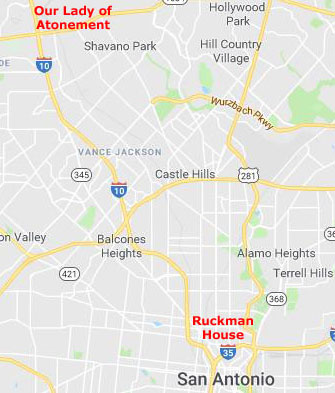
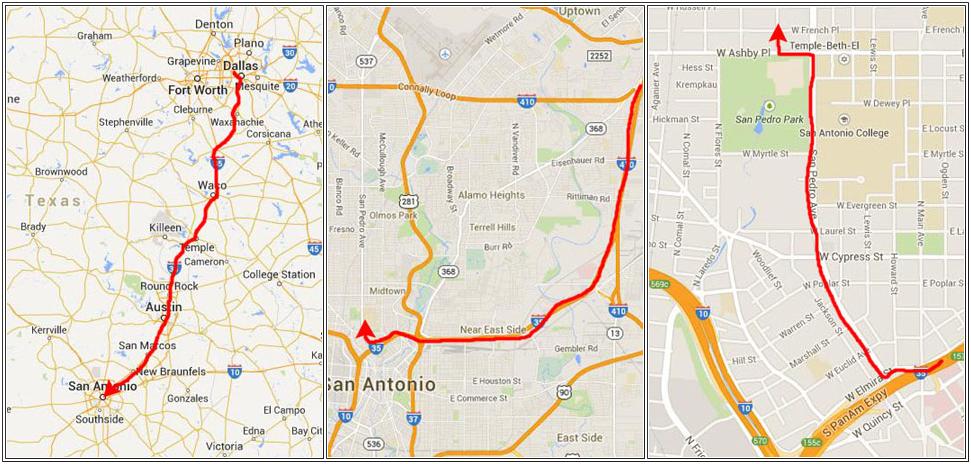
On the maps below, you can see the route to the Ruckmans' house. It is an easy matter to simply hop on I-35E from the Tollway in Dallas and take that highway all the way south through Austin to San Antonio. This 280-mile trip routinely takes about 4.5 hours. In San Antonio, we continue to follow I-35 into the city, eventually exiting onto San Pedro Avenue. We take that north about two miles, and either hang a left on Ashby and a right on Breeden or just a left on French to get to the Ruckmans' house on the northeast corner of Breeden and French.
 |
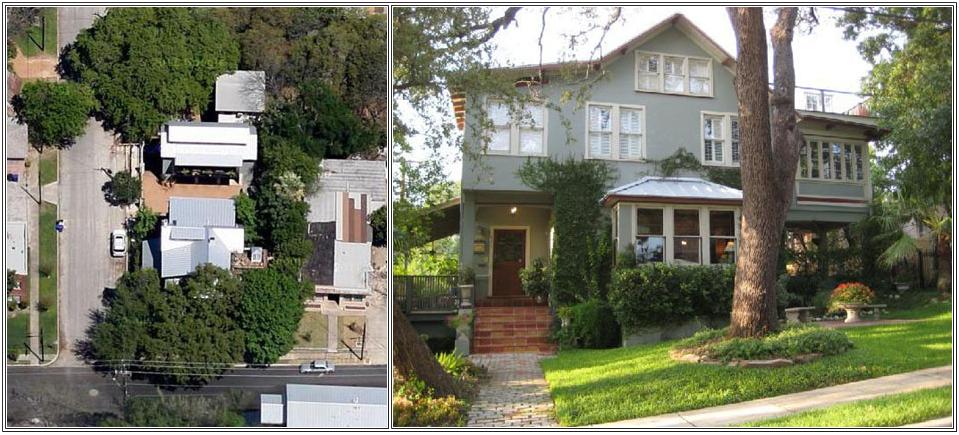
In case you have not seen them, I have put below first an aerial view of the Ruckmans' house (it is the house on the corner and the garage/apartment building north of it where Guy lives) and a front view of the house (taken in 2010).
 |
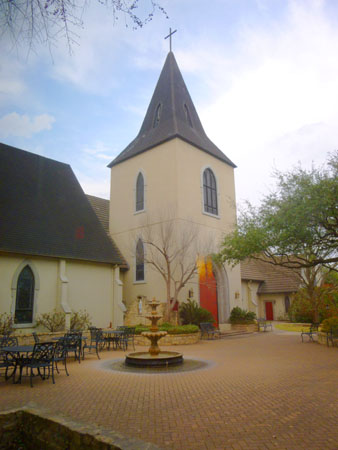
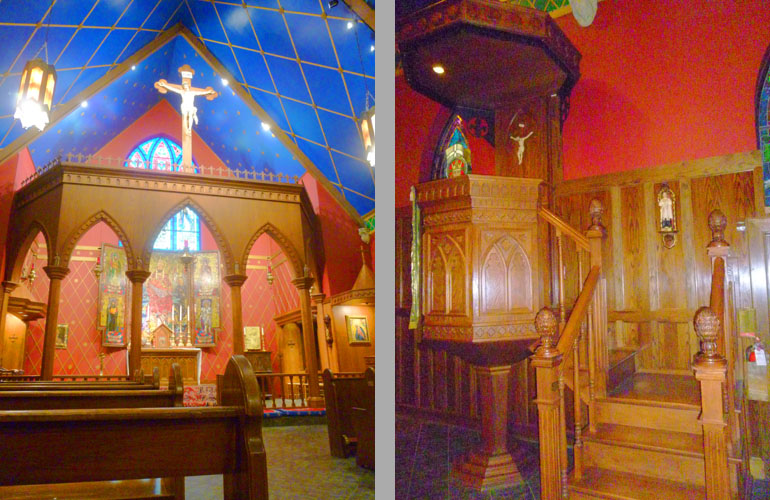
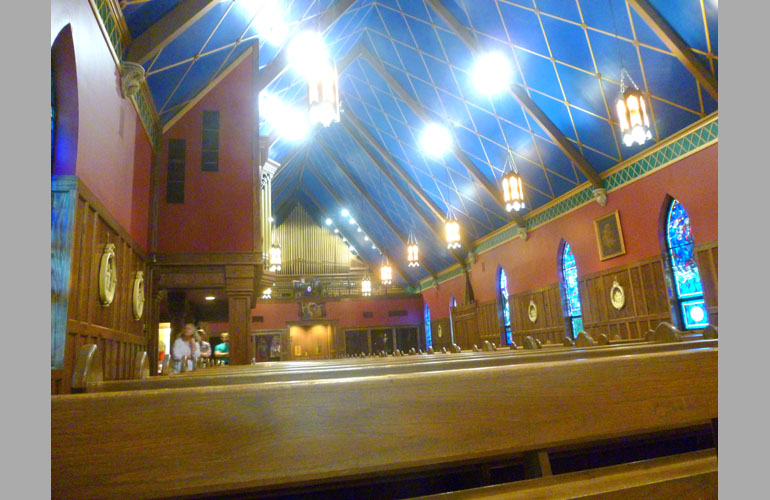
We did the usual things during our visit- stuff around the house, eating out, eating in, visiting with Nancy and Karl- but Fred, Guy, Prudence, and I also made a trip to the San Antonio Botanical Garden. One afternoon we all also went to see the Our Lady of Atonement Catholic Church- supposedly one of the prettiest and most historic Catholic churches in town.
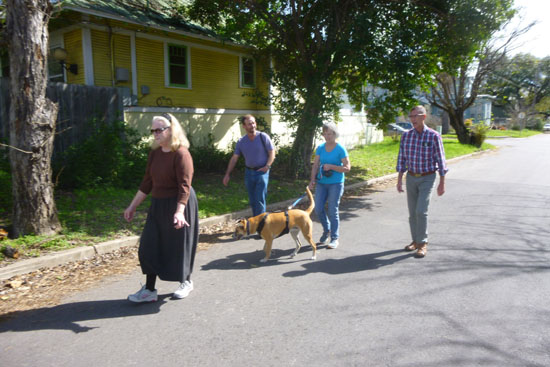
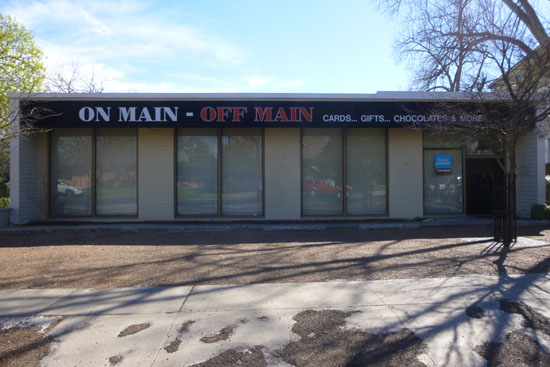
A Walk to Main Street
|
|
At the San Antonio Botanical Garden
|
In 1970, voters approved $265,000 in bonds for the Garden. This money, along with a grant awarded five years later by the Ewing Halsell Foundation, other contributions from organizations and individuals, and a significant grant from the Economic Development Administration helped pay for the project. Groundbreaking ceremonies were held on July 21, 1976. The official opening of the San Antonio Botanical Garden was May 3, 1980.
One of the first things Guy did when he moved to San Antonio in July was to get a membership at the Botanical Garden so he can come here frequently and walk. Apparently, he does this at least a couple of times a week. If I lived nearer to the Dallas Arboretum, I'd probably go more frequently as well.
|
|
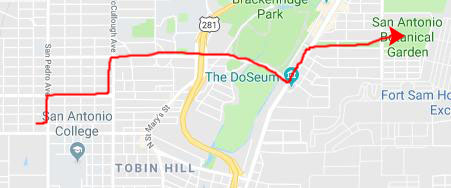
Getting to the gardens is just a fifteen-minute trip from Ruckman Haus, and I knew the way quite well. I didn't put a distance scale on the map at right, but the whole trip is a little less than three miles.
I think there are a number of reasons why Guy comes to the gardens frequently. They, like the Dallas Arboretum, are not only a delight to the eyes, but provide rest for the soul as well. That rest is something Guy treasures, and something we should all get more of.
|
|
|
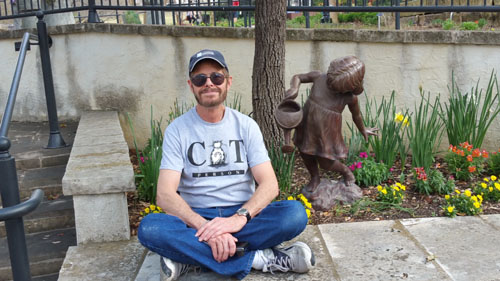
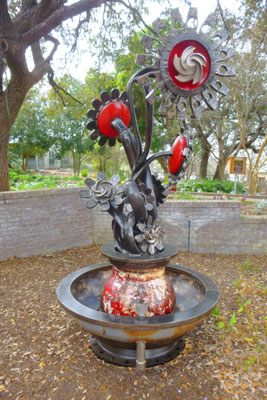
Prudence asked me to have a seat by that sculpture so that she could take a picture; that's the one at left.
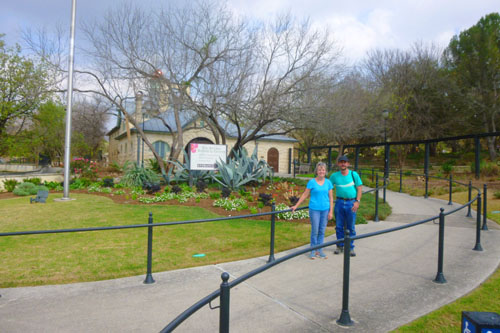
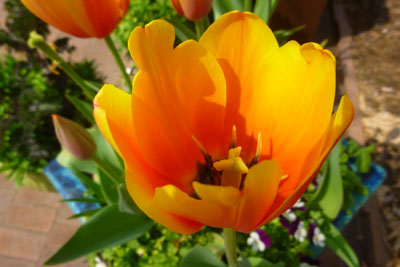
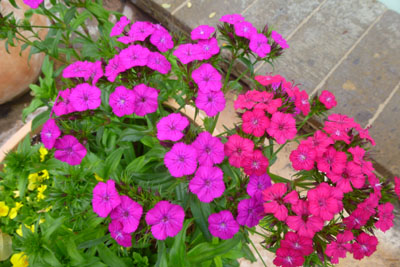
It is always interesting just to walk up the ramp from the Carriage House to the gardens; there is a wall along which all kinds of succulents grow. The gardens also have seasonal displays in the plaza and along that ramp, although at this time of year, we are usually limited to pansies, tulips, and a few other varieties.
|
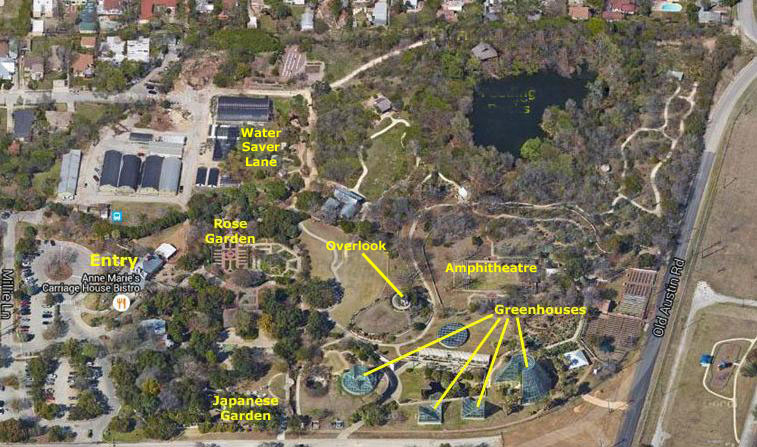
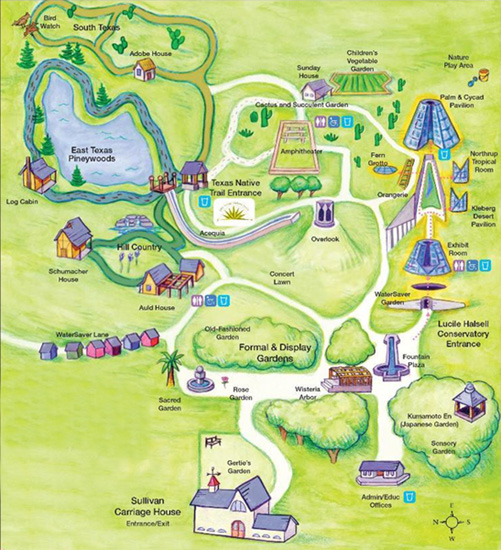
On the diagram at right, you can see the walkway up from the entry pavilion (carriage house). On our right, we passed some shaded vegetation behind the handrails up the path. Then we came to the area south of the Formal and Display Gardens (and the old-fashioned garden adjacent), with the rose garden to our left and the wisteria arbor to our right. I stopped here to take a picture of the beginning of the gardens, and then turned to look directly towards the wisteria arbor.
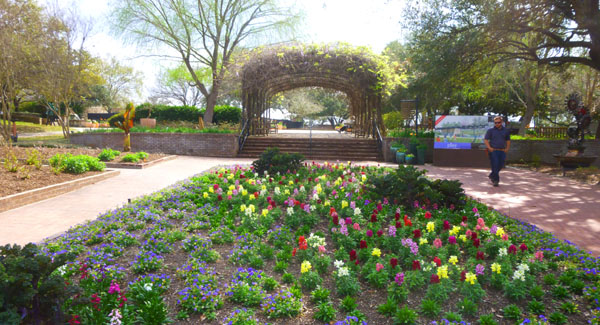
It was a beautiful day here in the gardens, a bit cloudy and a bit cool, and we spent quite a bit of time just wandering around the plaza where the old-fashioned garden is. We have been here in the middle of summer, and I can tell you that it is a lot less pleasant then!
|
|
|
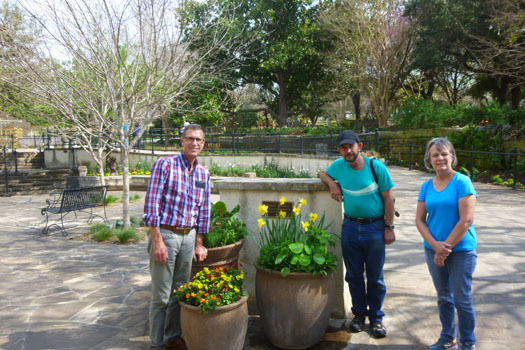
We stopped here for a bit as Fred, Prudence, and Guy were talking about some of the plants. I walked a bit ahead and up the steps to the arbor, turned, and looked back west towards the display gardens plaza. Standing here, I am now underneath the wisteria arbor which, in a month or so, will be a riot of new growth and blossoms. Inside the arbor, on either side of the walkway, are benches on which to rest (and I took advantage of one of them to wait for the others to catch up).
We walked through the wisteria arbor and out onto Fountain Plaza- the centerpiece of which is a long water feature that begins with a fountain on its north end. It is always a great place for pictures and a great place to hang out, what with the restful sound of the water.
|
(Mouseover Image Above for Video Controls) |
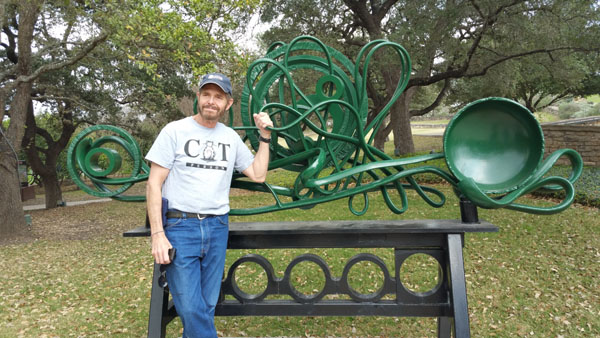
We walked into the Sensory Garden for a bit; here there are plants with distinctive smells and feel, and there are sculptures large and small designed for people to touch and experience. We also walked through the Japanese Garden; it has a pleasant little pathway that crosses a little artificial stream. From there, we walked up towards The Overlook, passing the butterfly wheel on the way.
|
|
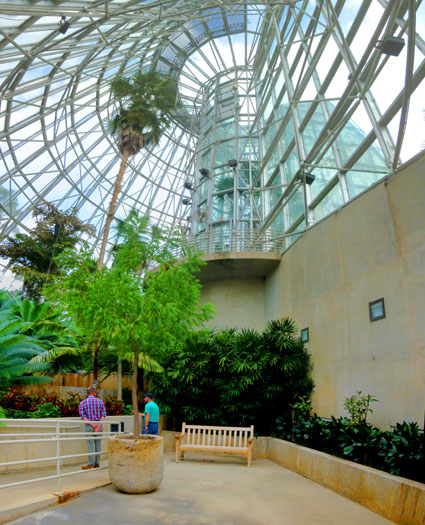
One can walk around this area and gain access to all of the conservatory buildings, and the first one we entered was the Palm and Cycad Pavilion. At left is a floor-to-ceiling view of the inside of this pavilion.
This pavilion is just one of the group of five buildings that make up the prize-winning Lucile Halsell Conservatory, which opened in February 1988. Argentinean-American Emilio Ambasz, the designer of the futuristic glass project, has a world-wide reputation. This series of conservatory buildings was the first of his projects ever built and his revolutionary design has been emulated and copied at several other locations. Each of the conservatory buildings has a different "theme"; this one is the tallest, and contains many ferns and various types of palms. Some of these palms are full-size trees, and so this is the tallest of the five conservatory buildings.
This project presents many new ideas on conservatory design. Most conservatories have all of their display areas connected by hallways or smaller rooms. By using the mild climate of San Antonio, designer Ambasz and local architect Jones Kell have the visitor enter an open-air courtyard; the various "greenhouses" are separate and all accessible via the courtyard (although, as you can see from the garden diagram, one needs to go through the Exhibit Room building to get to the WaterSaver Garden conservatory).
|
|
So the area can actually be viewed as five separate conservatories built around the courtyard. Not only does the climate help make this design work, but the arcades (overhead covered areas) also provide protection from the elements. In the southernmost pavilion are parts of the Botanical Garden's orchid collection.
|
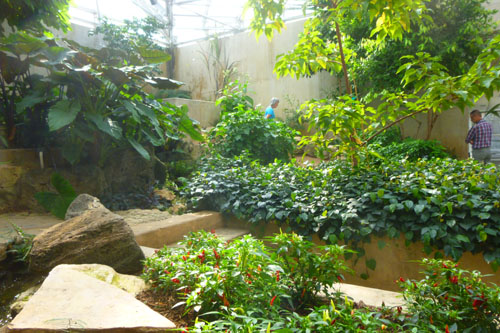
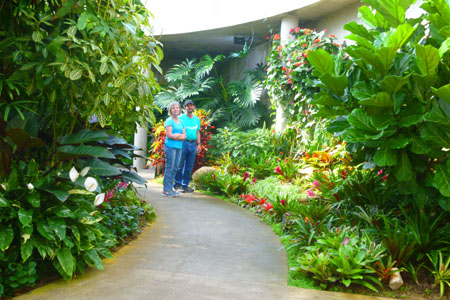
Basically, all of the conservatories are sunken in the ground and have a glass roof at least 18 feet above the floor level. The largest glasshouse, the palm pavilion, soars 65 feet at its highest point. The fern room is actually 23 feet below the surface. This design is successful in San Antonio because of the quality and quantity of sunlight. The sun is almost overhead in the summer and only dips 22 degrees above the horizon at its lowest point in the winter. Here are some additional views of the five conservatories:
|
Another unique feature is that only the glass roofs protrude above the earth’s surface. All mechanical rooms, offices, and backup areas are underground, allowing for the very clean, uncluttered look of the landscape. Coming out of the conservatories, we went back up to the walkway around the hill on which the overlook sits. From that walkway, I took a series of pictures to put together into a panoramic view:

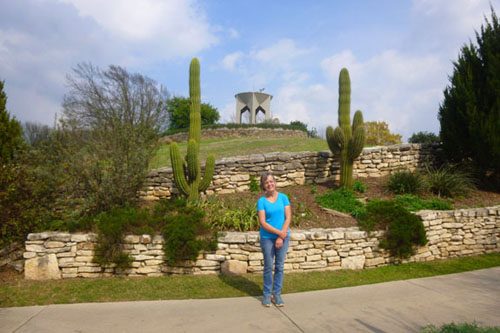
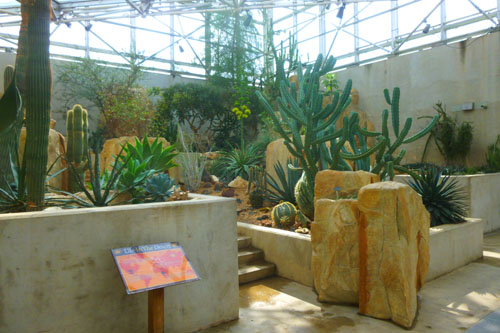
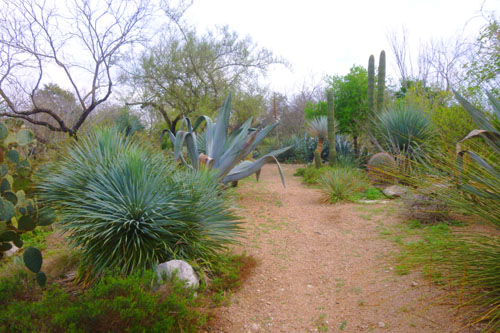
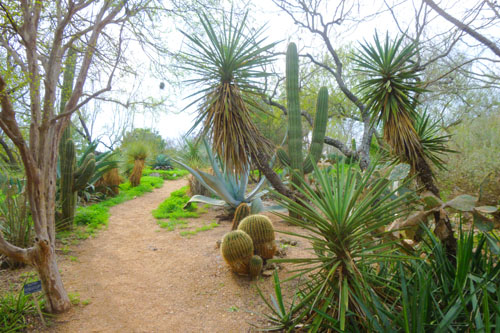
We continued walking along the trail below the overlook, coming around past the Amphitheatre, which is an open field with a huge chess set kids (and adults) can play with. Overlooking the field are four, primary-colored, gigantic, adirondack chairs. If you aren't sure how big they are, look at the red one; there is an adult sitting in it. (Nearby, there is also an oversized picnic table.) I also took a quick trip up the spiral walk to the Overlook Tower. Just beyond the amphitheatre is the Texas Native Trail, and we took the portion of it that leads through the Cactus and Succulent Garden, which is where the two pictures below were taken:
|
|
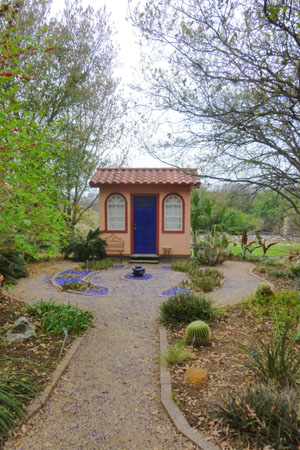
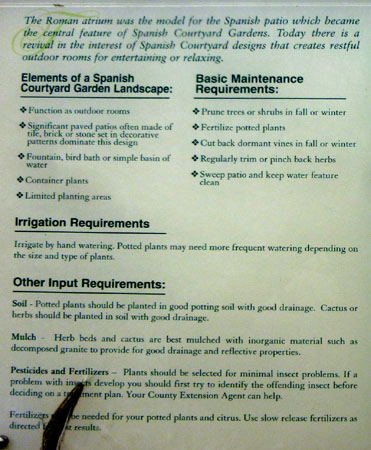
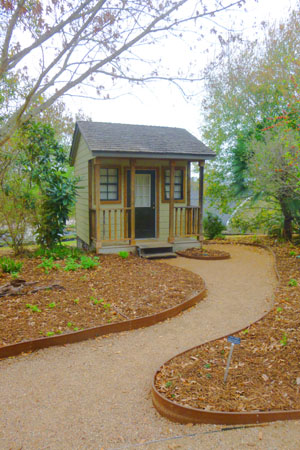
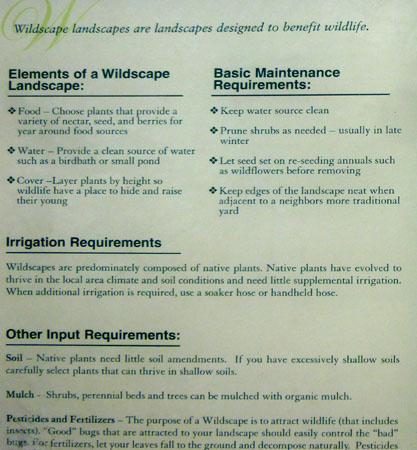
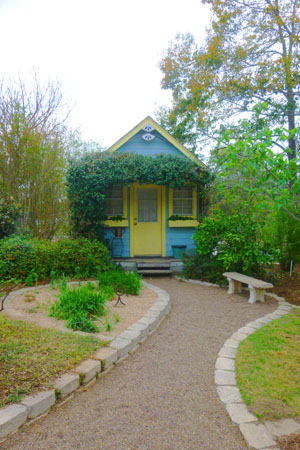
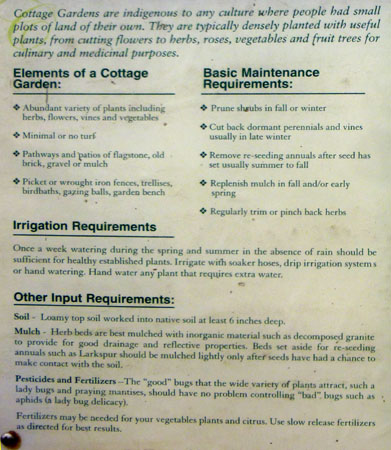
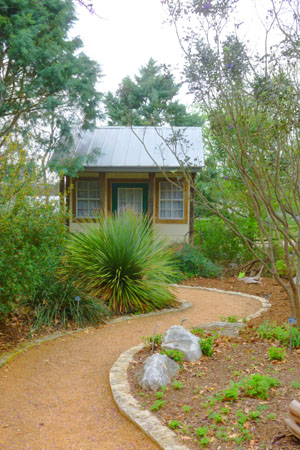
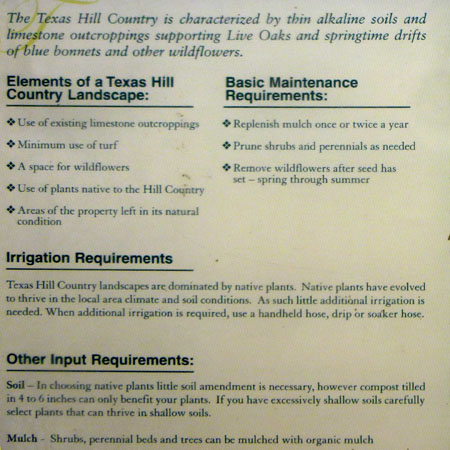
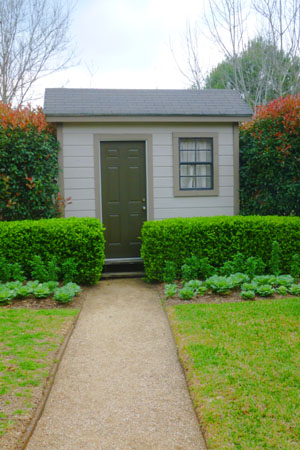
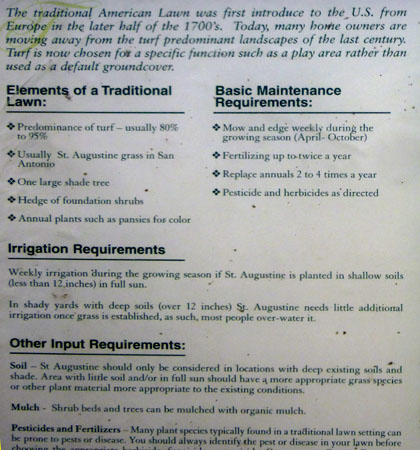
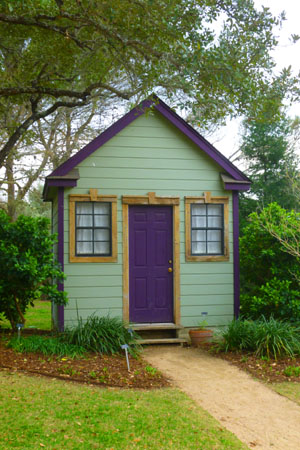
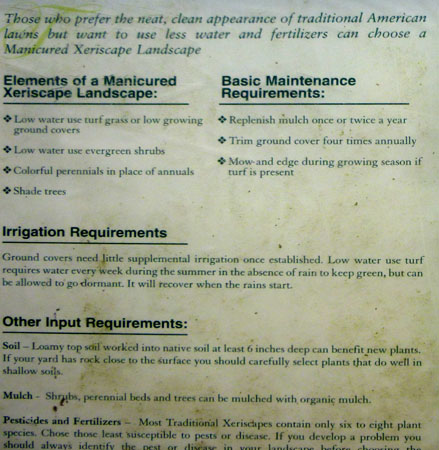
We walked through the Texas Hill Country area and went past the Schumacher House, and then to an area that I don't recall visiting before- Water Saver Lane. WaterSaver Lane features six cottages that demonstrate different types of drought-tolerant landscaping, including one showing what not to plant! Here you can find a variety of landscapes that minimize lawn and include more groundcover, perennial flowerbeds and herbs, native and adapted plants, and patio space. In case you would like to see them, here are the six cottages and the information posted near each one:
|
Spanish Courtyard Garden |
|
|
Texas Wildscape |
|
|
Cottage Gardening |
|
|
Texas Hill Country Landscape |
|
|
Traditional American Lawn |
|
|
Manicured Xeriscape |
|
This brought our visit to the San Antonio Botanical Garden almost to an end. We headed back towards the entrance, passing a new fountain on the way. We went back through the carriage house and stopped in to the gift shop. Then it was back to Prudence's house.
Our Lady of the Atonement Catholic Church
|
 Our Lady of Atonement Catholic Church |
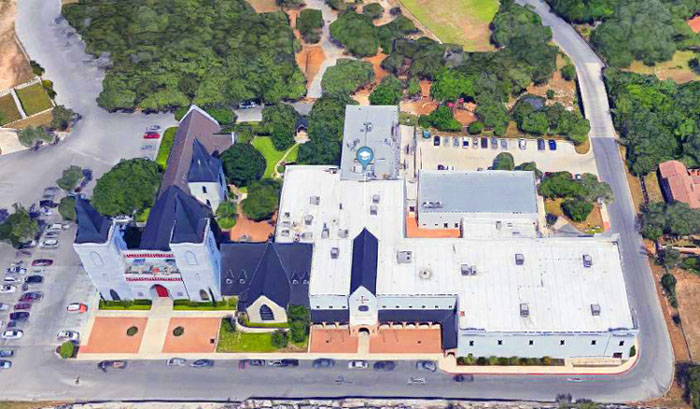
We parked in the lot on the east side of the church, and then started wandering around the complex. Not everything was open, but we managed to see quite a bit- especially me, as I found a way into the chapel balcony.
|
One reason the church is unusual is that it has been caught in a conflict between the archdiocese, which wanted to hold on to the Northwest Side parish that worships in the Anglican tradition, and the Personal Ordinariate of the Chair of Saint Peter, which oversees about 40 such Catholic parishes in the United States and Canada that follow Vatican-approved Anglican liturgy. As it turned out, less than 60 days after our visit, the Vatican removed the church from the Archdiocese of San Antonio and moved it to a special Catholic diocese based in Houston- apparently at the express direction of the Pope.
|
Atonement had been the first Catholic congregation in the nation to be named a Pastoral Provision parish by the Vatican and thus allowed to worship in Anglican traditions. The Ordinariate is one of only three such dioceses in the world, created for former Anglicans. Phillips, married and the father of adult children, was ordained a Catholic priest at the founding of the church, but will now cease being its priest.
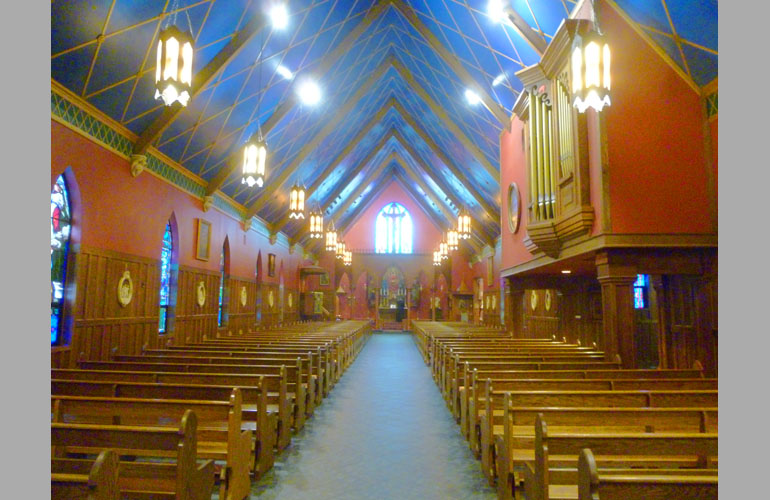
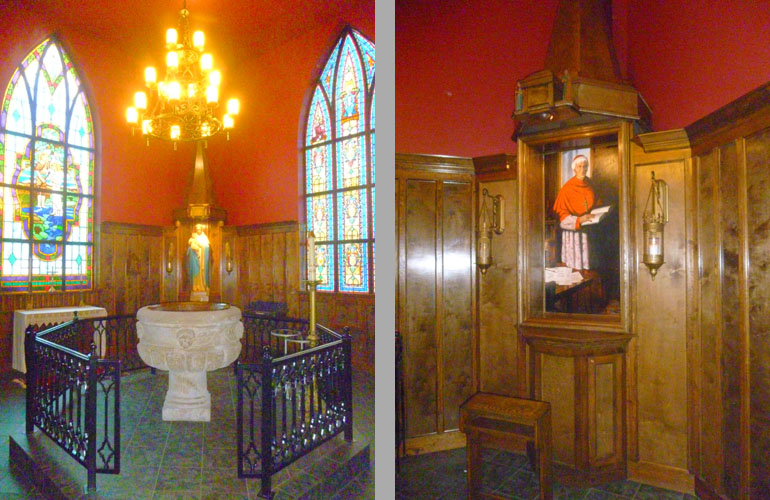
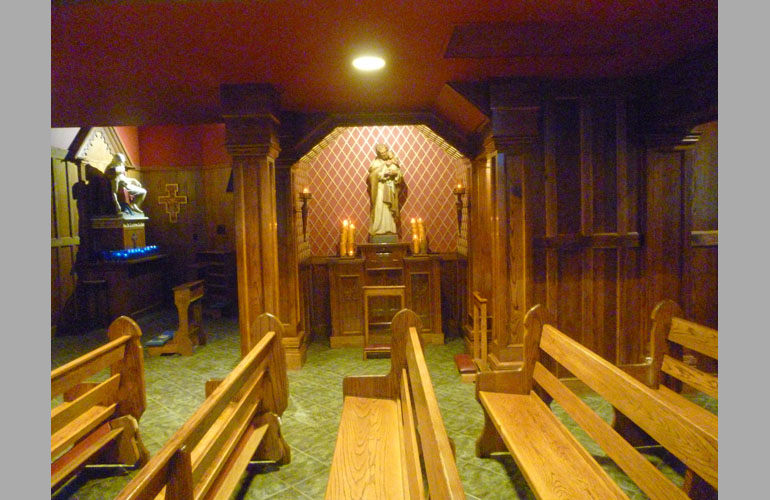
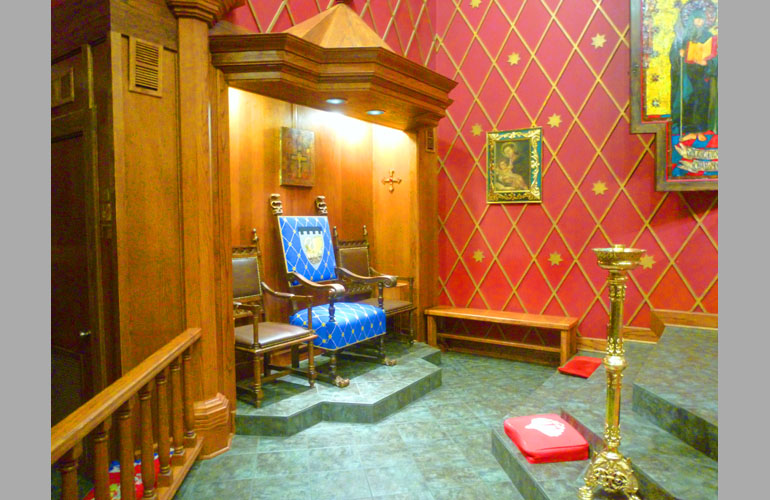
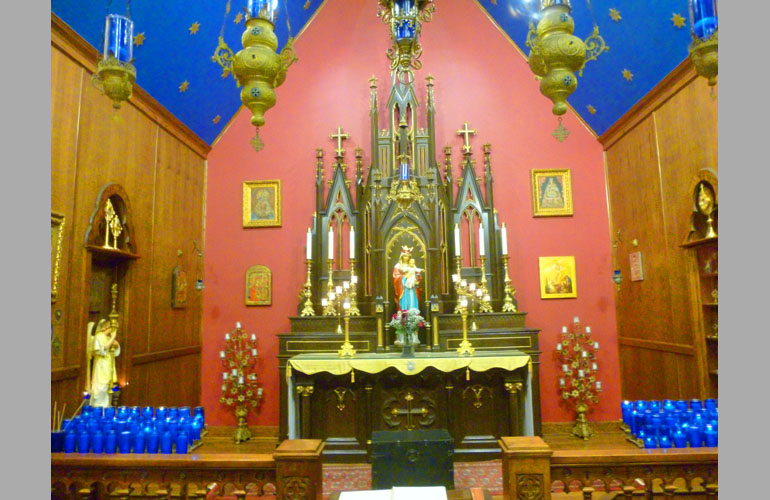
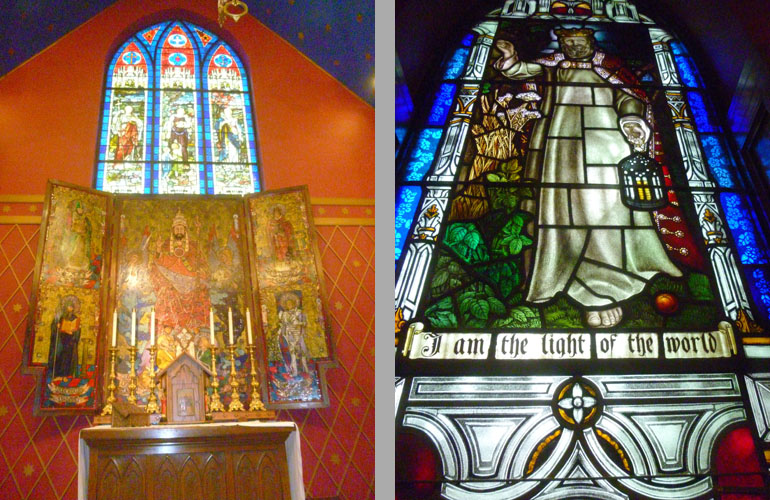
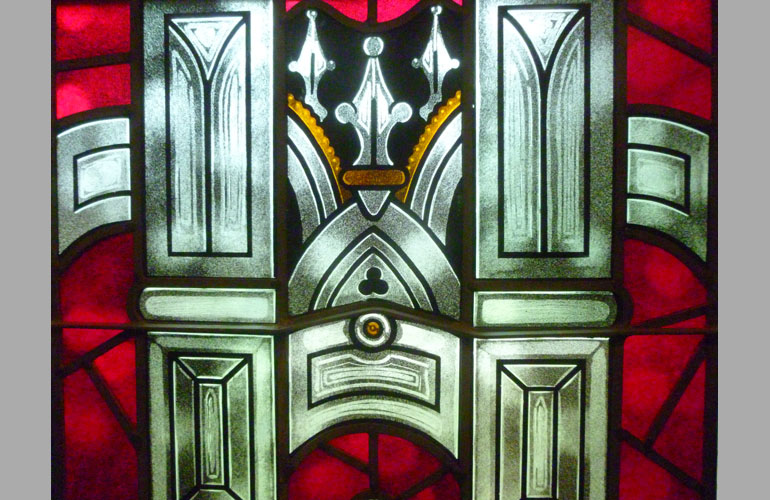
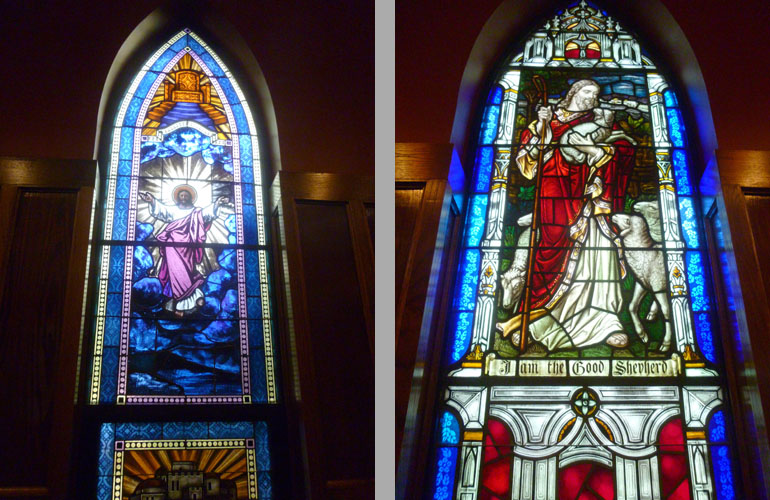
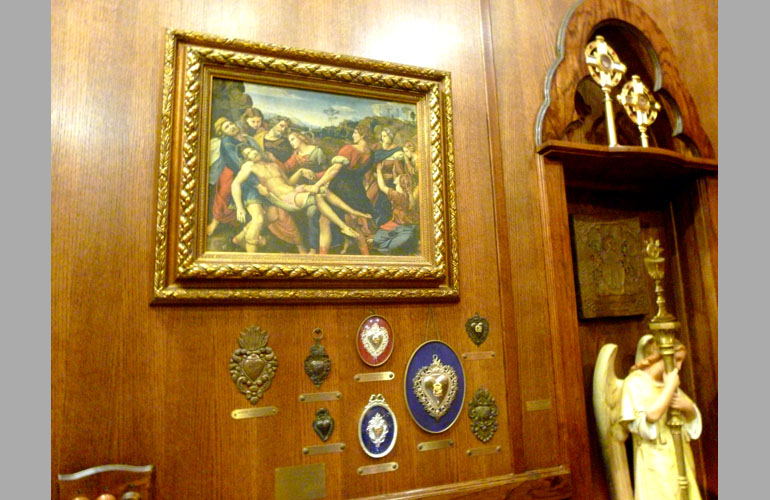
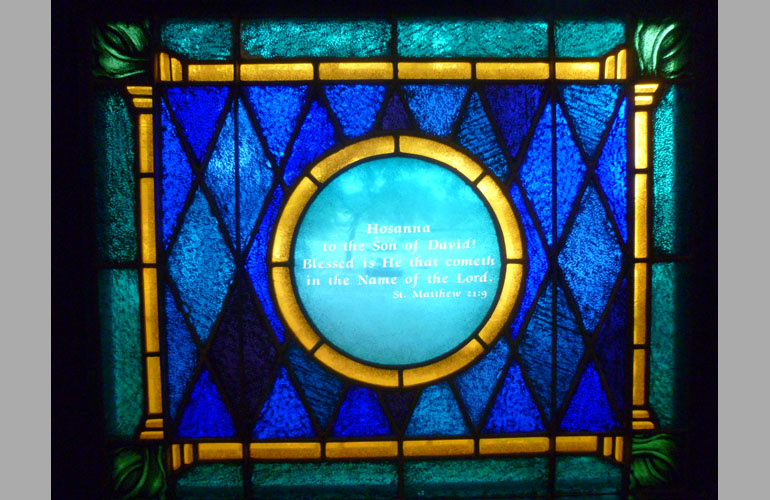
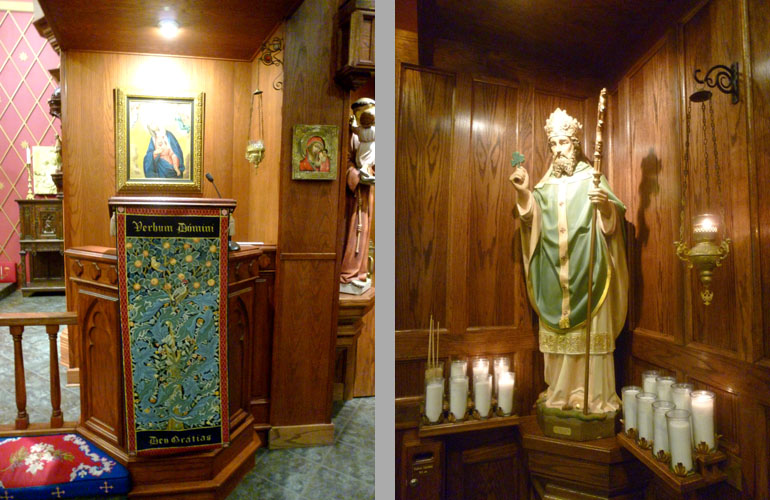
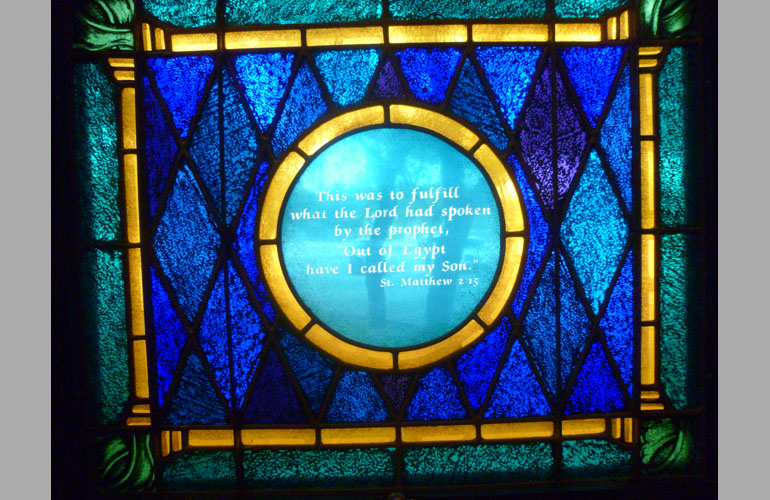
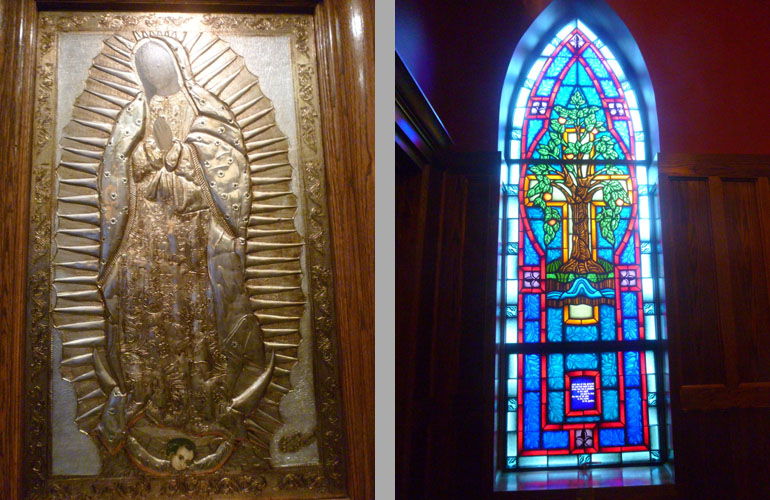
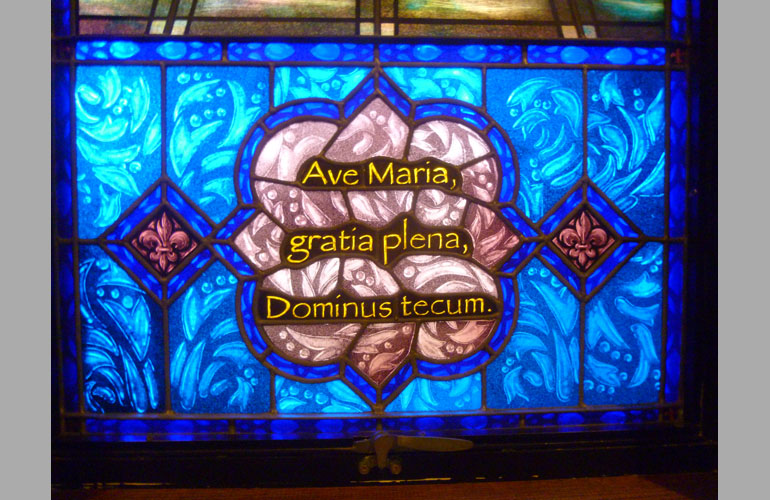
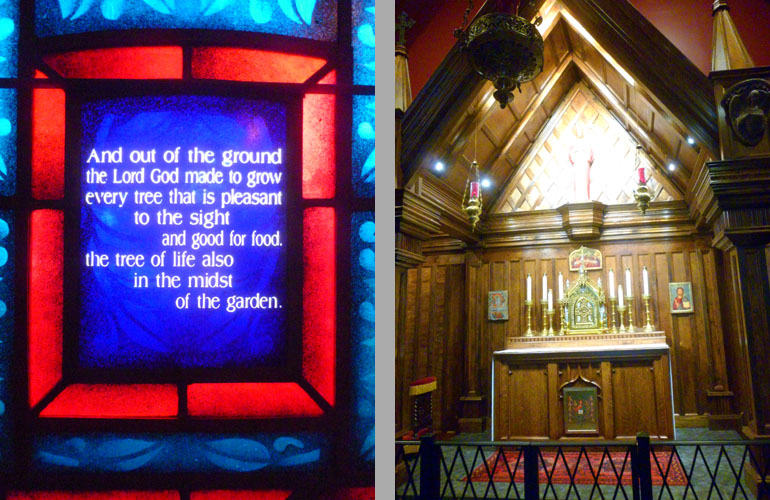
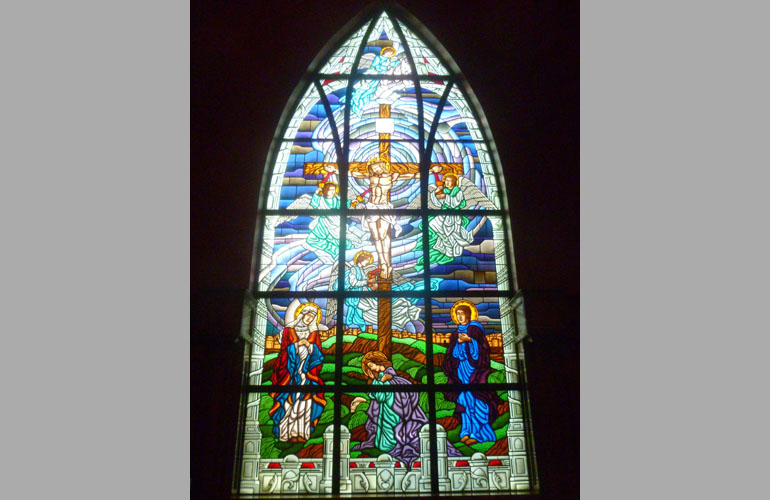
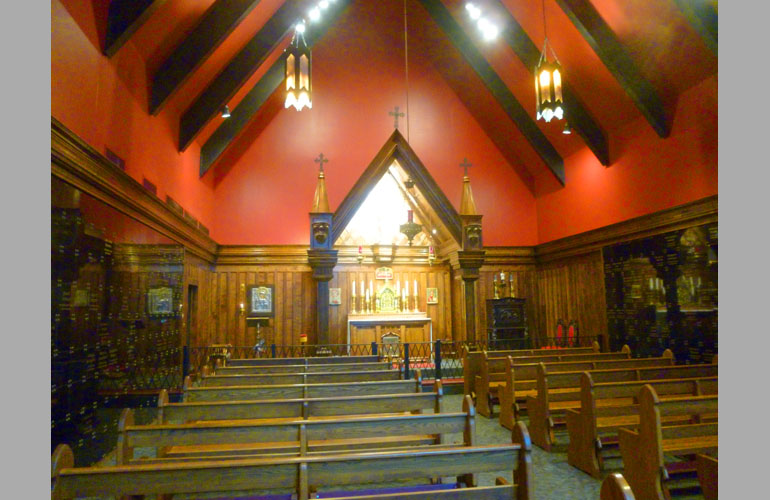
Along with some other visitors, we were able to get inside the church's two chapels to have a look around and take some pictures. I have no idea what many of the icons, statues, and other decorative elements mean, though (not being a Catholic and all).
|
|
So since I can't really describe each of the pictures to you in detail, we thought that just letting you look through them, and appreciate their beauty or interest, would be the best thing to do.
And the best way to do that is to present them to you in a slide show. That show is at right. As with all the slide shows in this photo album, you can use the little arrows in the lower corners of each slide to move from one to another, and you can track your progress through the slides by referring to the index numbers in the upper left.
We hope you enjoy looking around the Our Lady of the Atonement Catholic Church!
The rest of our visit here in San Antonio was really pleasant, and we spent as much time as possible just hanging out with Prudence, Ron, and Guy- as we always do when Prudence extends her hospitality to us.
You can use the links below to continue to another photo album page.
|
March 8-26, 2017: Our Spring Trip to Fort Lauderdale |
|
January 27-30, 2017: Guy Visits Us in Dallas |
|
Return to the Index for 2017 |