|
August 6 & 8, 2020: Two Birthdays |
|
March 2-17, 2020: Our Spring Trip to Florida |
|
Return to the Index for 2020 |
As you learned on the previous page, while we were in Florida in early March, everything began to fall apart, as I am sure that anyone reading these pages will remember. In our last few days in Fort Lauderdale, restaurants began closing early or permanently, and there was talk of states limiting travel across their borders. So we thought it best to head home a bit early, and begin to sequester at home we did this for eight weeks, rarely going out at all.
Our San Antonio friends, particularly Guy Blair, were doing essentially the same thing, although because he works with the sick and the elderly, Guy was even more conscientious. Eventually, though, his own work was curtailed as nursing homes became a focal point for virus spread. While the church and these homes were working out the procedures they would have to follow going forward, Guy took advantage of the lull in his work to drive up to Dallas to stay with us for a while.
We thought this a safe activity, as the three of us had been sequestering and masking from the beginning, and in the past two months none of us had showed any symptoms at all. We thought that we would just spend time together, with our only outing being to the Dallas Arboretum which, by then, had instituted its own procedures. These involved making most walkways one way, closing some of them to maintain distancing, and limiting attendance. The only pictures we took during Guy's visit (other than pictures of the cats, which will be on this year's Pets Page) were taken on our outing to the Arboretum. This would be our first outing to anything but a grocery store since our return from Florida and, as it turned out, our only outing of any kind until much later in the year.
Getting to the Dallas Arboretum
We usually go to the Arboretum sometime during "Dallas Blooms!" The Dallas garden had been named by Architectural Digest as one of the "15 Breathtaking Botanical Gardens to Visit This Season" early this year, but that, of course, was pre-pandemic. But we have known for many years how beautiful the Arboretum is at almost every time of the year.
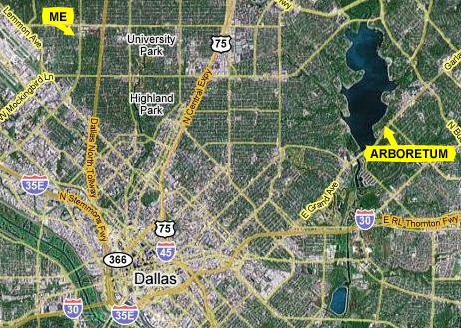 |
The day before Guy arrived (a few days before our actual visit) I went online and made reservations for the timed entry process that is now part of the Arboretum's visiting procedures. Another requirement, of course, is that we be masked whenever we are in the entry plaza or in close proximity to other guests. That didn't happen often, as the Arboretum is also limiting (quite severely) the number of people in the gardens at any one time.
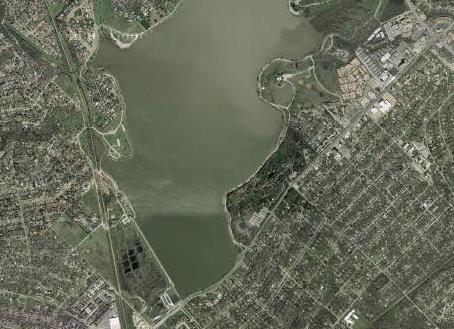 |
The bike path used to cross the top of the dam, but for one reason or another, the bike path was rerouted some years ago, and now it goes through some parkland and playing fields south of the dam, across the spillway, up Garland Road for a ways, and then back north along the lake shore.
You can also see a closer view of the Arboretum in this picture, and can begin to pick out some of the pathways through the gardens.
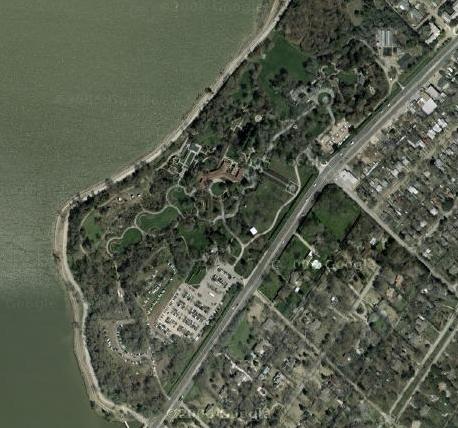 |
You can also see the maze of pathways that criss-cross the gardens.
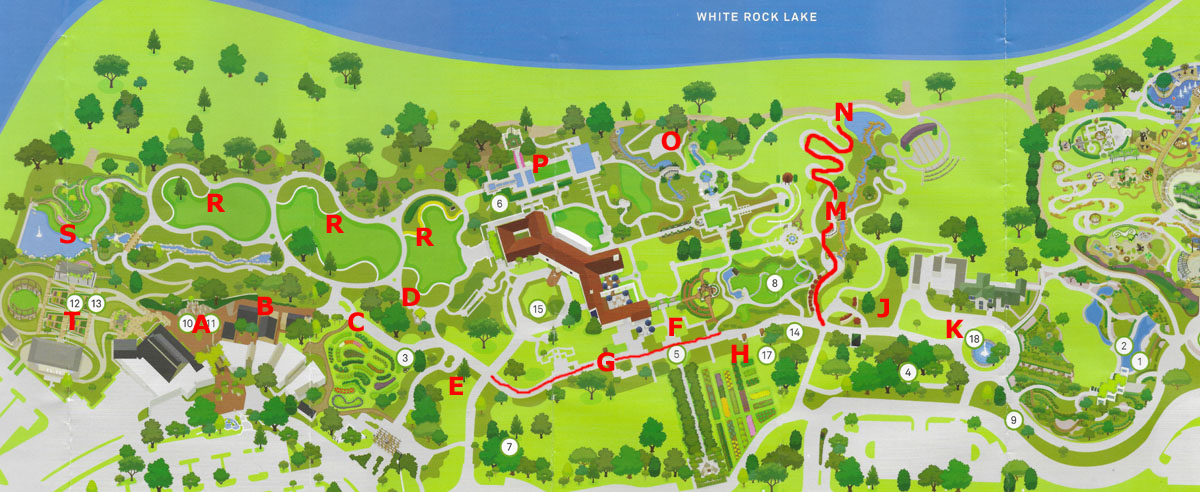
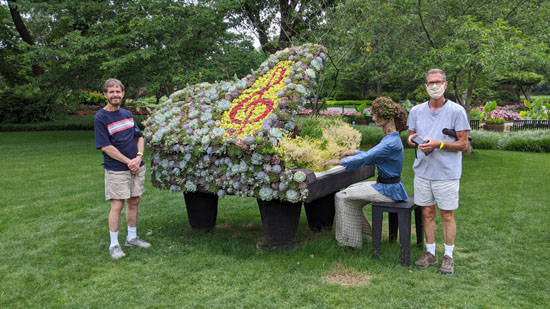
Today we are just going to wander around mostly following the one-way route that the Arboretum has established through the gardens to help minimize the opportunities people would usually have to encounter one another. This year, for Dallas Blooms!, there are supposed to be six musical-themed topiaries for us to find and photograph. I will be presenting these as we encounter them. Below is a map of the gardens; I won't try to mark our exact route, but I will try to mark the locations mentioned in my narrative, and the locations of the six topiaries (assuming that we find them all).
|
We began, as we always do of course, by coming in to the Arboretum through the Ginsburg Family Plaza.
The Ginsburg Family Plaza (A)
|
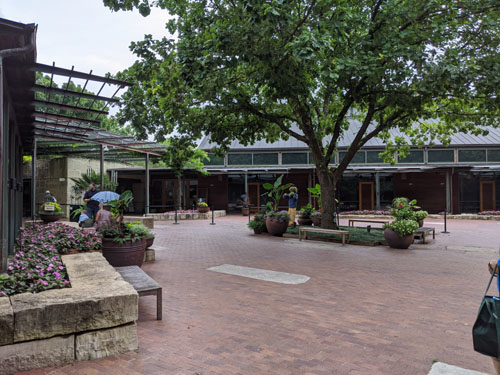
The plaza is home to the Trammell Crow Visitor Education Pavilion. Built with native Texas limestone and wood and copper sheathing, this structure serves as the gateway to the gardens. Upon entering, visitors find themselves in the Ginsburg Plaza that also features the Junkins Fountain; the plaza is enveloped by a menagerie of seasonal flora. This entryway gives visitors a glimpse of the 66 acres of stunning vistas ahead. There are kiosks here where guests can purchase admission, parking and memberships. On occasion, live choral performances and other live music take place just inside the ticket booth, welcoming guests.
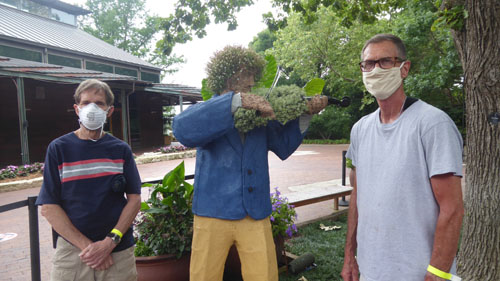
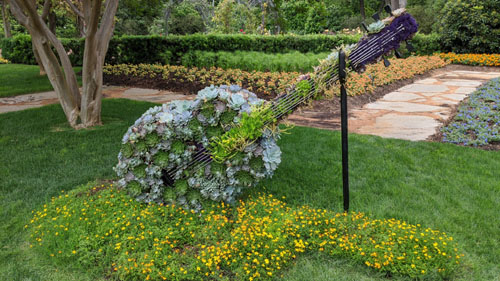
It was here that we found the first of the six topiaries- this one of a violinist (not so hard to figure out). Also, we encountered here our first example of the garden's procedures for the pandemic; guests were requested to go from the entry plaza to the north onto the Paseo de Flores, rather than head south towards the lake to A Tasteful Place.
|
|
Along the Paseo de Flores
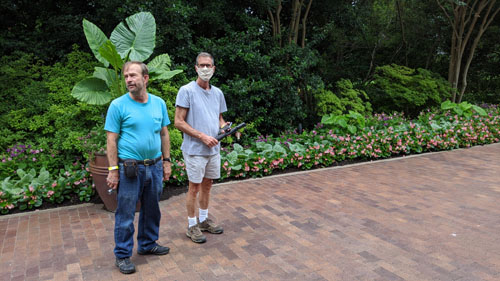
Pre-pandemic, our route through the gardens would take us first to A Tasteful Place, off to the left from the entry plaza. But the Arboretum is now channeling visitors along the Paseo first, kind of taking them on a counterclockwise route through the Gardens. As we walked along, we passed one of the Price sculptures, a few of which are still in the gardens from an exhibition last year. We also walked out towards the Jonsson Color garden, although we could see that the general flow was along the far side of the area back to the entrance.
|
|
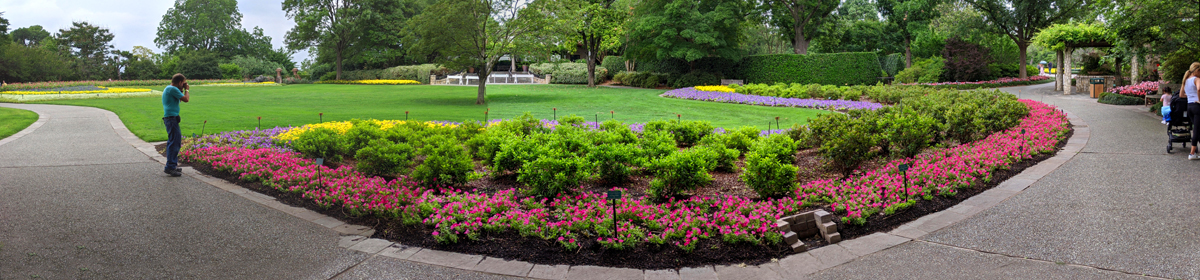
A short way out to the south side of the Color Garden (D), I took a series of three pictures with my phone, and then stitched them together into this panoramic view:
|
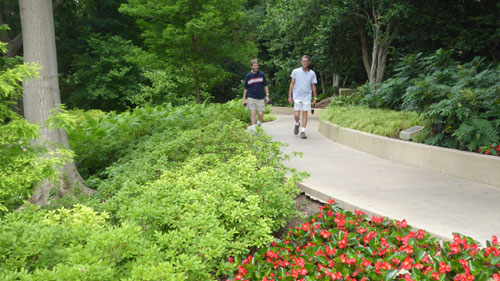
Then we returned to the Paseo by walking around on the walk at the right side of the panoramic view above, past the lady with her kids and to the Paseo in the distance. As I followed Fred and Guy back out to the Paseo, I thought I would try a movie with my phone. I might point out that since getting my Google Pixel 3a phone late last year, I have discovered it has a very good camera and that it takes much better movies, what with its image stabilization, which does a lot to minimize the usual shaking I've become used to in the films made with my little camera.
|
|
Anyway, in the movie at left, I am following Fred and Guy past the woman and her kids, and past the little stone shelter to our right and then out to the Paseo again (where we realized we should have gone back the way we came.
Once out at the Paseo, Fred found some additional plants to photograph, something he did throughout the day. Rather than give you a huge number of thumbnails to click on (although in time sequence they would be in little groups up and down this page), I think I will wait until the end of our visit, and then give you a slideshow of the best of them.
Back out on the Paseo, we crossed to the other side and found the second of the floral topiaries that were on display in the garden today.
|
|
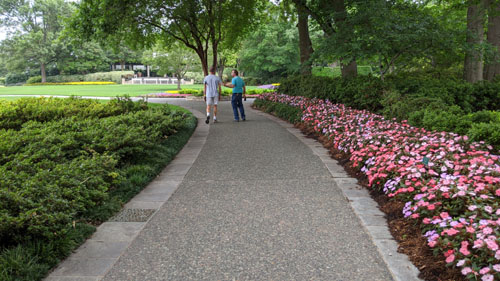
We continued walking east along the Paseo, following the route the Arboretum had marked out. Along the way, the beds of plants and flowers- particularly those near the DeGolyer House and the little restaurant that is attached to it- were very pretty, even for this late in the season and after the end point of Dallas Blooms! when the garden is at its prettiest. The pictures below were all taken along path (G).
|
|
|
|
|
|
At the Alex Camp House
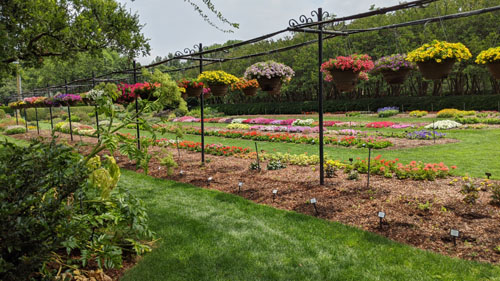
We continued walking east along the Paseo, passing the Arboretum's Test Beds as well as another of the topiaries.
|
|
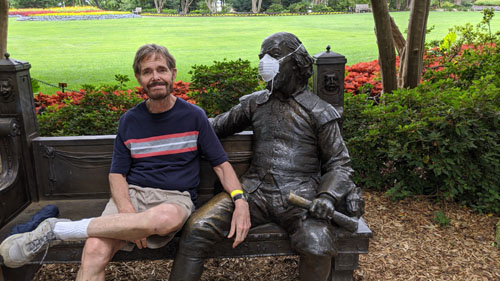
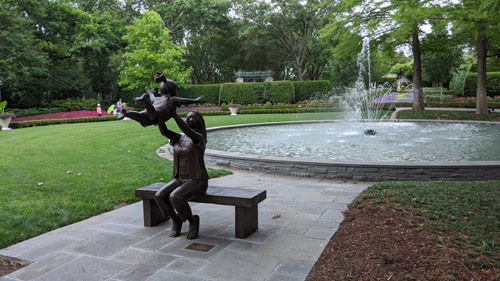
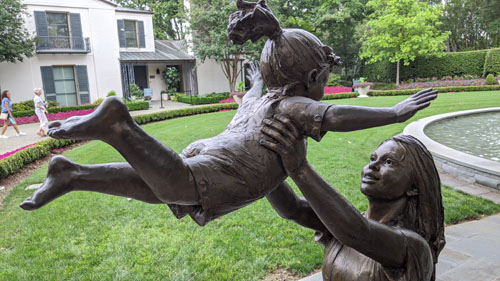
The Alex Camp House is the other former private residence that was donated to the Arboretum during the years of its early expansion. It is not so large as the DeGolyer House, but has even better views out across White Rock Lake. In front of the house there is a circular pool with a fountain in the middle (K). This used to be the end of the Paseo, but now the walk continues around the Lay Family Garden (which used to be the easternmost garden at the Arboretum), to the new Rory Meyers Children's Garden. Here at the fountain we found another Price sculpture from last year's exhibit, this one entitled "Time Together", and it is shown in the pictures below.
|
|
From last year's exhibition brochure, here are Price's comments about this particular piece:
| "So many times in our busy and responsible lives as adults we forget about Thoreau's advice to "simplify, simplify, simplify". Children remind us of that as we spend time with them appreciating the little things. Like looking for four-leaf clovers in the lawn, like watching the fuzzy caterpillar inch along, and also simply laying on our backs as we watch the clouds and the birds sail by. Have a seat with these two as they enjoy their 'Time Together'." |
The Nancy Rudchik Red Maple Rill
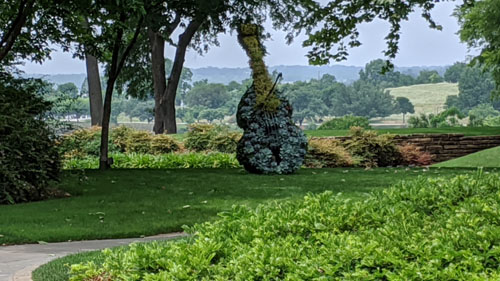
Backtracking just a bit along the Paseo, we came to the entrance to the Nancy Rudchik Red Maple Rill, which is a "named garden" here at the Arboretum that stretches down a slope from the Paseo all the way to the northern boundary of the Arboretum at White Rock Lake. The cello topiary was just to our right as we entered the top of the Rill.
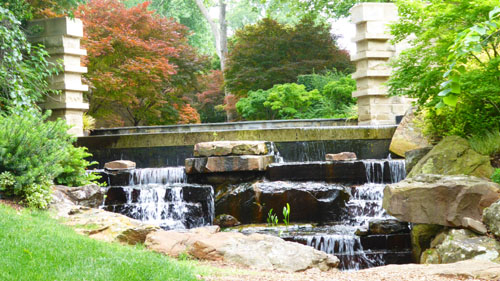
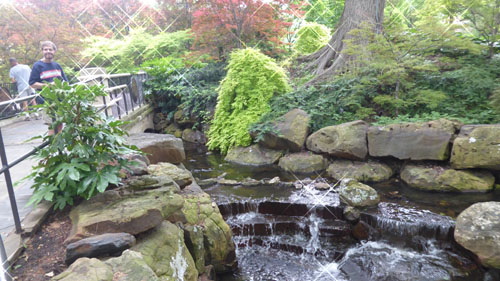
The most impressive feature of this two-acre garden- aside from its fabulous collection of over 80 varieties of eponymous Japanese Maples- is the incredible artificial stream that flows down the slope from the Paseo to White Rock Lake.
|
|
|
|
The artificial stream is just incredible and, as I said, Fred would love to have the resources to have something like it, as it is certainly a million-dollar water feature. The water eventually winds up in a lagoon (N) at the bottom of the Rill. As we walked down to that lagoon, we took a number of excellent pictures:
|
|
Continuing on brought us to the east end of A Woman's Garden.
A Woman's Garden (P)
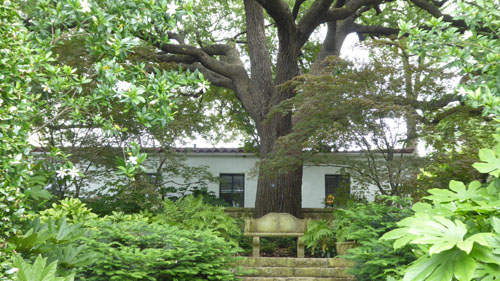
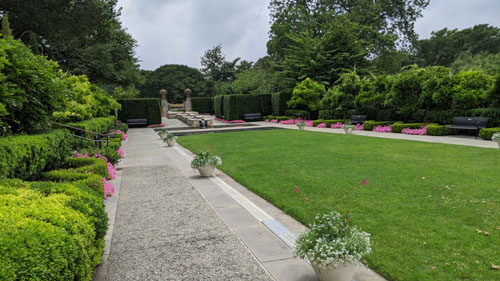
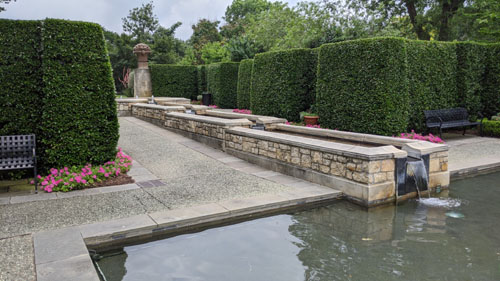
A Woman's Garden is relatively new, and features a beautiful infinity pool at its east end, rectangular lawns, hedges, flowers, and benches in the middle, and a beautiful stairstepped fountain and pocket garden at its western end. A Woman's Garden is located just north of the old DeGolyer House (the DeGolyers being the earliest patrons of the Arboretum, and to which they donated their house in their will) and right alongside White Rock Lake. Looking up at the house, visitors can see what is reputedly the Arboretum's largest tree.
Here are some of the pictures we took as we walked westward through A Woman's Garden:
|
|
|
|
The Jonsson Color Garden (R)
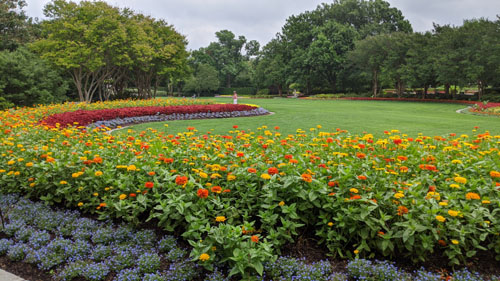
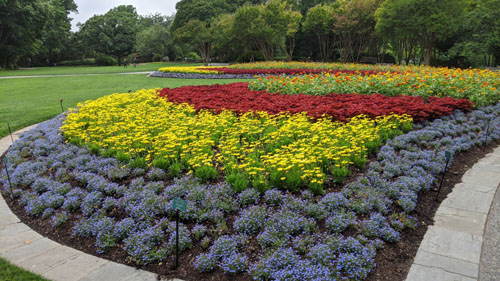
The Jonsson Color Garden is always a pleasure to visit; it is basically a series of three open lawns surrounded and divided by walkways and bordered by seasonal plants in huge beds.
|
|
Designed by Naud Burnett II, the 6.5-acre Margaret Elisabeth Jonsson Color Garden features large, sweeping beds of seasonal flowers and plants and is a popular place for families and picnics. It is also one of the many locations for holiday displays throughout the year.
|
|
At the west end of the series of lawns there is a section devoted to plants suitable for the drought-prone Texas summers; it is always an interesting exhibit. There are also beds of seasonal plants here, such as these beautiful daffodils.
As we were going around the north side of one of the elliptical lawns, I stopped to take a series of pictures that I then sketched together into this panoramic view:

The Three Sisters Lagoon and Fountain (S)
|
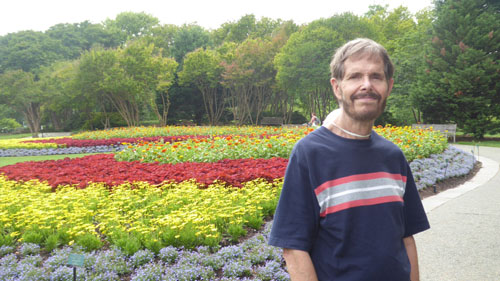
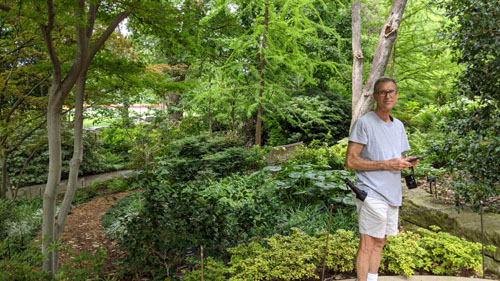
As we continued west from the Color Garden, we crossed the path that leads up into the Fern Dell, and Guy walked a ways up it to see what the Dell looked like, and that's where I snapped his picture.
A few years ago, there used to be a bridge at the west end of the Color Garden and Fern Dell that led directly back up to the entry plaza, bypassing an area of land that the Arboretum used for maintenance activities. Then the Arboretum received a gift that enabled it to redevelop this "wasted area" into two new areas for the Gardens. These two areas were a named area at the extreme west end of the Arboretum- "A Tasteful Place". More about that in a moment.
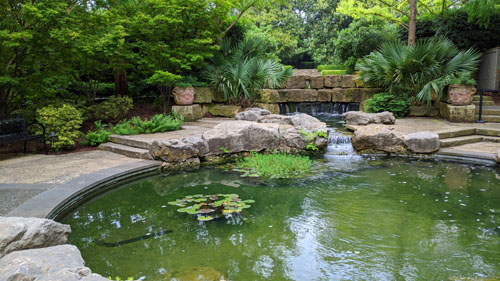
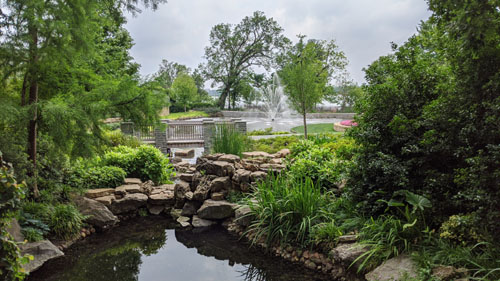
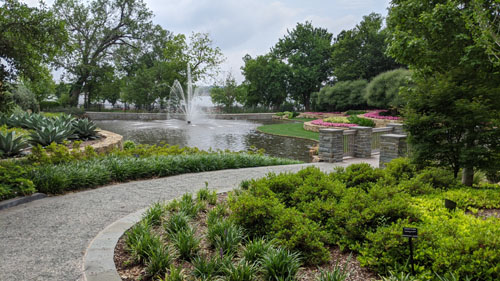
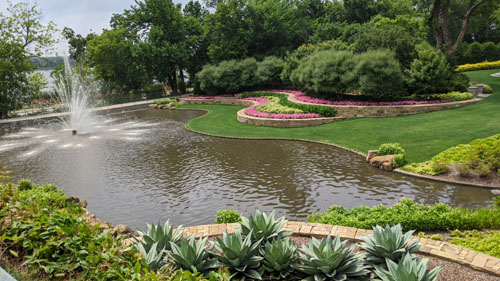
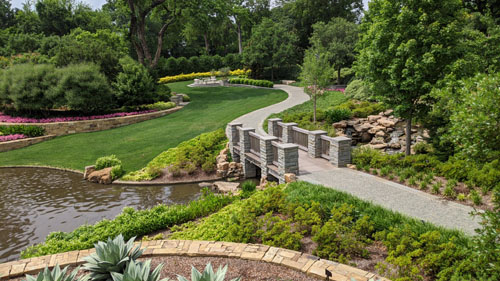
Between A Tasteful Place and the Color Garden/Fern Dell, the Arboretum removed the old bridge and extended the artificial stream that ran through the Fern Dell further down towards White Rock Lake and created a lovely lagoon and fountain with various walks surrounding it, and some new stone bridges. What had been a rather unattractive catchment for the Fern Dell's stream was transformed into an open, sunny space ideal for families. Various walks lead from the Color Garden, across and through this new area, and eventually up to A Tasteful Place.
Just look at some of the pictures we took in this area today and you will see how beautiful an area it really is:
|
|
|
|
A Tasteful Place (T)
Our final stop at the Arboretum today was in an area that we usually visit first. It is the Arboretum's newest garden called "A Tasteful Place". This 3.5-acre, potager garden, pavilion, and kitchen is inspired by the movement toward growing and eating fresh, sustainable, locally-grown food. There are three daily tastings made with seasonal produce, and the pavilion offers cooking demonstrations.
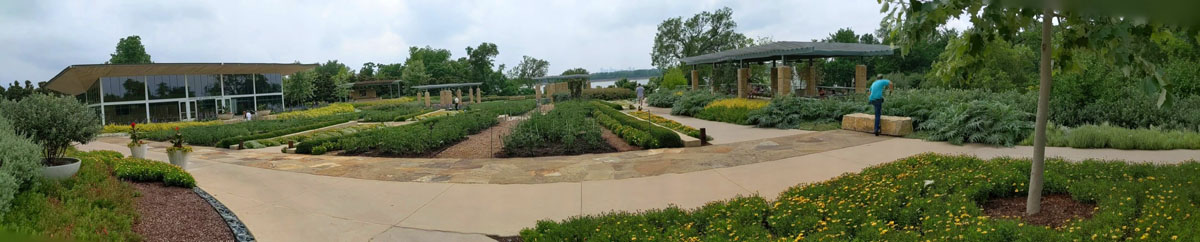
It was here, in A Tasteful Place, that we found topiary number six- this one in the shape of a harp. These gardens, while small, are very nice, flanked on the west by the Pavilion and Tasting Terrace and on the east by the pergola overlook down into the other new part of the garden where there is a fountain and watercourse. Most of the plants here in A Tasteful Place are either herbs or actual food plants, although they are manicured and don't look much like a farm.
Our stop in A Tasteful Place ended our pandemic visit to the Arboretum (but not Guy's visit, which continued for another day). We were all happy to get out of the house, something we have not done (save for trips to the grocery store) since we returned from Florida in mid-March. It was, in a word, exhilarating.
Plant and Flower Pictures
|
To view the slideshow, just click on the image at left and I will open the slideshow in a new window. In the slideshow, you can use the little arrows in the lower corners of each image to move from one to the next, and the index numbers in the upper left of each image will tell you where you are in the series. When you are finished looking at the pictures, just close the popup window.
And that's it for today's pictures from the Arboretum.
You can use the links below to continue to another photo album page.
|
August 6 & 8, 2020: Two Birthdays |
|
March 2-17, 2020: Our Spring Trip to Florida |
|
Return to the Index for 2020 |