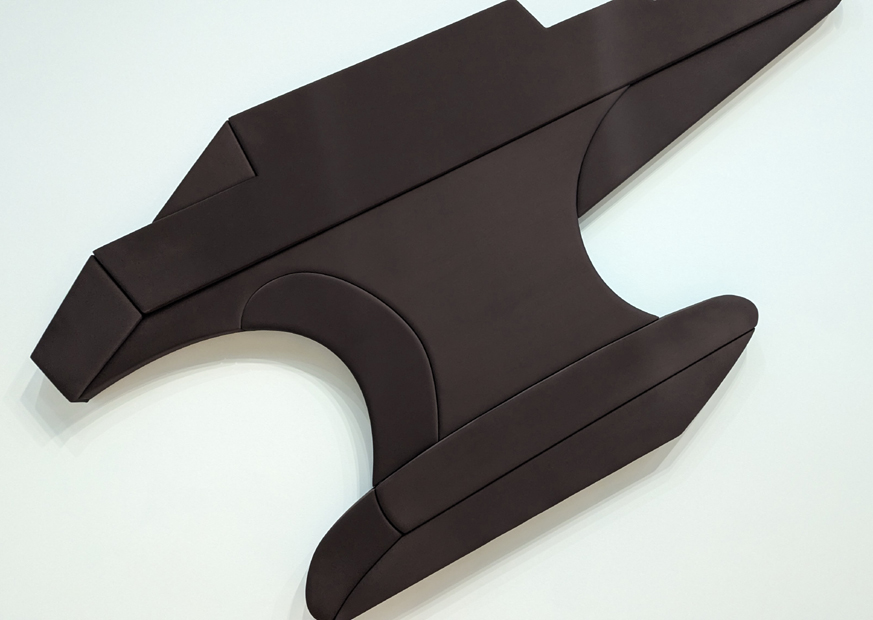
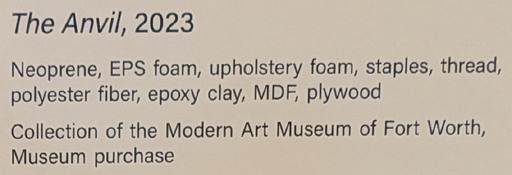
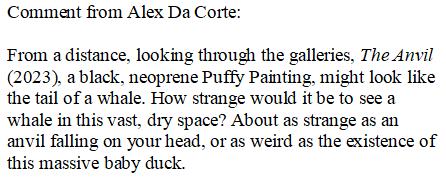
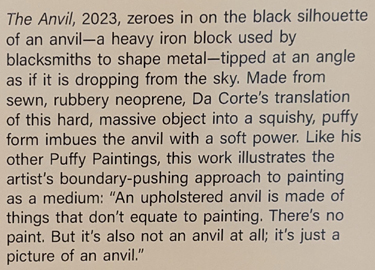
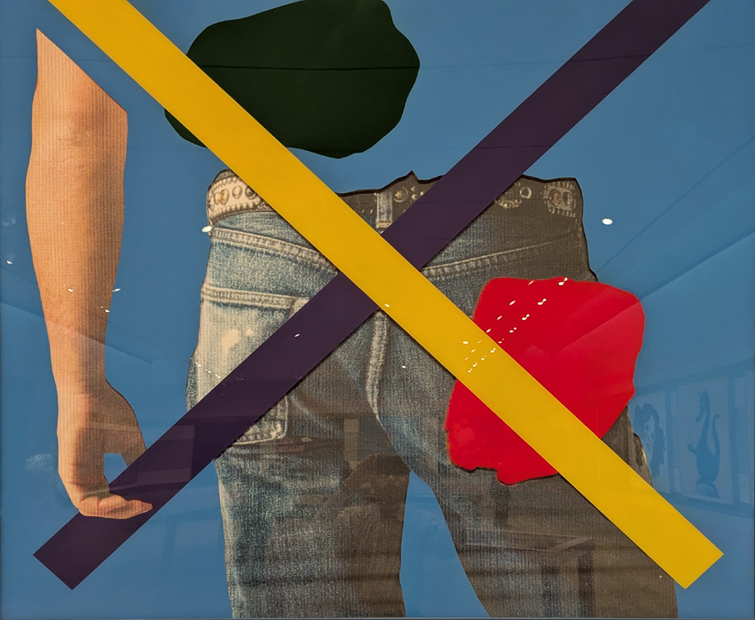
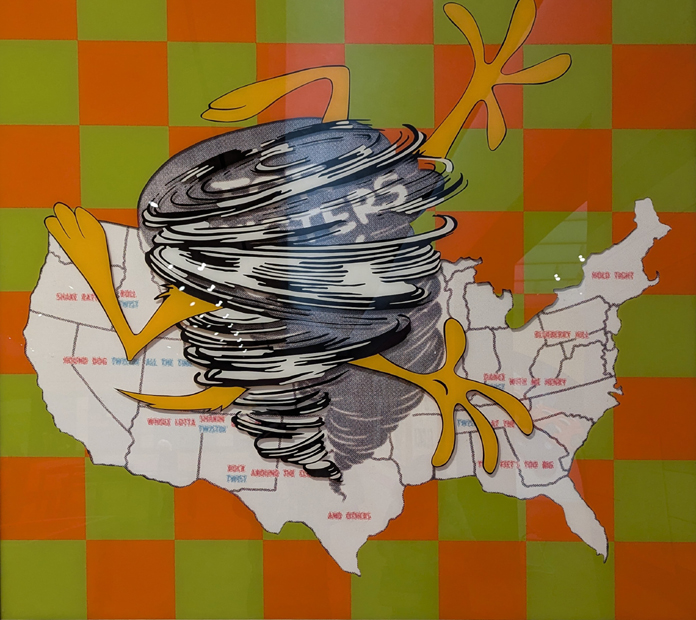
August 25-26, 2025
Visiting With Prudence in Fort Worth
Prudence and Ron, along with Karl, Nancy, and Ron's sister Lori came up to Fort Worth on Monday the 25th for Prudence's birthday. I believe that Prudence also needed to stop in an see Soon Y. Warren, one her artists who lives in West Fort Worth. While Prudence asked Fred and I to stay at their hotel with them both Monday and Tuesday night, we could only stay with them on Tuesday as I had a medical followup on Tuesday morning.
We did come over Monday to have dinner with them, and then we returned on Tuesday to go to the Modern Art Museum and the Amon Carter Museum and to have a birthday supper with the group and some other guests. We stayed that night with them and returned to Dallas on Wednesday.
On this page, I'll be putting the pictures taken at the hotel, at both dinners, and in both museums.
Dinner on Monday
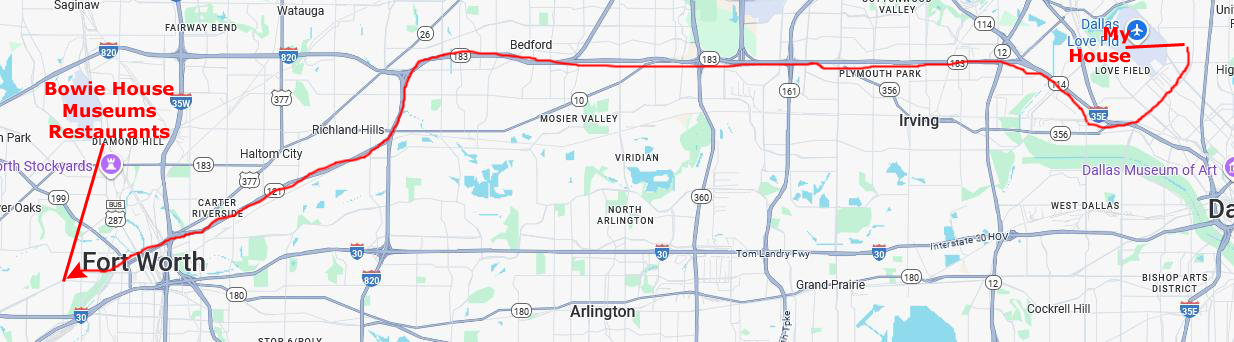
Monday afternoon we headed over to Fort Worth to meet everyone at
the Bowie House-
a boutique hotel near the Museum District on Camp Bowie Boulevard just west of downtown Fort Worth.
The drive over was pretty normal, and it took us about a half hour to get over to the hotel. We found a parking spot nearby, and met up with Nancy in the lobby.
Lori, Nancy, and Prudence
Nancy was having a snack in the lobby bar when we arrived, and after spending a few minutes talking with her, the others began to arrive.
Ron's sister Lori was down for a visit, and of course she had come along with them to Fort Worth. Ron and Karl showed up, so there were seven of us when we headed out to supper.
Dinner was to be at Don Artemio's, an upscale Mexican restaurant about four blocks from the Bowie House. Ron and Karl, both of whom have had leg issues from which they are recovering, decided to drive down, while Lori, Nancy, Prudence, Fred, and I decided to walk.
About six-fifteen the five of us started out from the Bowie House, walking down Camp Bowie Boulevard about four blocks and then north a short block.
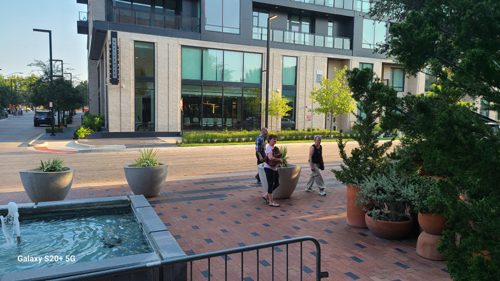
That's the Bowie House in the background; it extends almost a whole block along Camp Bowie.
Fred got to the restaurant first with Nancy, and took this picture of Prudence, Lori, and me arriving.
The restaurant turned out to be very upscale, and many of the Mexican dishes they served were pretty far from Tex-Mex. I have to say the food was quite good and we had a really pleasant dinner.
(Mouseover Image if Video Controls Not Visible) There was a roving singer, and Fred made a short movie of him.
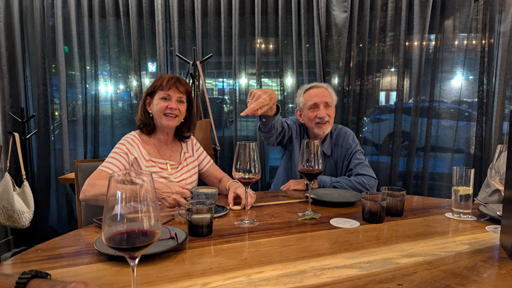
Just as I took this picture of Ron and his sister, he gestured, so the result is bit odd.
Dinner was great, and we returned to the Bowie House afterwards for some conversation before Fred and I headed back to Dallas.
At the Modern Art Museum of Fort Worth
The Modern Art Museum of Fort Worth is the oldest art museum in Texas. Over the years, it has been housed in various buildings within the city.
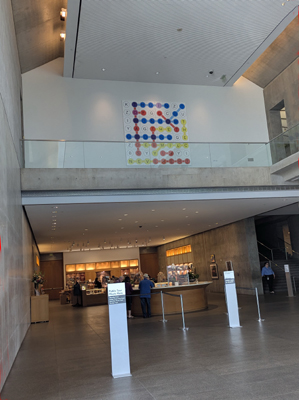
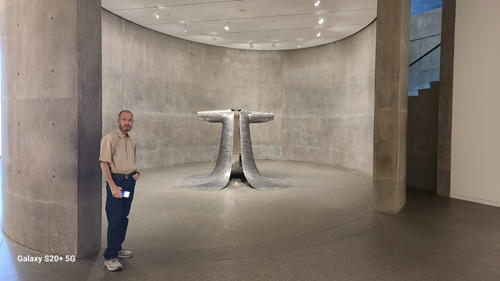
The Lobby
The newest museum building opened at the intersection of Camp Bowie and University on December 14, 2002. Designed by Tadao Ando, this concrete and glass museum features dramatic views of the Fort Worth skyline sitting above a reflecting pool.
The design of the building features soaring concrete cantilevered roof slabs supported by "Y" shaped columns. Below the roof slabs are curtain walls rising 40 feet that enclose the sculpture galleries. A series of baffled skylights and clerestories allow light into the art galleries.
We arrived just after lunch to find Ron and Karl also just arriving at the museum, so we waited with them in the lobby for Prudence, Nancy, and Lori to arrive, as they had decided to walk from Bowie House- about four blocks away.
When everyone arrived, we all bought our tickets for the Museum and then headed up the main stairs to the second floor where most of the galleries are.
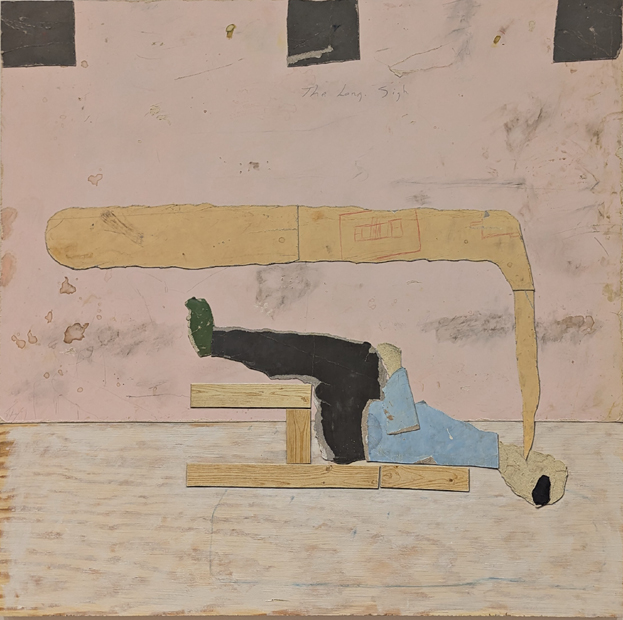
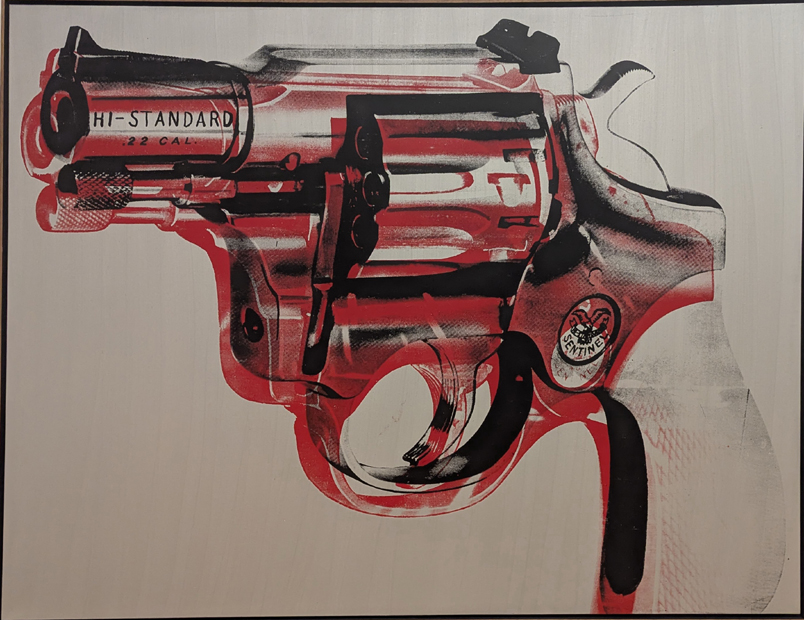
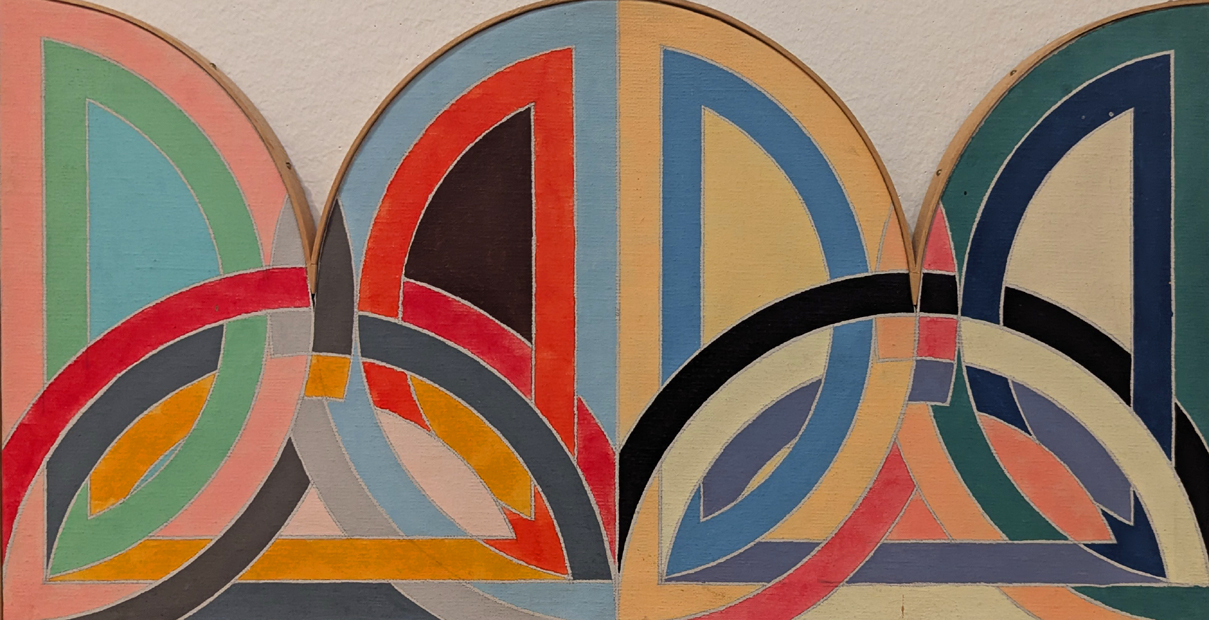
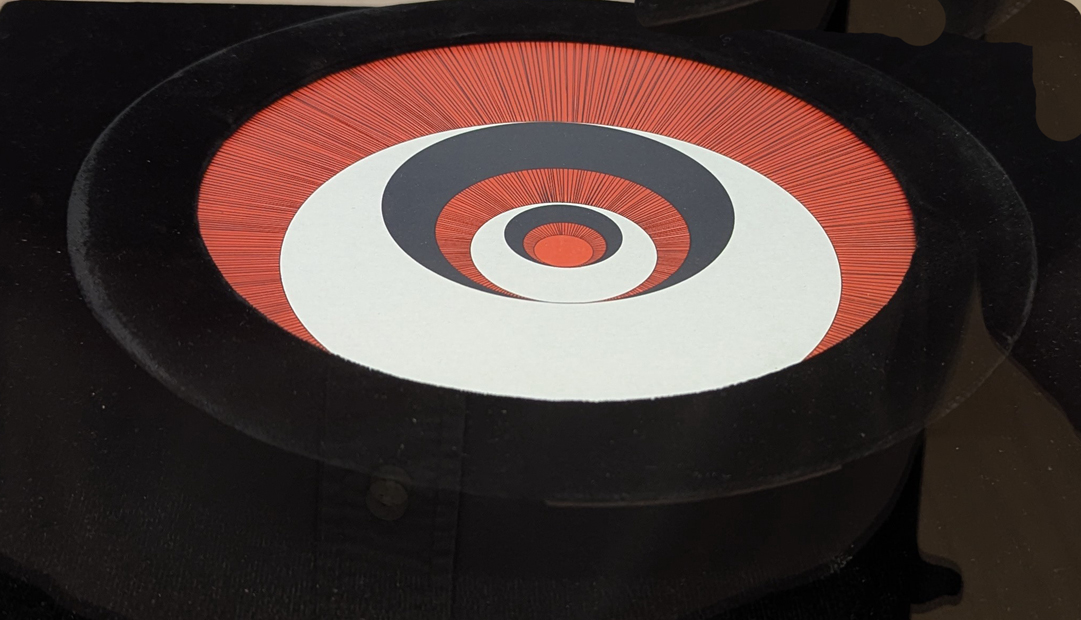
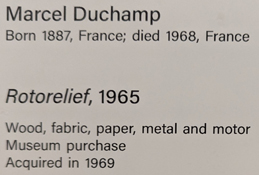
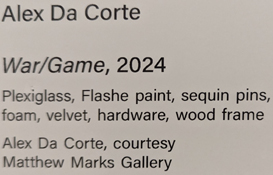
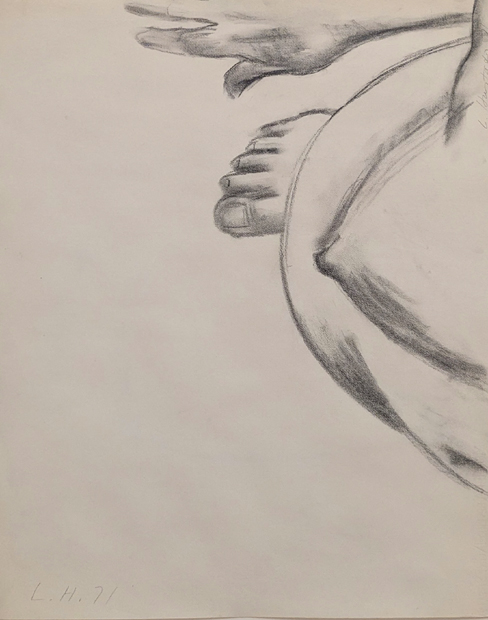
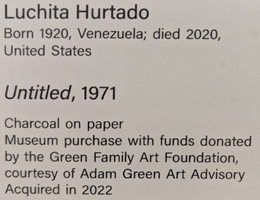
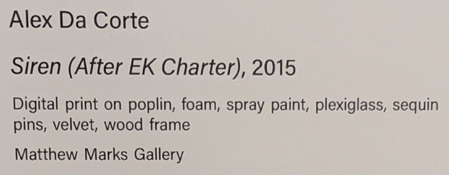
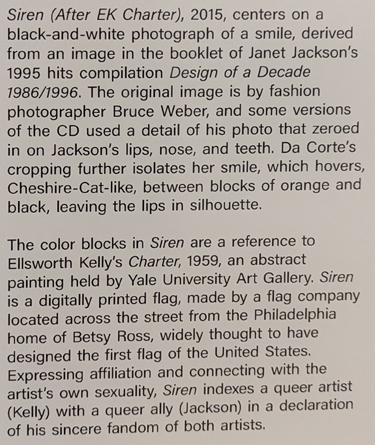
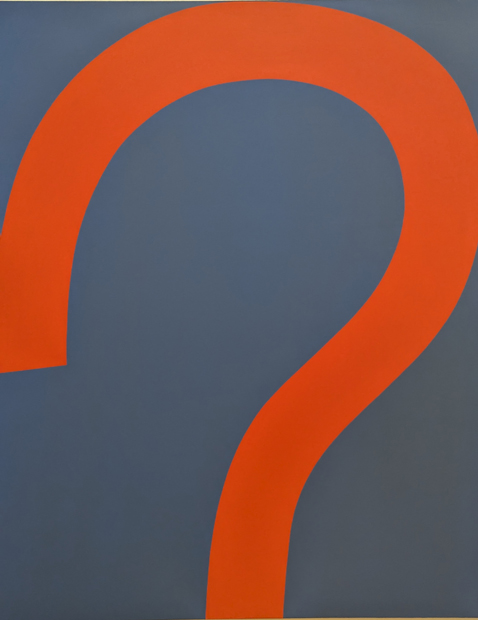
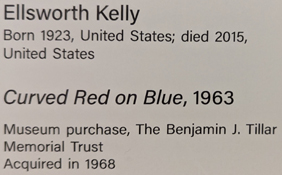
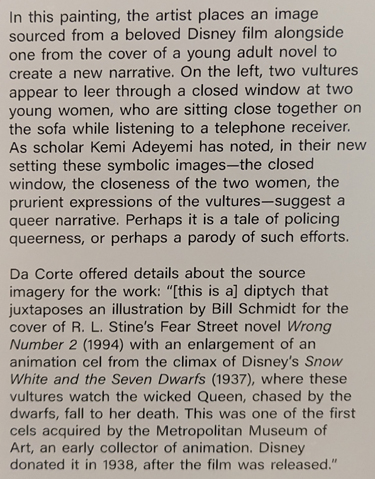
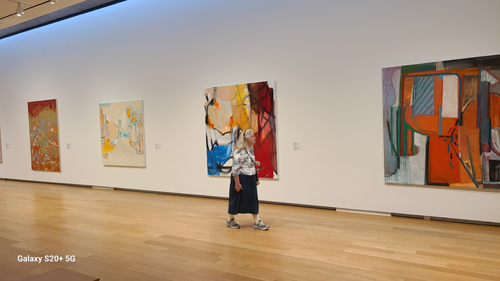
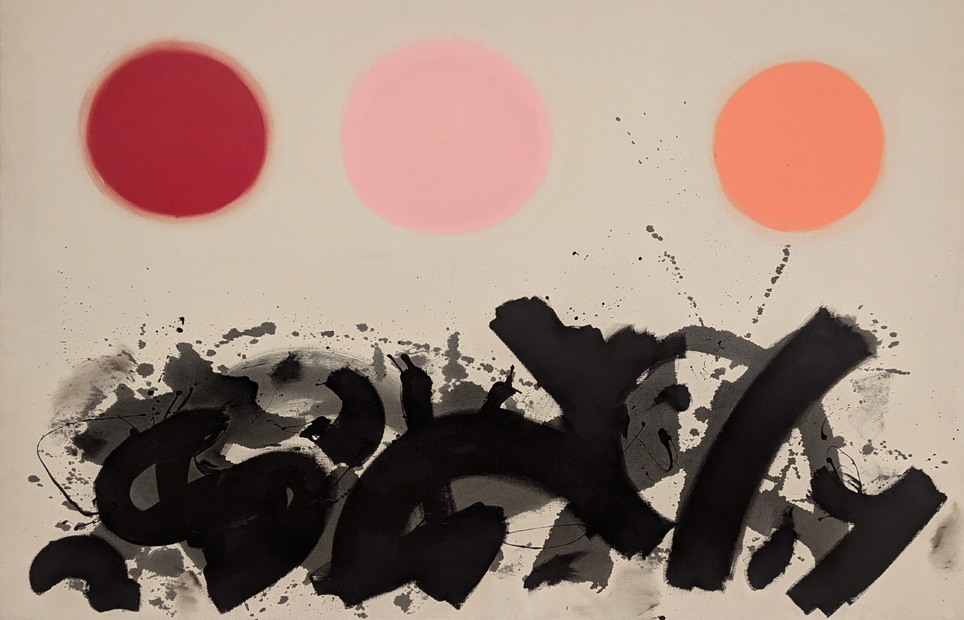
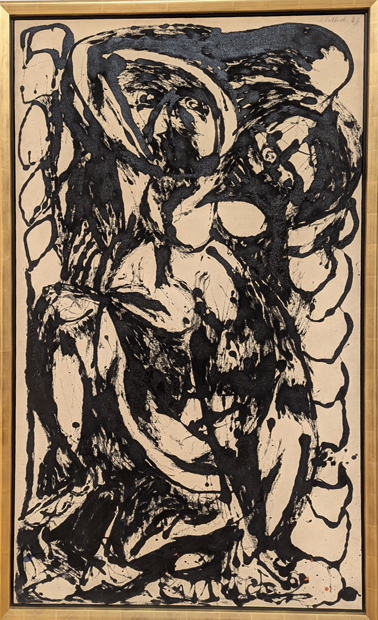
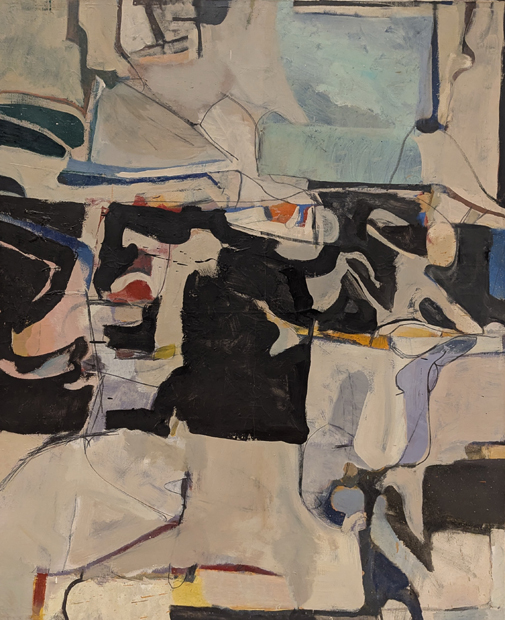
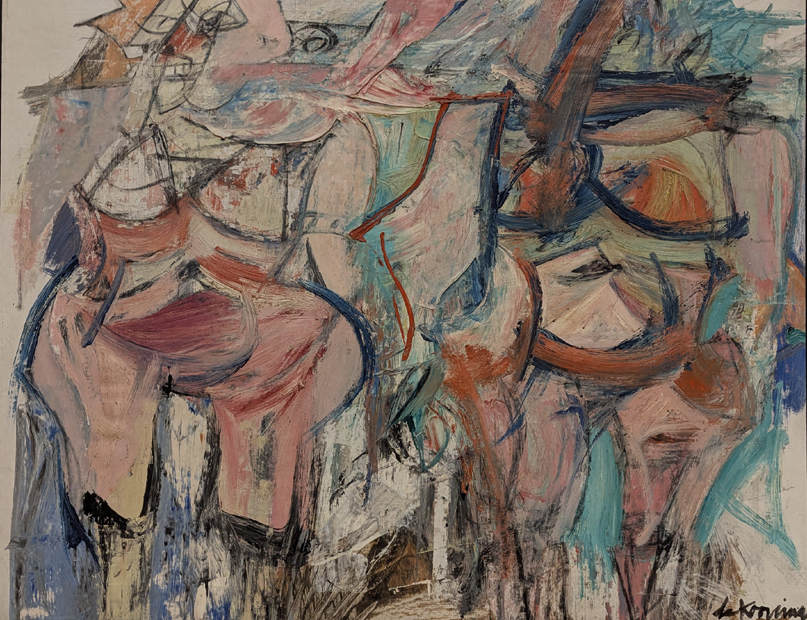
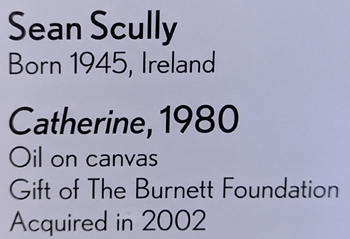
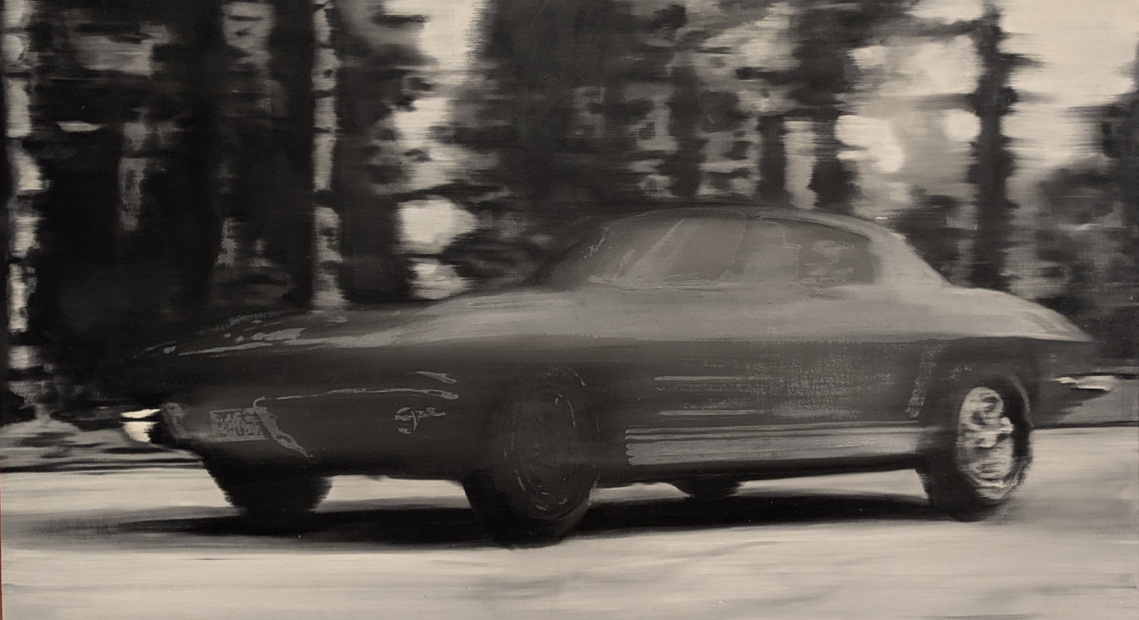
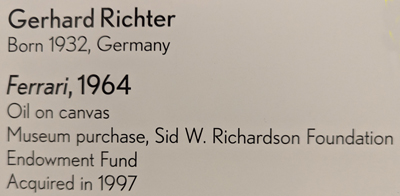
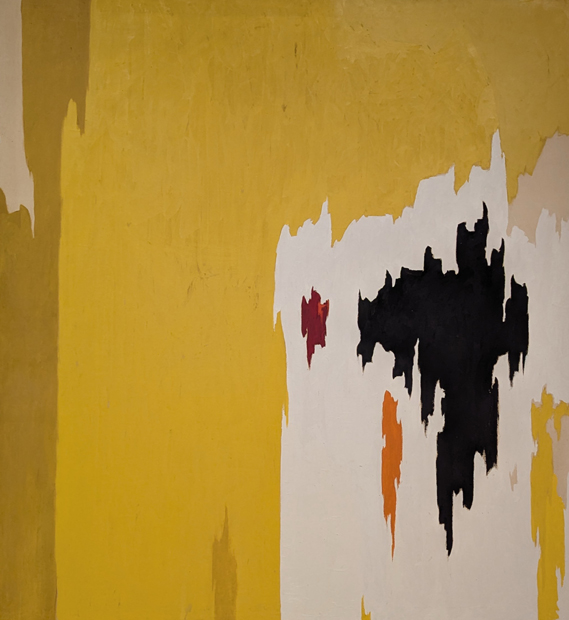
I photographed most of what we saw in the museum today, so I want to say a few words about how I'll organize the photos. First of all, the major event on today was an exhibition entitled "Alex Da Corte: The Whale", and this exhibit occupied five galleries upstairs. The second section below will be devoted to this exhibition, and it will have five subsections for the five different galleries involved. There was another gallery, right at the top of the stairs to the left, in which the museum had on display some of the works from its permanent collection, and this gallery will be the first section below. Another gallery was devoted to a series of works by Oak Cliff artist David-Jeremiah, and this gallery will have its own section. Finally, there was an additional selection of artworks in the first-floor galleries that we saw, and these works will be in the last section below.
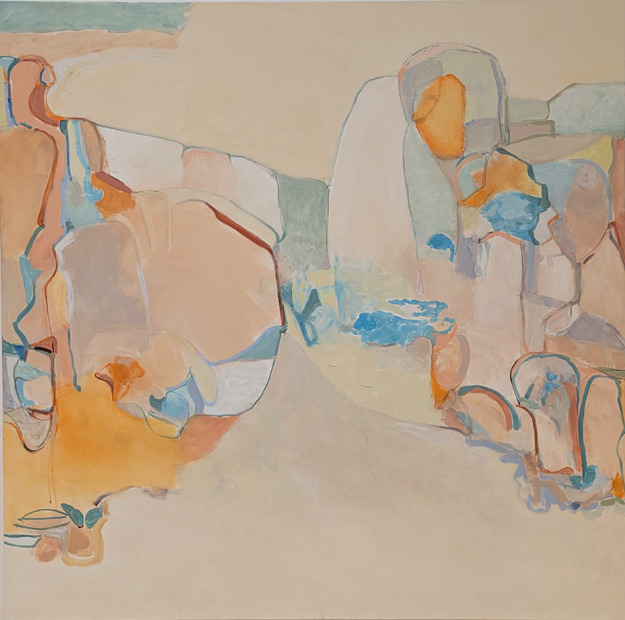
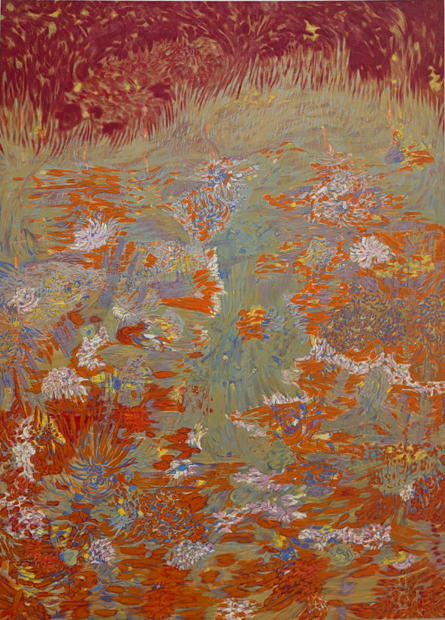
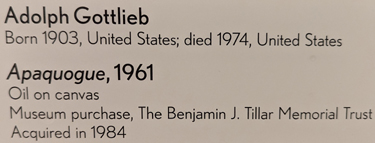
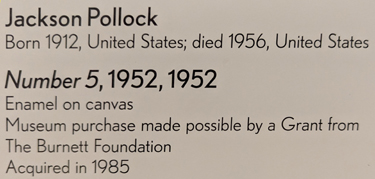
Where there was a plaque with a lot of information about a gallery or exhibit, I will include that information in a scrollable window so you read what we did. For each artwork, I will show you a thumbnail of the work, and beside it will be information from its identifying plaque. If you want to see a large version of a particular artwork, you can just click on the thumbnail and I'll show you a larger picture of the artwork in a popup window.
I hope you enjoy wandering through the Fort Worth Modern Art Museum with us!
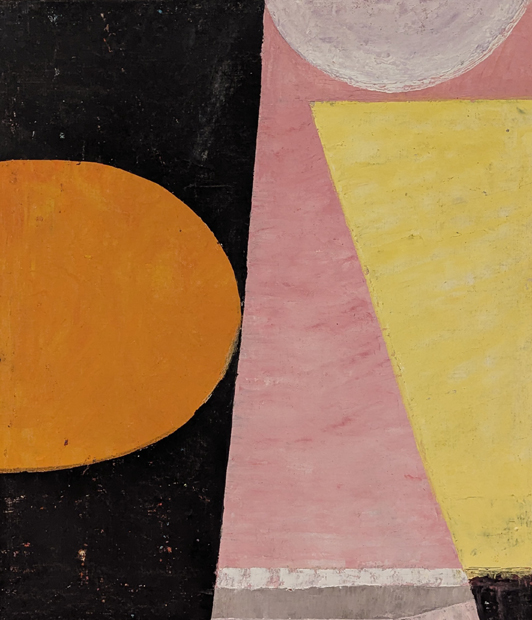
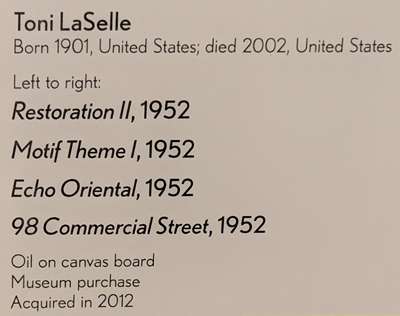
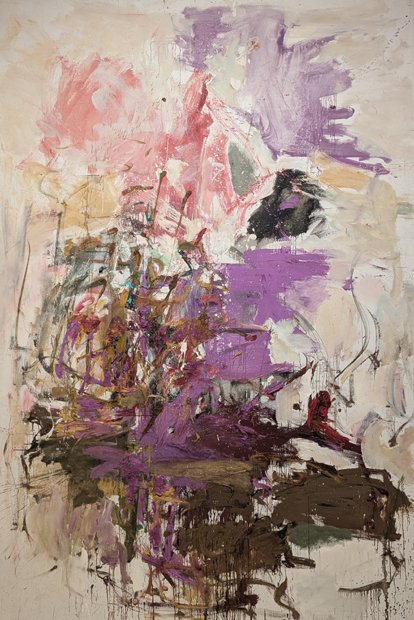
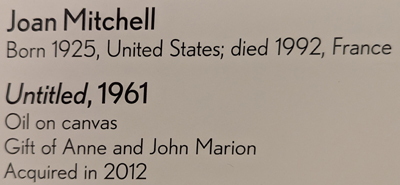
Works From the Museum's Permanent Collection (First Gallery)
Let's first take a look at the works that were in the gallery on the left at the top of the main stairs.
Alex Da Corte: The Whale
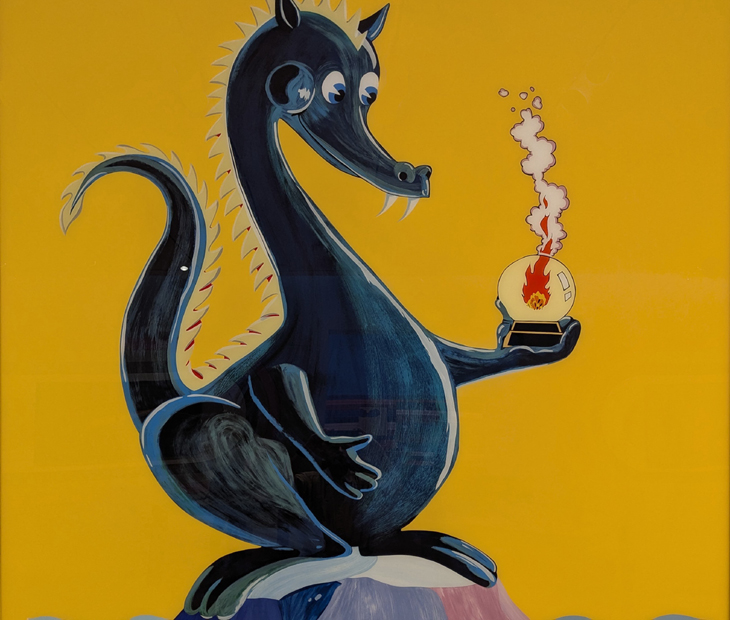
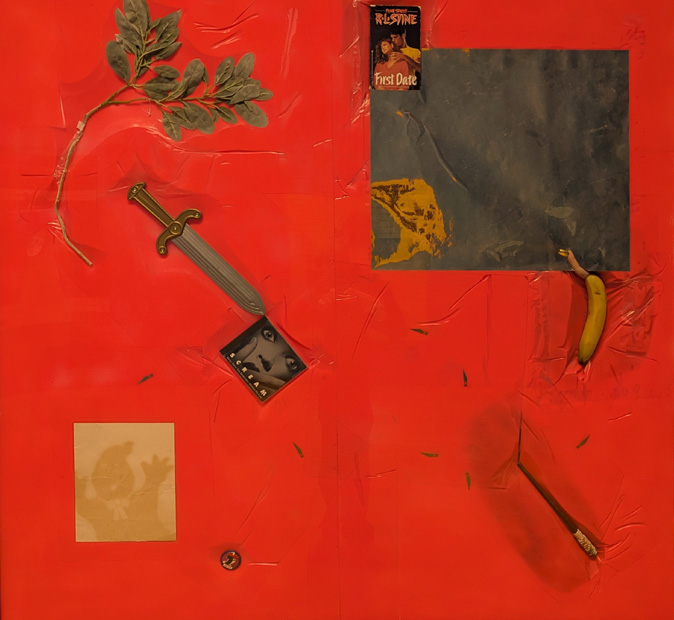
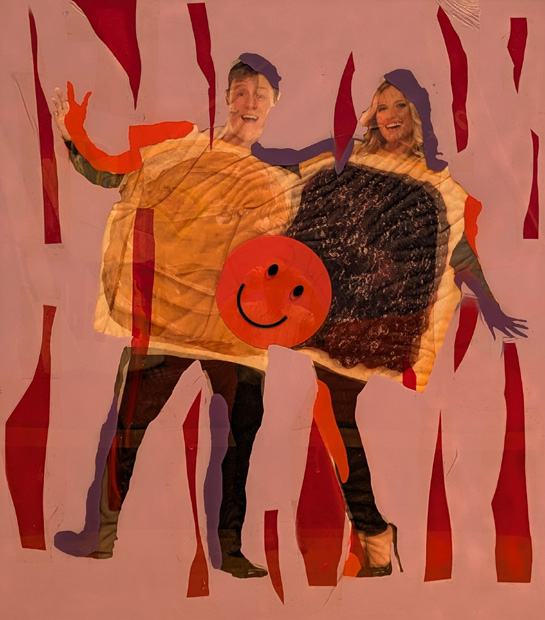
Alex Da Corte: The Whale is the first museum exhibition to survey the interdisciplinary artist’s long relationship with painting. Focusing on the past decade of Da Corte’s career, this exhibition features more than forty paintings, several drawings, and a video that considers painting as a performative act.
Alex Da Corte
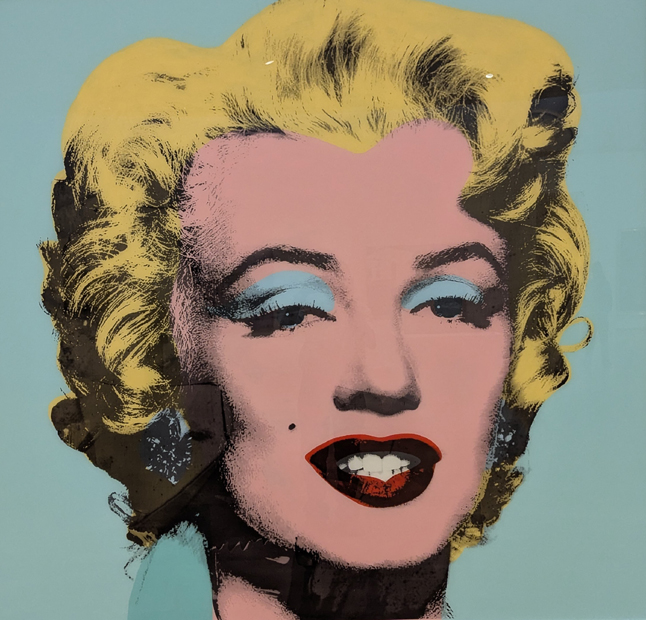
Alex Da Corte was born in Camden, New Jersey, in 1980 and lives and works in Philadelphia. The artist received a BFA from the University of the Arts and an MFA from Yale. Da Corte creates vibrant and immersive large-scale installations, including wall-based works, sculptures, and videos. Colorful and surreal, his work combines personal narrative, art-historical references, pop-culture characters, and the glossy aesthetics of commercial advertising to reveal the humor, absurdity, and psychological complexity of the images and stories that permeate our culture.
The exhibition’s title, The Whale, illustrates the artist’s vast mining of contemporary culture, a process that Da Corte sees as a sea journey at night, relating to myths in which the hero is devoured by a sea monster— a whale— and descends into a land of ghosts in the quest for individuality. Da Corte sees the medium of painting as providing an expression of this individuality; he sees the artist situated at the whale's mouth, interpreting and working with all the elements of contemporary culture that swirl around.
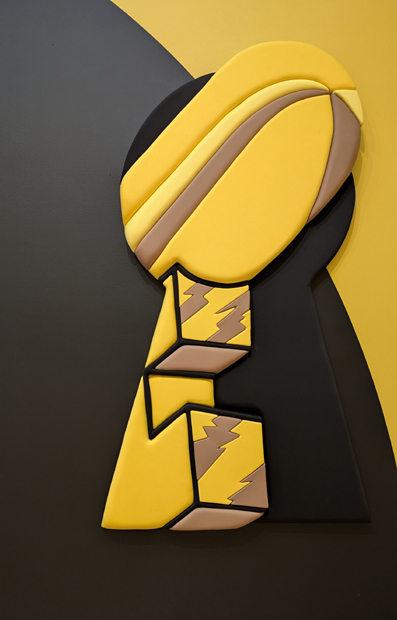
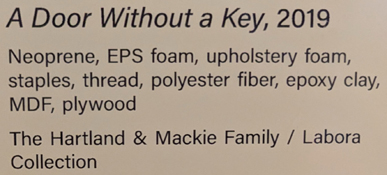
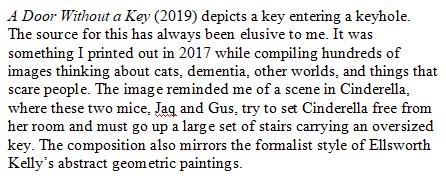
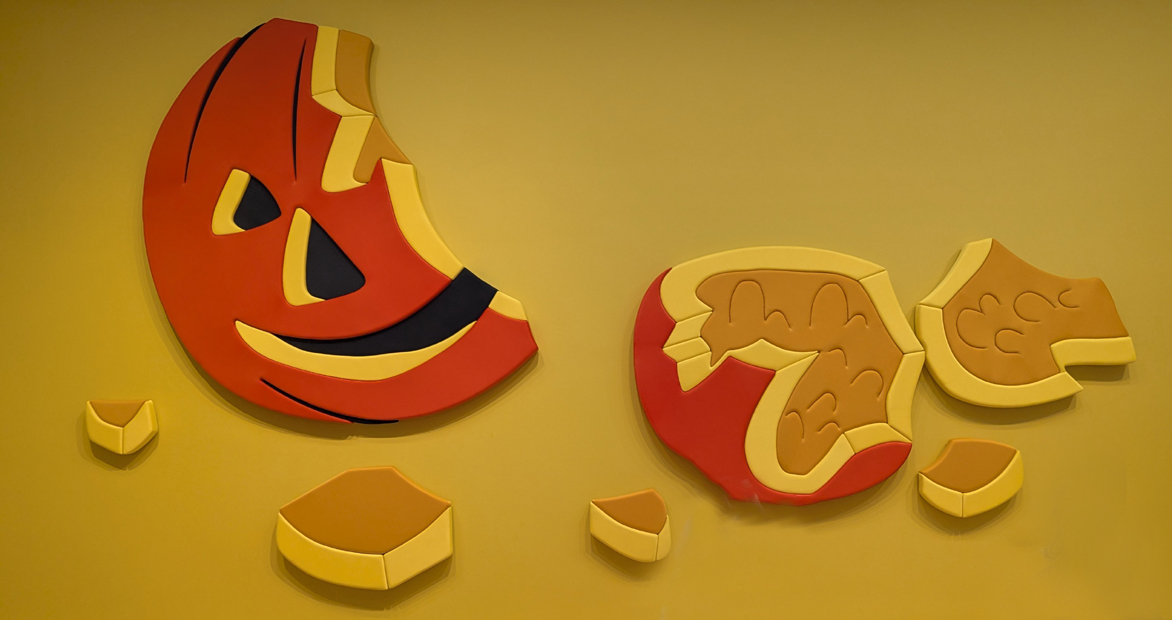
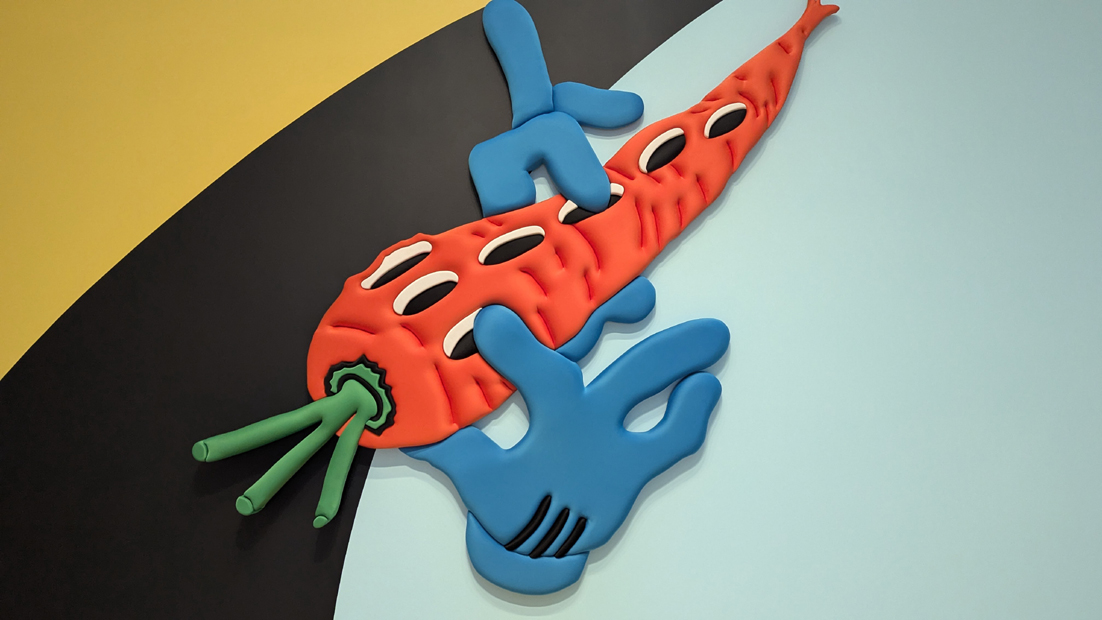
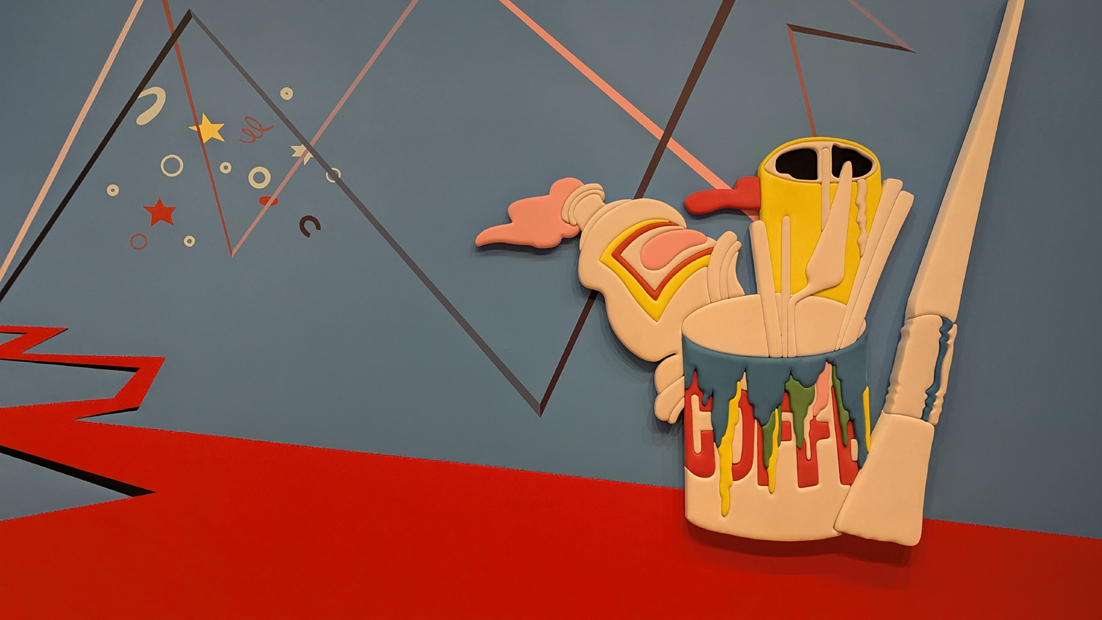
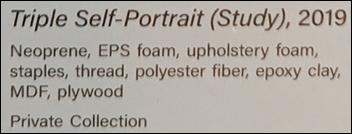
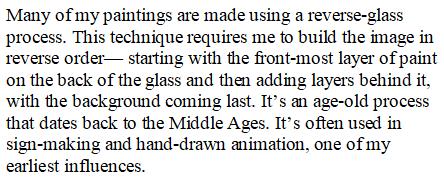
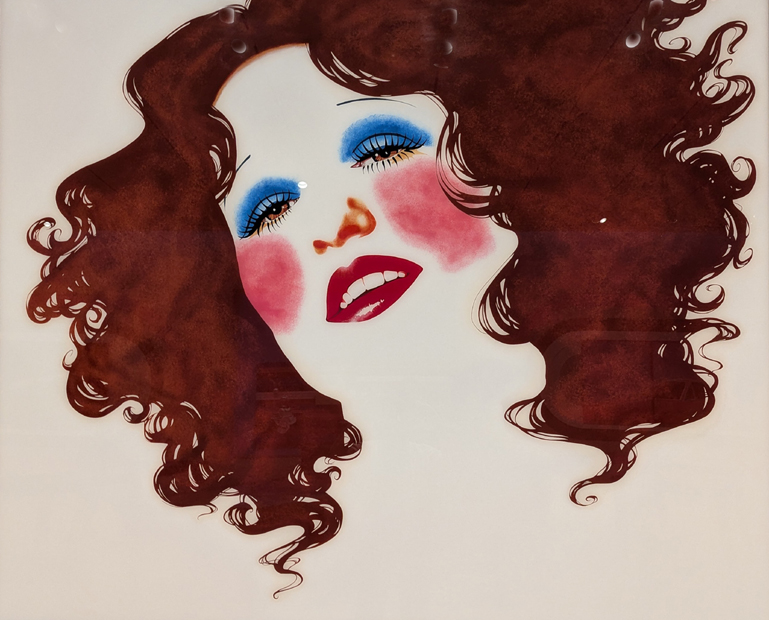
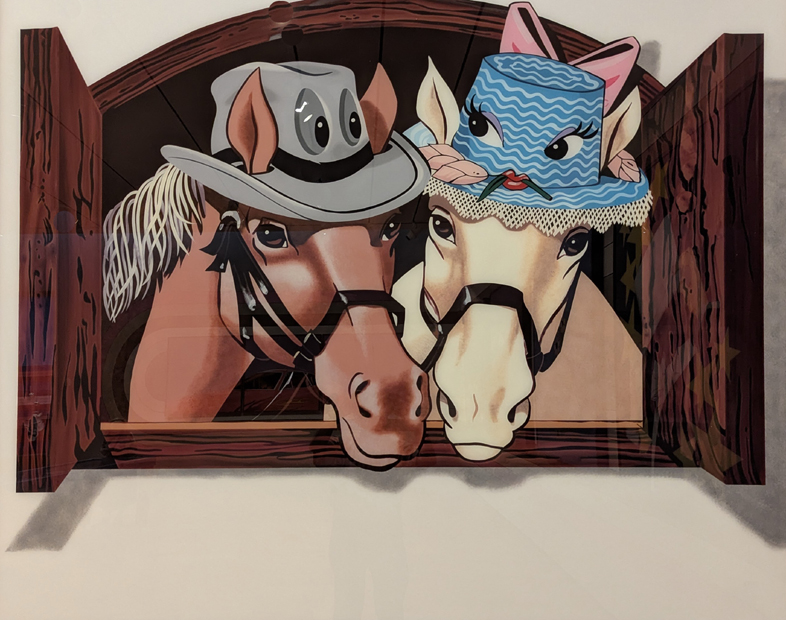
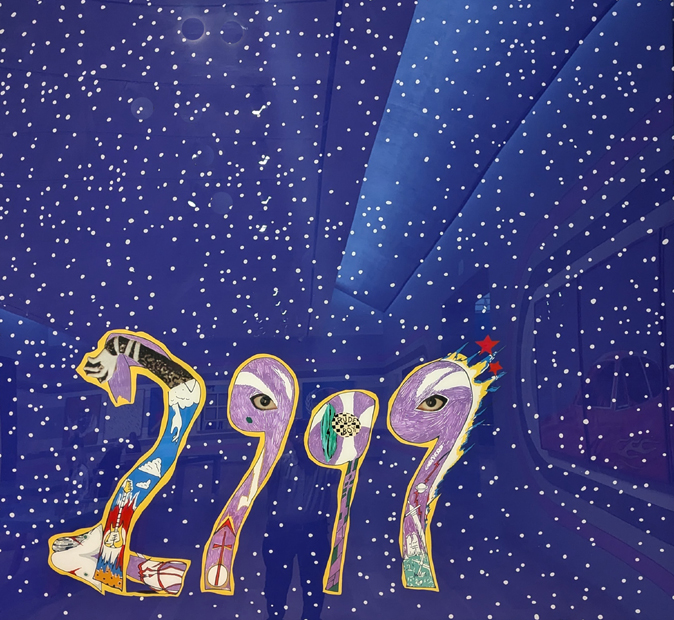
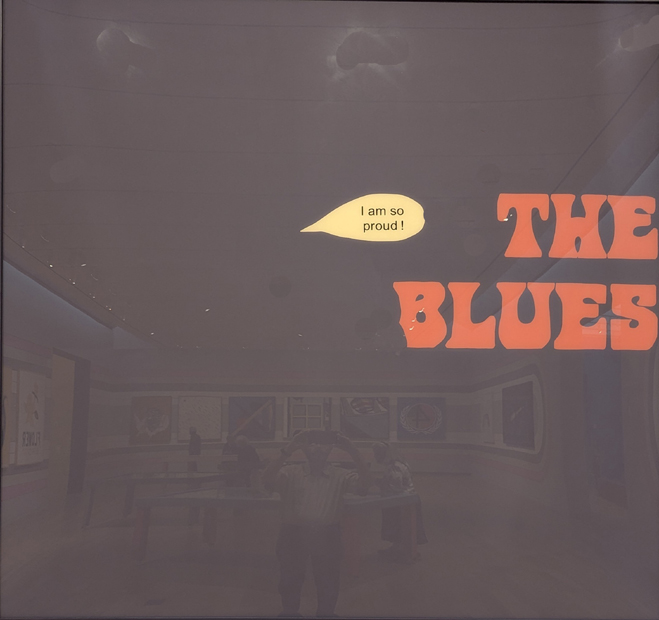
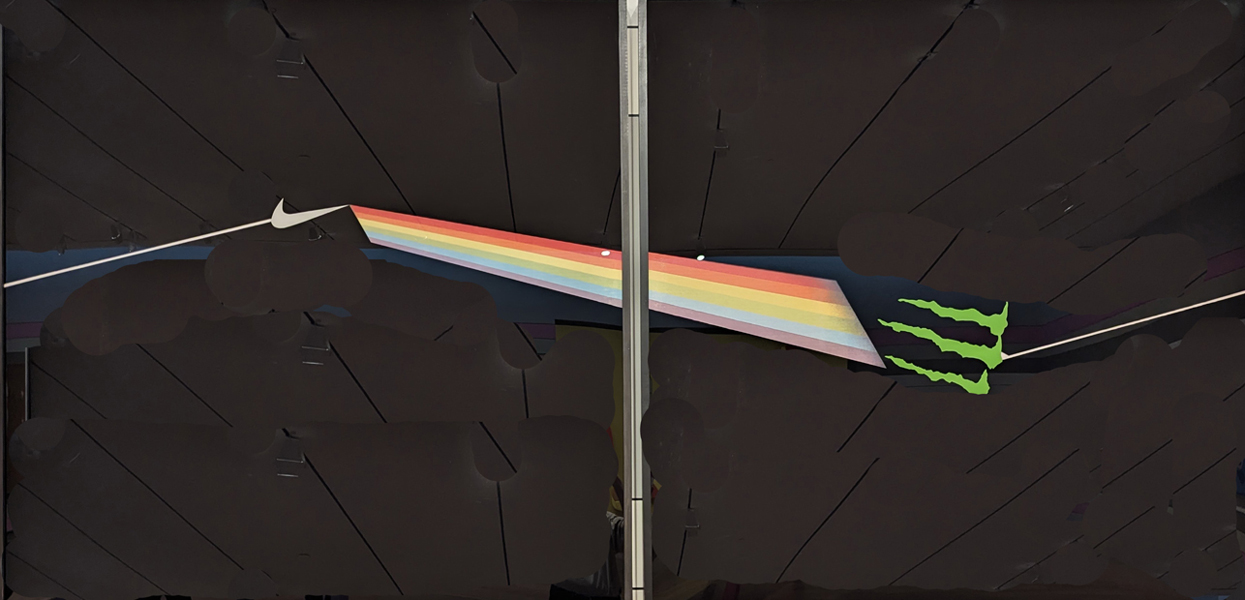
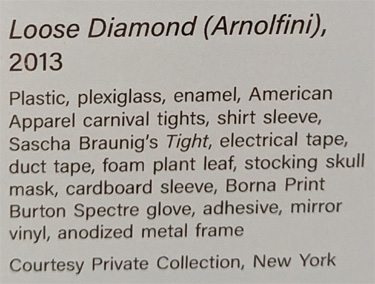
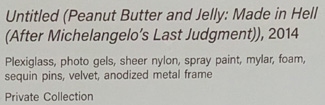
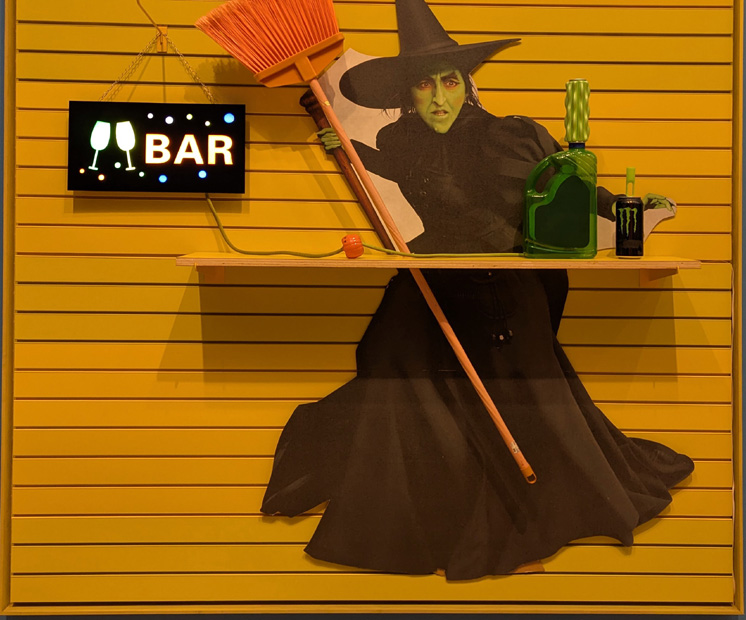
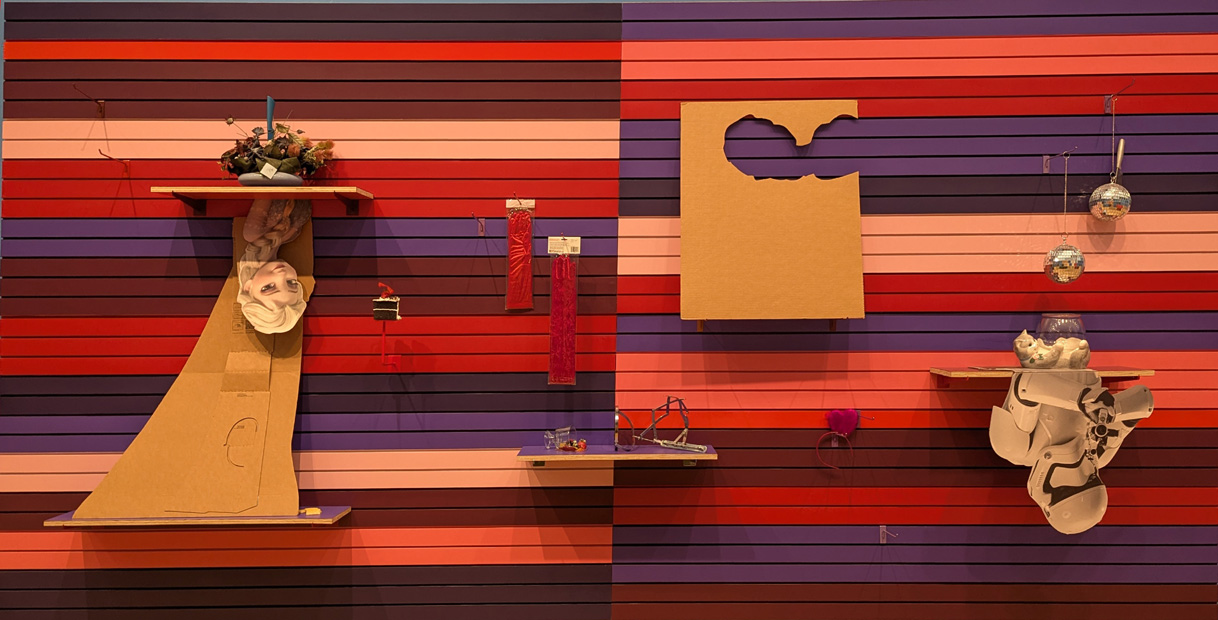
To realize this reconstructed vision of painting, Da Corte stretches the medium’s traditional boundaries. The exhibition incorporates Puffy Paintings in stuffed, upholstered neoprene, Shampoo Paintings comprised of drugstore hair products, and sculptural Slatwall Paintings, where found objects protrude from the slatted grooves found in everyday commercial displays. The remaining Da Corte works in the exhibition are reverse-glass paintings, in which the artist employs a process often used in animated celluloids and sign-making. But also part of the exhibition are works from the Modern's collection, curated and commented on by Da Corte, illustrating Da Corte's influence on other artists and their influence on him.
I'm going to subdivide this exhibition further, with sections below for (1) the works from the Modern's permanent collection, (2) Da Corte's "Shampoo Paintings", (3) his "Puffy Paintings", (4) his CD Paintings & Reverse-Glass Paintings, and (5) his Plastics Paintings & Slatwall Paintings.
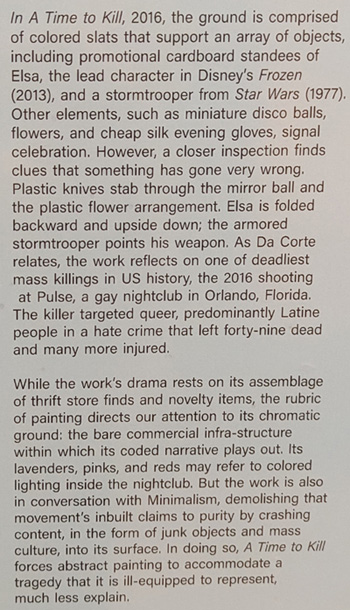
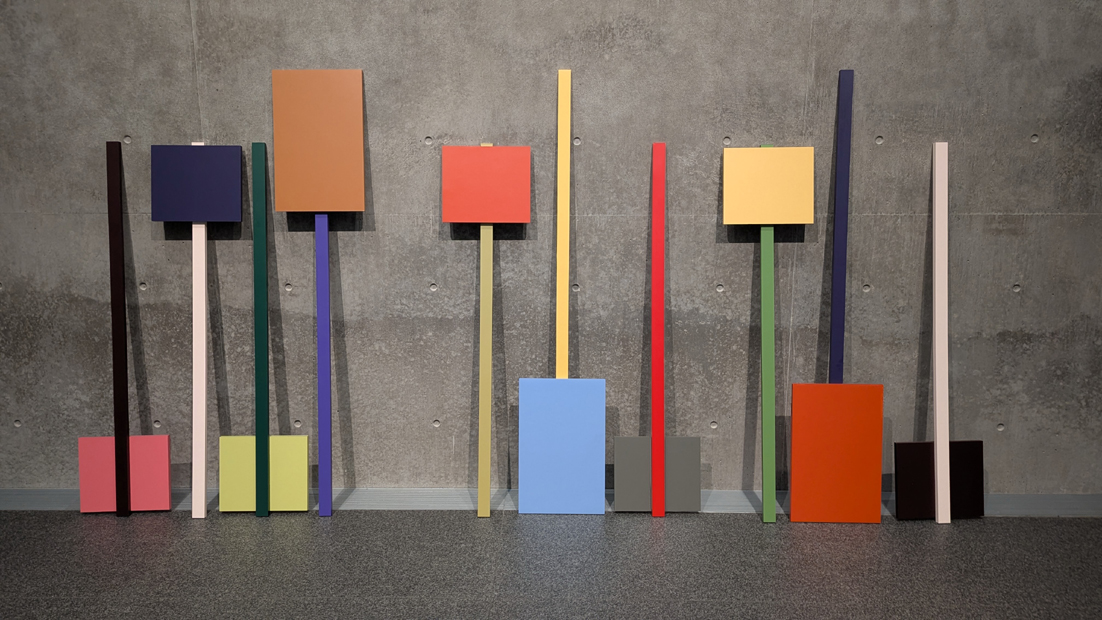
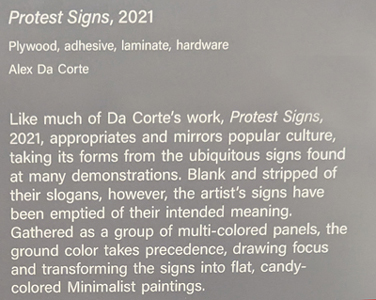
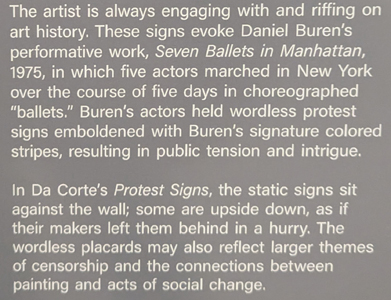
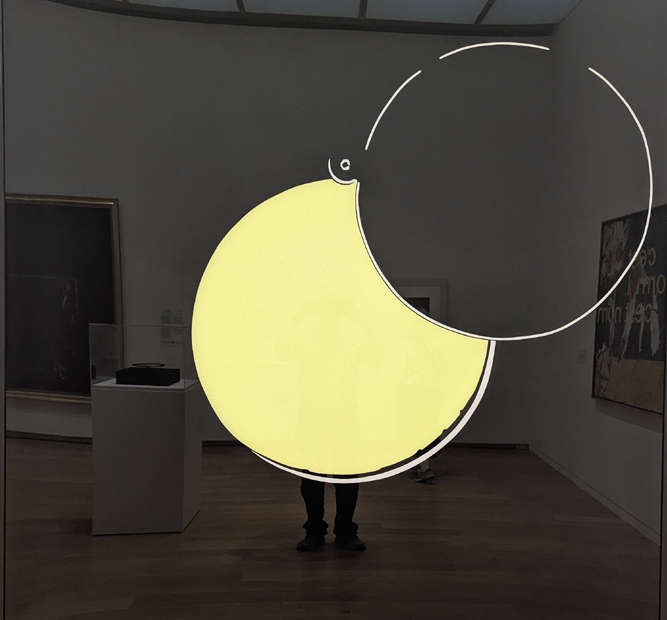
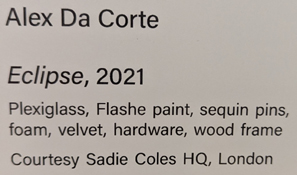
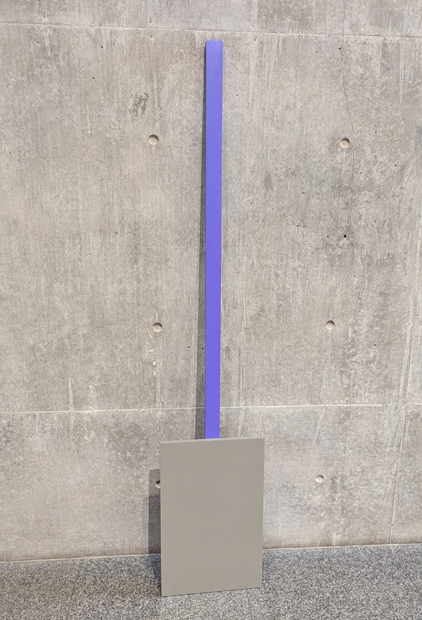
But first, there was an art installation right at the top of the stairs- one of Da Corte's own works:
In the sections below, you will occasionally see a "headphones" icon. Clicking on it will let you listen to Da Corte himself as he comments on a work or on his own technique. When you click on this icon, the audio of Da Corte will open in a new browser tab, allowing you to continue looking at the album webpage by simply returning to that tab. When Da Corte's comments have concluded, you should just close that browser tab.
For some of the artworks, the text of Da Corte's comments will also be provided, in case you are in a location or situation where listening to audio is inconvenient.
Works Curated by Alex Da Corte
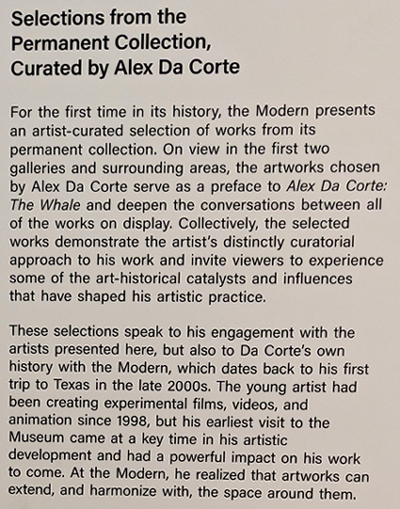
In the first few galleries on our right the first part of The Whale we found the first section of the exhibit consisting of works from the Modern's permanent exhibit, curated by Da Corte. The selection included some of Da Corte's own works. You might want to first read the introductory plaque, and you can listen to Da Corte's welcome message by clicking on the headphones:
Now we can take a look at the curated works in these first two galleries:
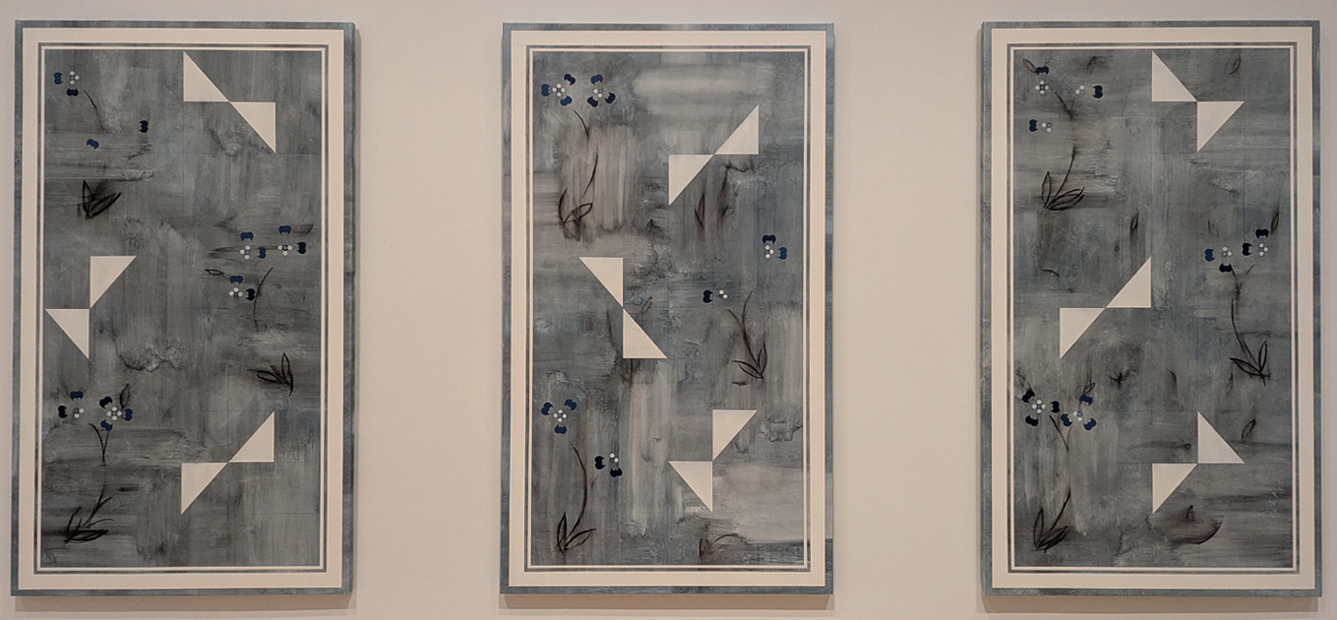
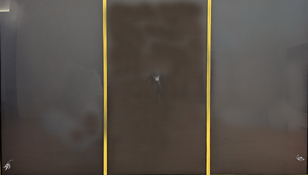
The first work was unusual, in that had three components which were together taken as the artwork. So for this work, there were be icons for the work itself and also for each of its three components so you can look at them in detail. In addition to the title plaque, this was one of the works that had extensive comments by Da Corte, so I will include those comments so you can read them, and there will also be a "headphones" icon so you can listen to the comments as spoken by Da Corte himself.
Be sure to listen to Da Corte's extended comments. They are different from the information at right.
This work seems to be three panels of grayish-black. But note the seeming "imperfections" (upper left, lower left, middle, and lower right). These are not imperfections at all, but you have to be close-up to see them. So when you click on this thumbnail, and the larger image opens, click on the "imperfection" in the lower left, and it will be as if you were able to get very close to the work in the gallery.
And to complete your tour of the galleries of curated works, here is the last one:
Alex Da Corte's "Shampoo Paintings"
The next few galleries were an exhibition of Da Corte's own works (even though some were also among the curated works in the first few galleries.
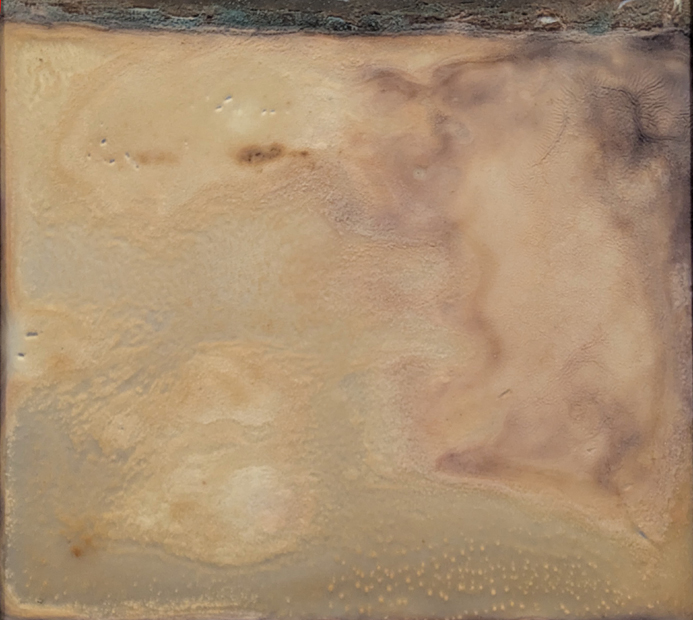
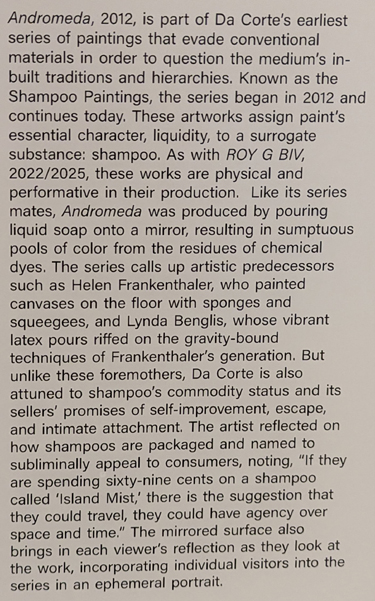
The first work I ran across was the single example in the exhibition of Da Corte's "Shampoo Paintings", and we will look at it in a moment. But in the audio guide, Da Corte also talked about this innovative painting technique in general, and if you click on the headphones at left, you can hear his comments.
Now we can take a look at Andromeda, 2012, the sole example of this technique that I photographed in the exhibition.
Be sure to listen to Da Corte's extended comments. They are different from the information at right.
Alex Da Corte's "Puffy Paintings"
The next gallery was devoted to Da Corte's "Puffy Paintings".
I thought when walking through this gallery that the term "puffy paintings" was a misnomer, as these artworks are anything but paintings.
Fortunately, Da Corte talked in general about these works in an audio clip that I have copied for use here. To hear Da Corte's comments, just click on the headphones at left. If you are in a place where listening to the audio is inconvenient, the text is in the scrollable window at right.
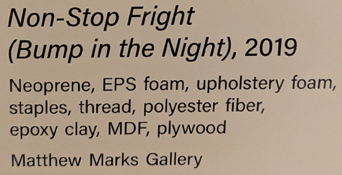
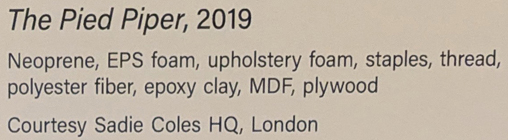
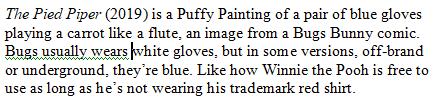
We can now look at the Puffy Paintings in this gallery. Some of Da Corte's audio comments are specific to some of the individual works, so I have simply transcribed those comments for use alongside the individual works.
Alex Da Corte's "Reverse-glass Paintings"
The next series of works by Da Corte that we encountered were his "Reverse-glass Paintings".
In addition to the comments about reverse-glass paintings that were posted on a plaque at the beginning of this section of the exhibit (which you can read in the scrollable window at left), Da Corte talked in general about these works in an audio clip that I have copied for use here. To hear Da Corte's comments, just use the controls below:
If you are in a place where listening to the audio is inconvenient, the text is at left.
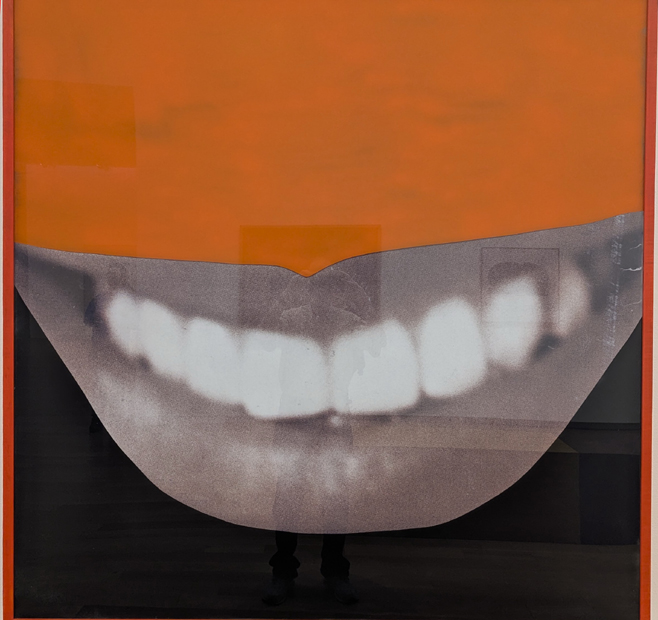
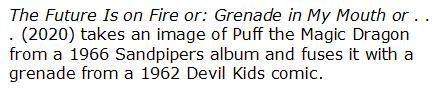
Da Corte's reverse-glass paintings draw from a range of source material, from those, he says, who are working on the edge of anonymity- album cover designers, animators, comics artists, sign painters, and stock photographers. By bringing together art-historical references with more ephemeral pop cultural elements, he highlights how the things we connect with, the things we use to define ourselves, are always shifting and evolving.
Let's now look at the Reverse-glass Paintings in this gallery. Some of Da Corte's audio comments were specific to some of the individual works, so I have simply transcribed those comments for use alongside the individual works.
From Da Corte:
From Da Corte:
From Da Corte:
From Da Corte:
From Da Corte:
From Da Corte:
From Da Corte:
Alex Da Corte's "CD Paintings"
Similar in look but different in source were Da Corte's "CD Paintings".
I think it is interesting to hear the artist describe this type of his work in his own words, and you can hear him do so by using the audio controls at left. But if you are in a place where listening to the audio is inconvenient, click on the "Text of Da Corte's Comments" link below the audio controls.
Let's take a look now at the artworks in this category that were displayed in the exhibition. As with previous categories, Da Corte commented in audio on many of the works. Since these comments are short, I will simply include them for you to read.
From Da Corte:
From Da Corte:
From Da Corte:
From Da Corte:
From Da Corte:
Alex Da Corte's "Plastics Paintings"
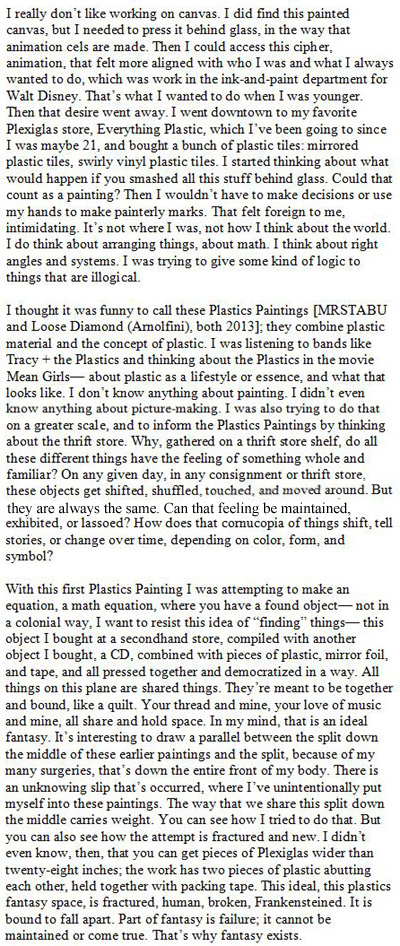
There were four examples of this type of Da Corte's work, and we will see them in a minute. First, let's have a look at the plaque describing the works, and listen to Da Corte's own comments about them.
To listen to Da Corte's own comments, use the audio player below:
If you are in a place where audio is inconvenient, the text of Da Corte's comments are in the scrollable window below:
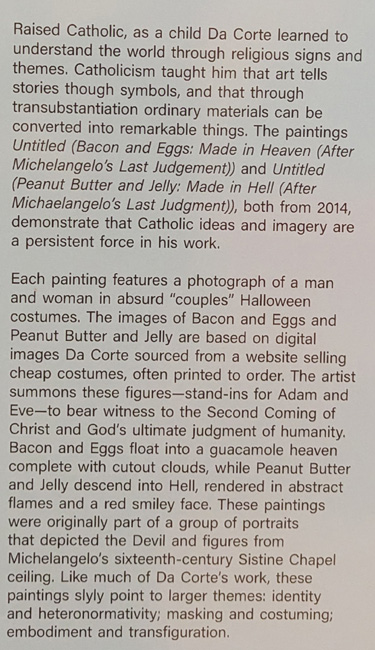
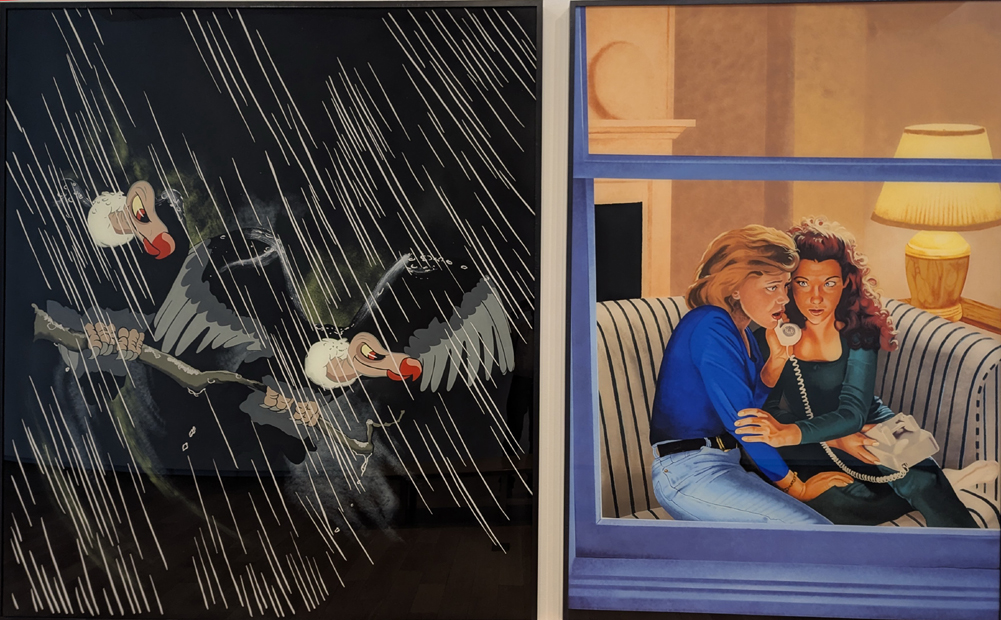
Now let's look at the four "Plastics Paintings" that were part of the exhibit:
The other two Plastics Paintings were located on a different wall, perhaps because it seems as if they were a set.
These two works had their own descriptive plaque, and it is in the scrollable window at left. The two works are below:
Alex Da Corte's "Blue Pencil Drawings"
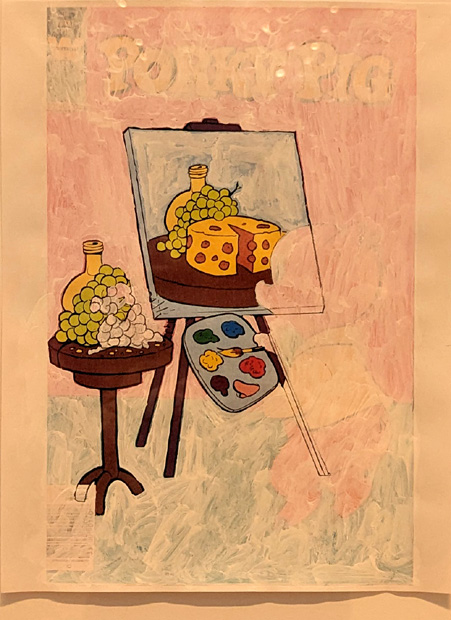
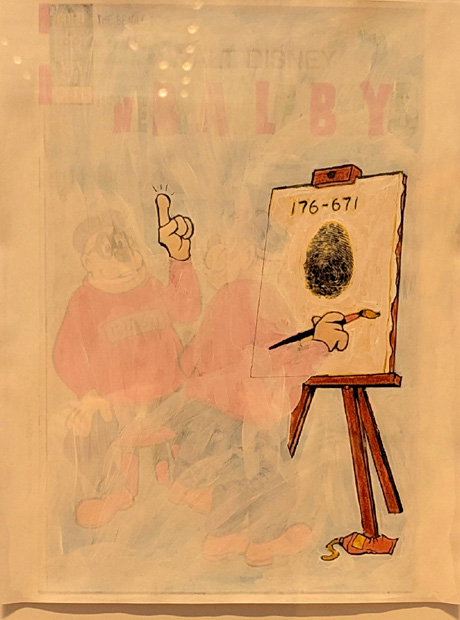
My photo of the plaque for the next three works by Da Corte did not turn out well, so I have transcribed it here:
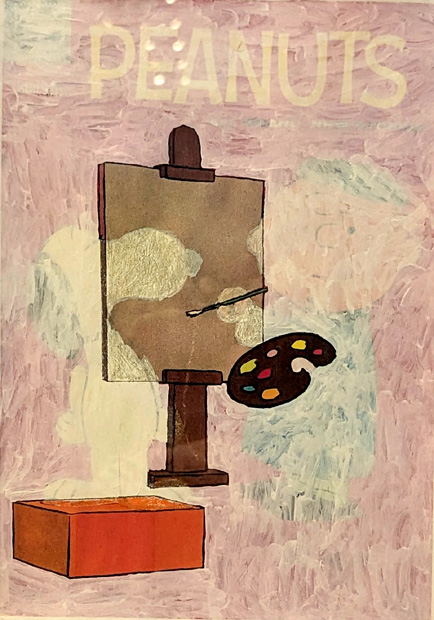
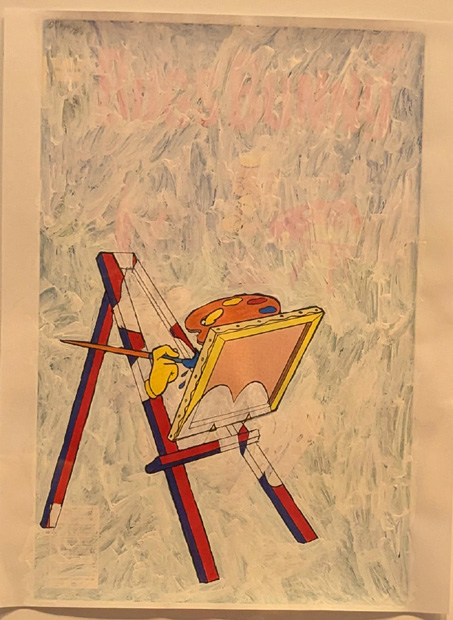
"In this playful series of drawings, Da Corte follows a similar rubric to the Puffy Paintings: the drawings use the technique of isolation to depict images sourced fro comic books, with most of their figures, gestures, or motifs stripped away. This time, however, the comic-book page remains in the works, demonstrating the artist's process of elimination. The ground is erased through a layer of semi-transparent Wite Out, causing the central images to stand out against the white. Nonetheless, some elements of the reference sources are still visible.
"Each drawing shows a painter's easel, a common motif and trope used by mid-twentieth century comic artists to poke fun at the more privileged 'fine' art form of traditional painting. Further conflating these two forms, paiting and comics, Da Corte follows the comic artists' line of thinking and, as in most of his work, riffs on art history and the institution of painting by using populist materials and sources to have the conversation. In this way, he explores the intersections where painting as the high point of Western culture meets painting as labor, as entertainment, and as commerce."
Alex Da Corte's "The Slatwall Paintings"
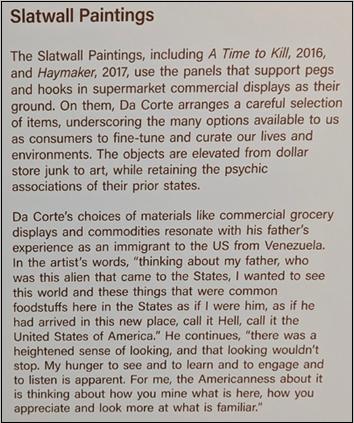
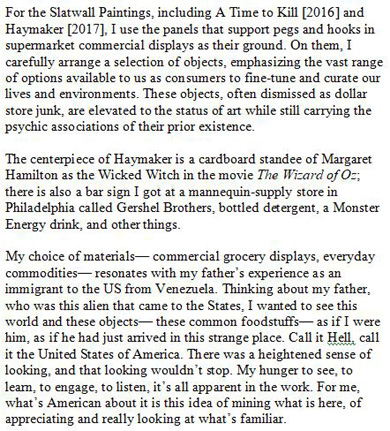
There were only two Slatwall Paintings in the exhibit, and we will see them in a minute. First, let's have a look at the plaque describing the works, and listen to Da Corte's own comments about them.
To listen to Da Corte's own comments, use the audio player below:
If you are in a place where audio is inconvenient, the text of Da Corte's comments are in the scrollable window below:
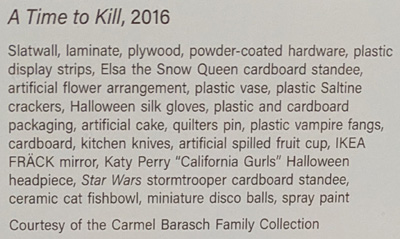
Now let's look at the two "Slatwall Paintings" that were part of the exhibit:
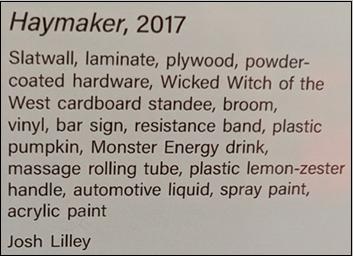
This particular slatwall painting was quite complex, and so in addition to the normal short description and source attribution for works in the exhibit, this work had a fairly lengthly description, and that description is in the scrollable window at left.
In addition, I was especially amused by one of the elements in the work, and you can have a closeup look at by clicking the link below:
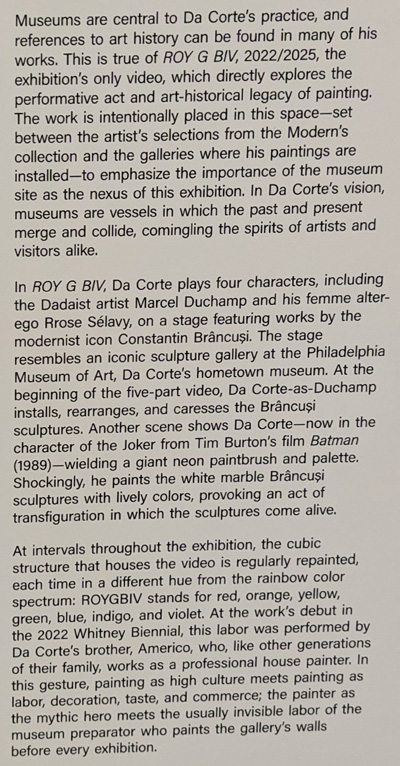
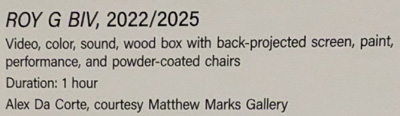
The last part of the exhibit was a very small theatre (projection screen and six or eight chairs) where a movie created by Da Corte was on repeat. I photographed the explanatory plaque on the wall and then filmed a couple of separate minutes of the movie to give you an idea of what it was like.
At left, in the scrollable window, is the information from the plaque that was adjacent to the "theatre".
Below are a couple of movie players for the two segments of the movie that I filmed:
(Mouseover Image if Video Controls Not Visible)
(Mouseover Image if Video Controls Not Visible)
With that, our tour through the exhibit of works by Alex Da Corte- "The Whale"- was over. But there were still other galleries to see, and so we will look at the other works in those galleries in the sections below.
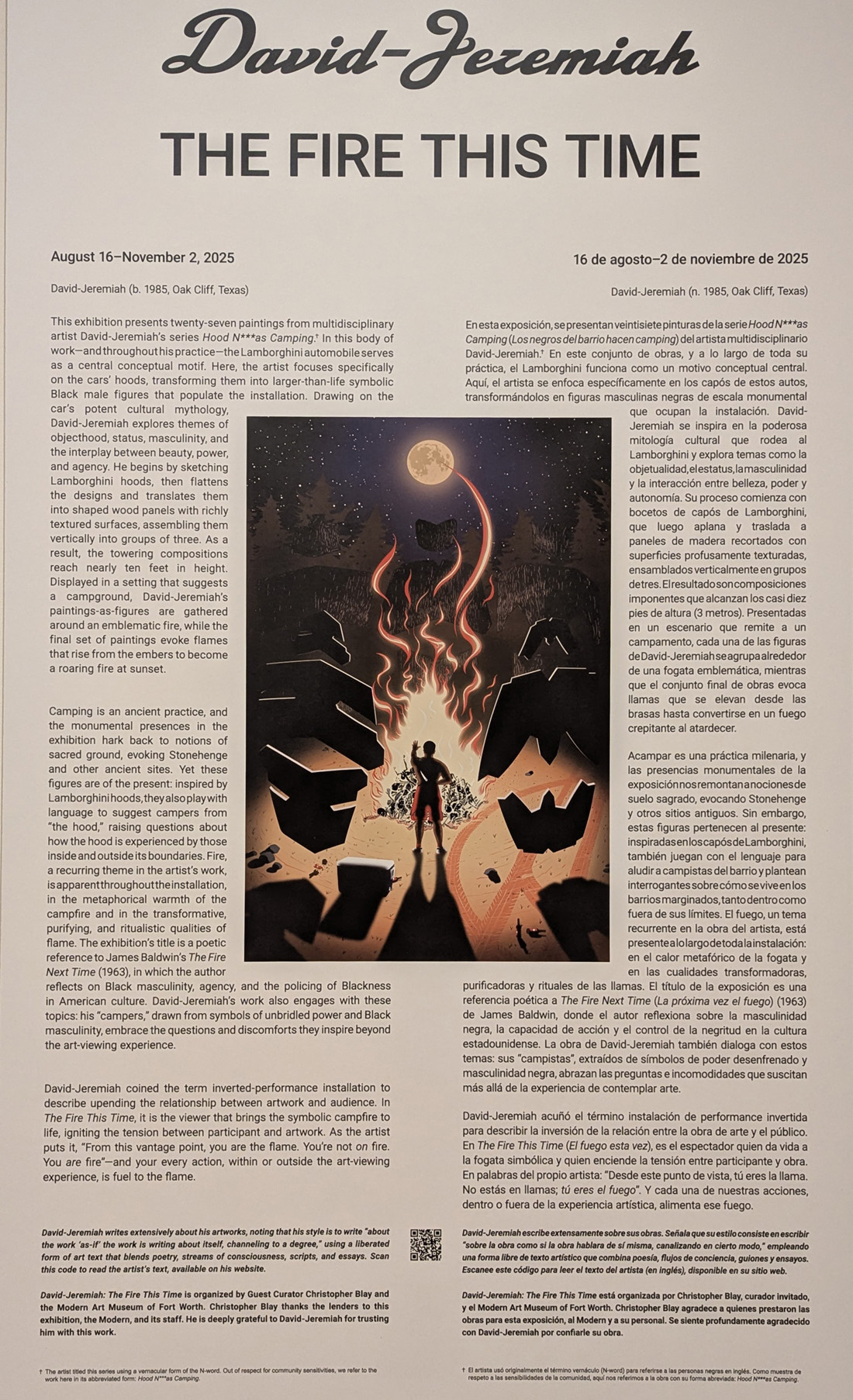
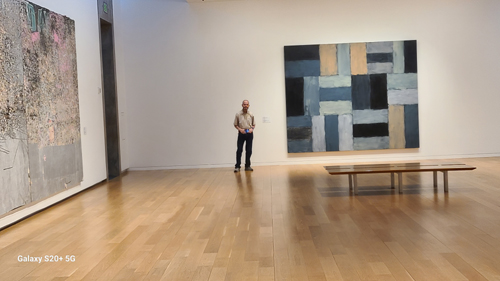
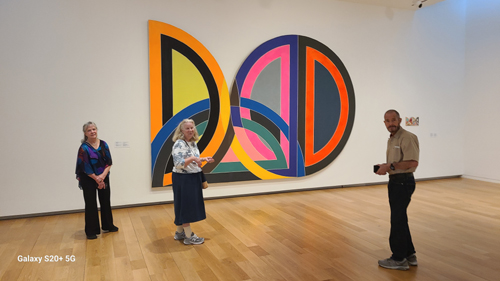
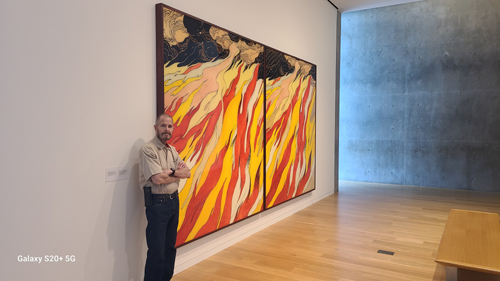
"The Fire This Time": An Exhibit of Works by David-Jeremiah
"The Whale" occupied most of the second floor, but in a gallery at the back of the building there was another, smaller exhibit, and we can take a look at it now. First, by way of explanation of what this exhibit was about, you might have a read of the plaque just outside the gallery that describes the exhibit and its works. This plaque is in the scrollable window below:
Click on the Image Above to View the Slideshow
The works in the David-Jeremiah exhibit seemed to me to be very, very repetitive. There were some where I found it difficult to see the difference from one work to another. I will confess that I thought about not even photographing the works in this exhibit and just eliminating it from this page, but I then thought that someone else might find the works intriguing.
And so, I photographed each work, and have put those 27 images in a slideshow so that you can go through them one at a time if you wish. That slideshow is at left.
To view the slideshow, just click on the image at left and I will open the slideshow in a new window. In the slideshow, you can use the little arrows in the lower corners of each image to move from one to the next, and the index numbers in the upper left of each image will tell you where you are in the series. When you are finished looking at the pictures, just close the popup window.
Some Candid Pictures from Our Visit to the Modern
In addition to pictures of the artworks (almost all of which I took in my effort to document what we saw) there are also some candid pictures taken during our visit (all of which Fred took). I want to simply put those candid pictures here.
Other Artworks at the Modern (Downstairs Galleries)
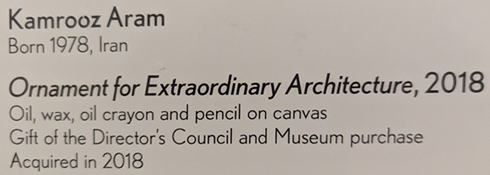
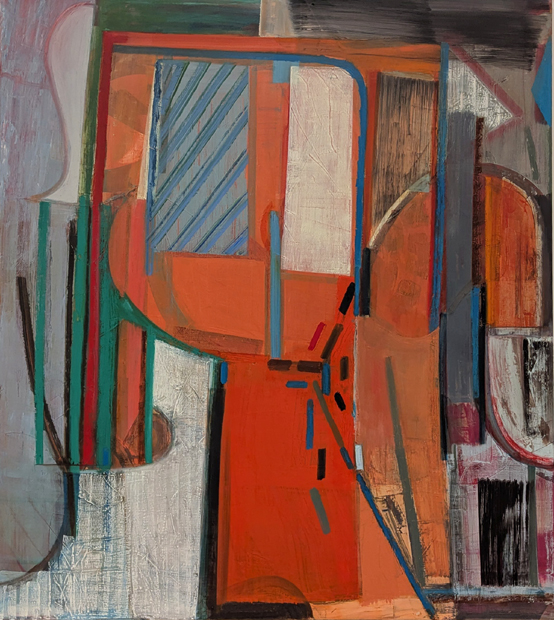
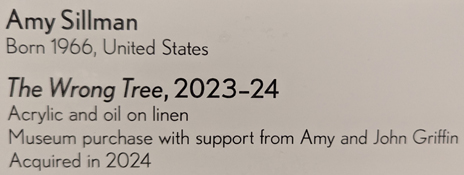
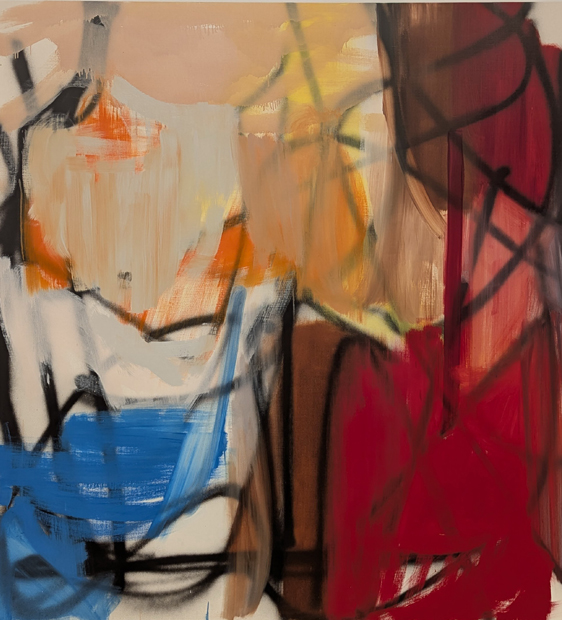
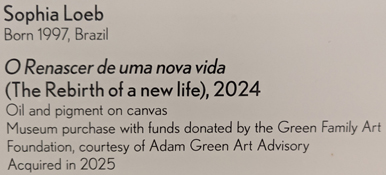
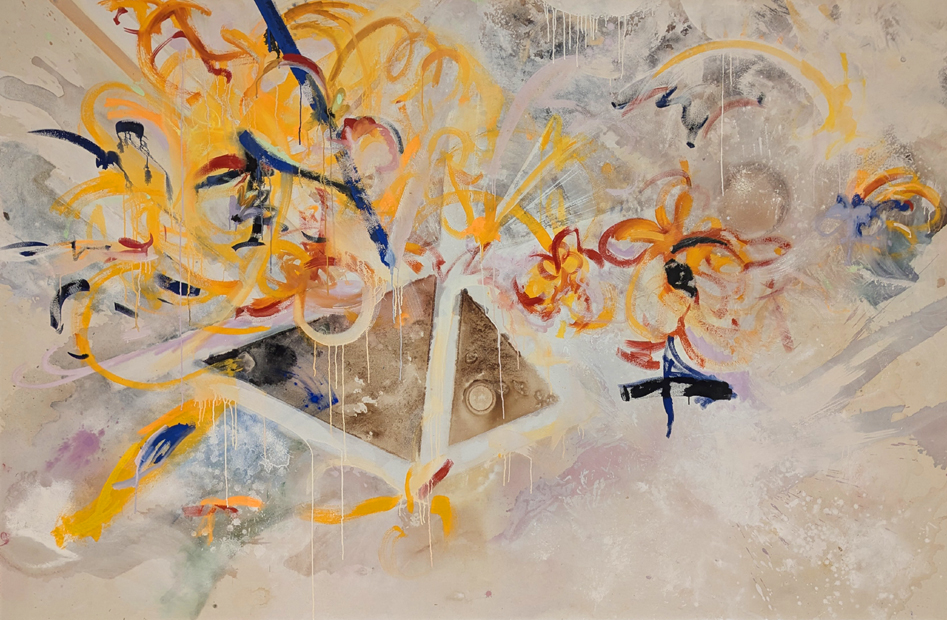
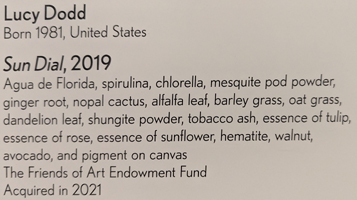
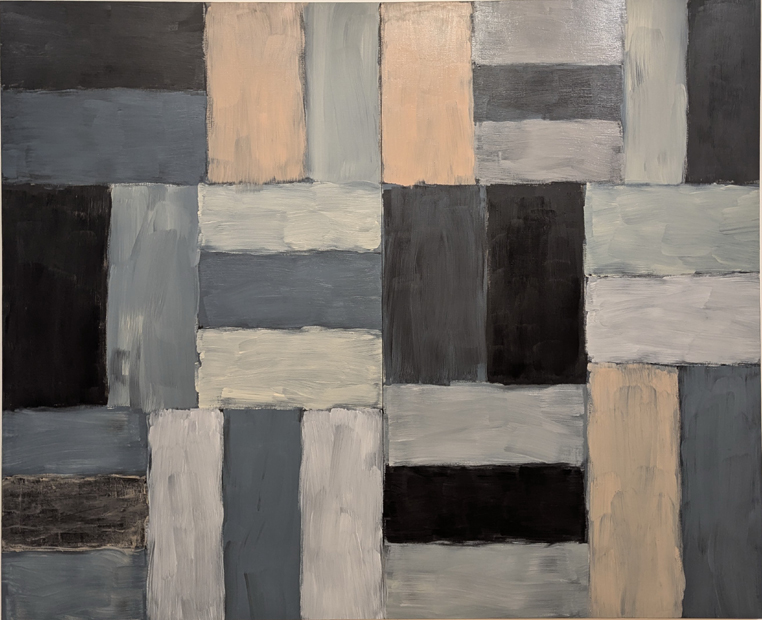
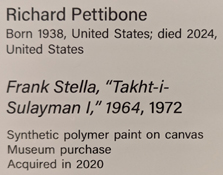
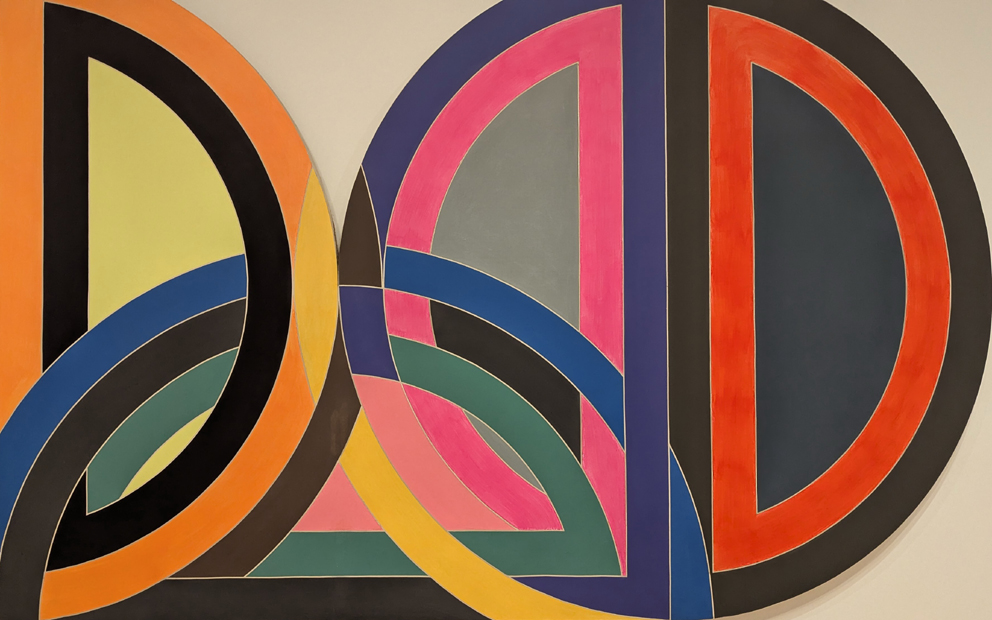
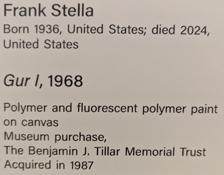
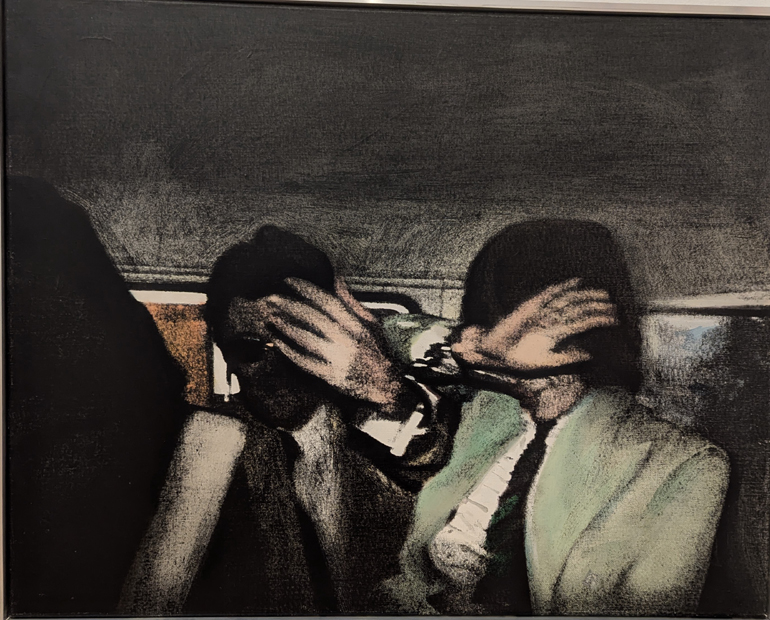
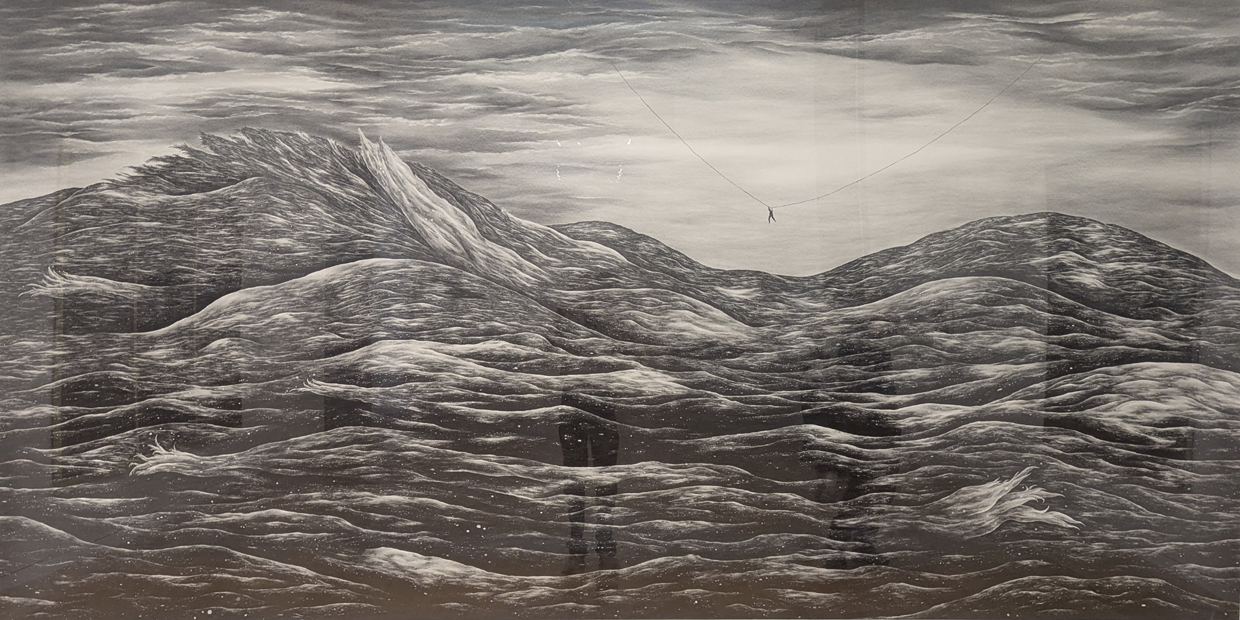
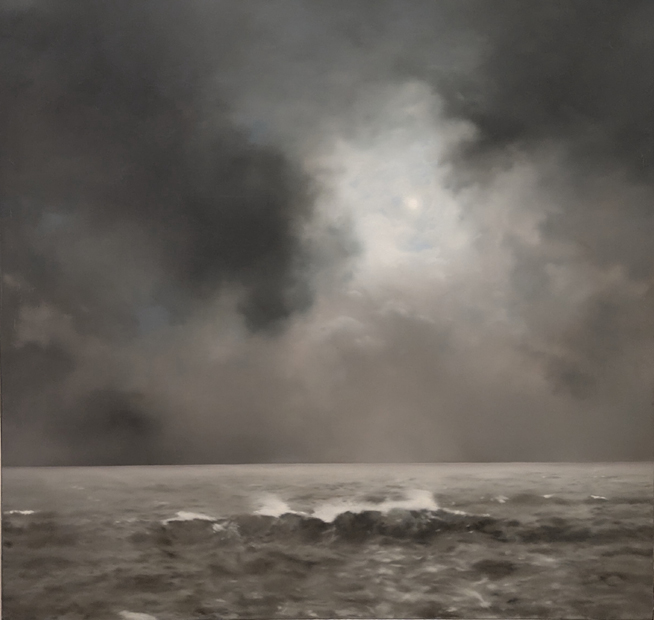
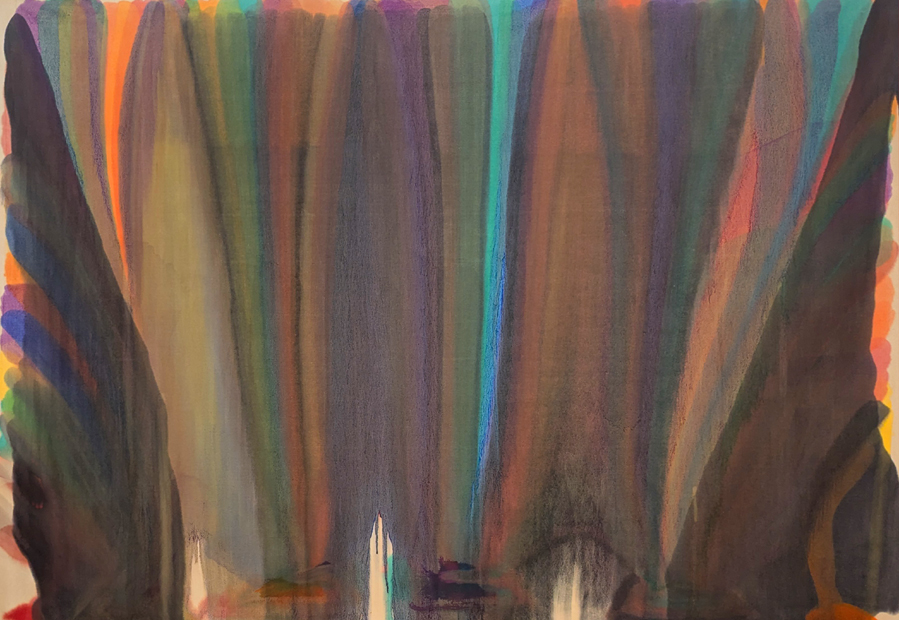
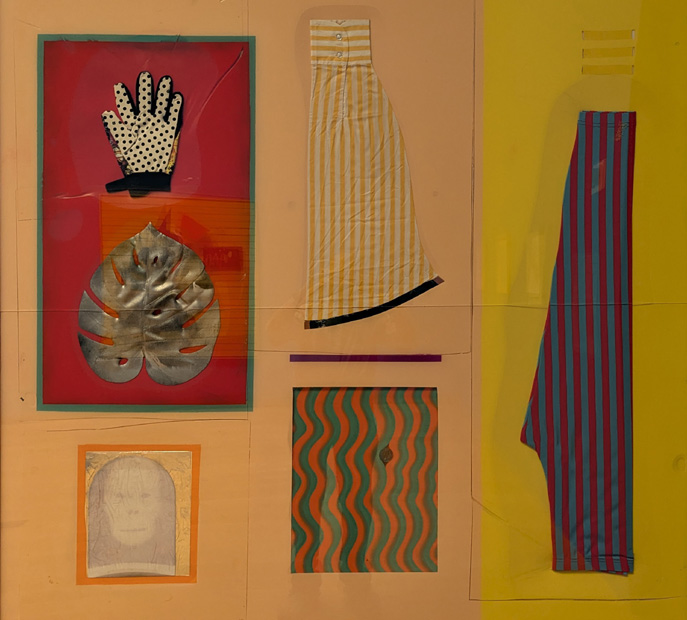
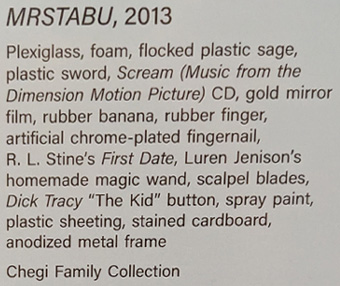
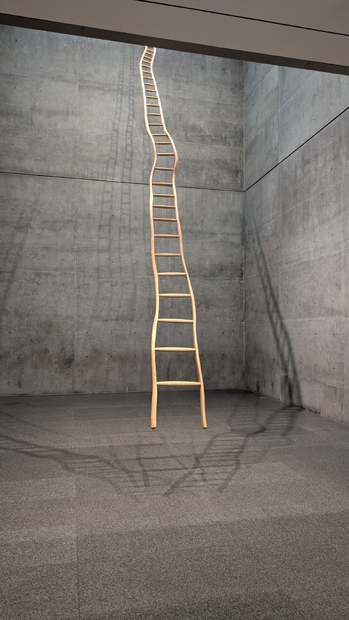
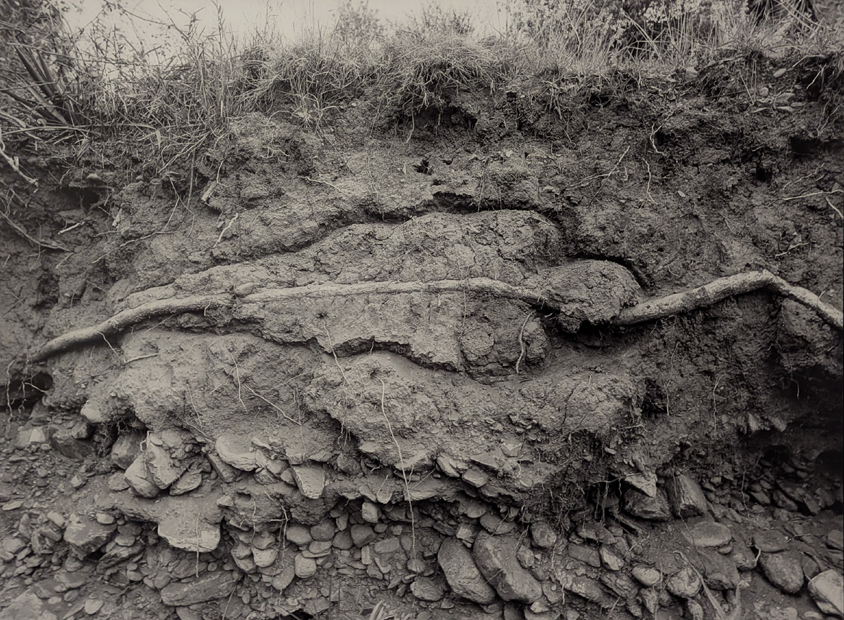
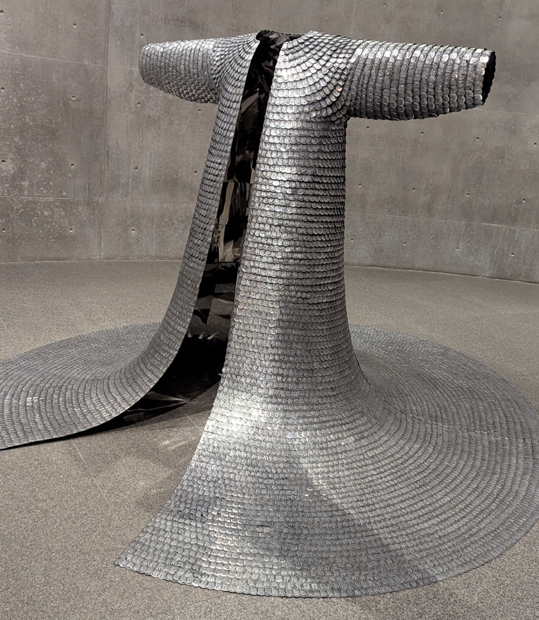
Having finished with "The Whale" and the David-Jeremiah exhibit, we can take a look at other artworks that we saw at the Modern. There were some in some side galleries adjacent to the Da Corte exhibit, but the majority were in the galleries downstairs. These were not organized into an exhibit, so I'll just show them to you one at a time. As above, I will show you the plaque for each work and a thumbnail of it. To see a full-size image of the work, just click on the thumbnail, closing the popup window when you are done.
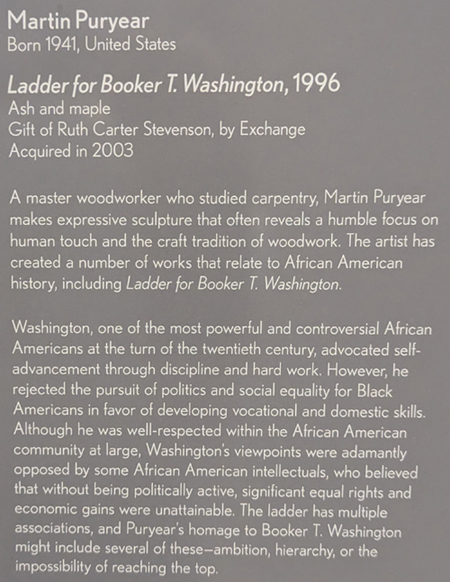
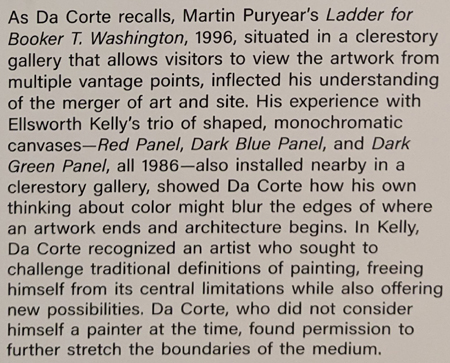
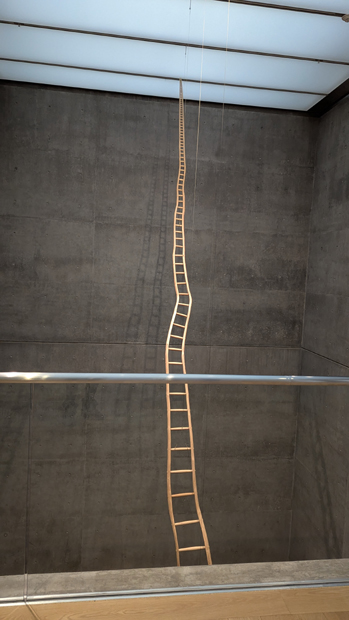
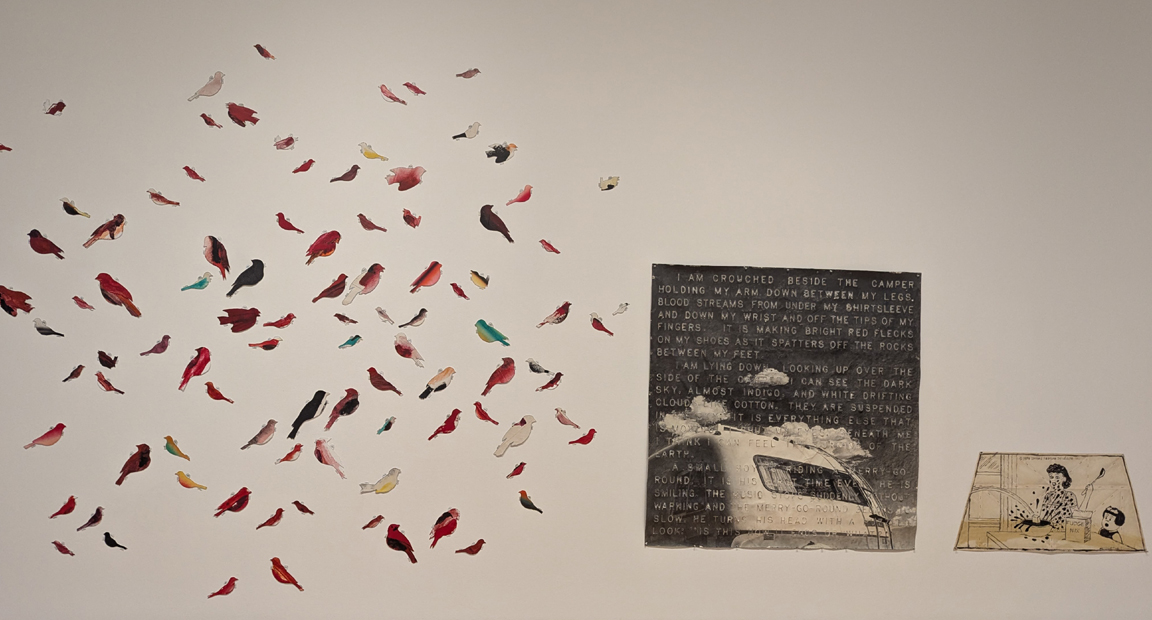
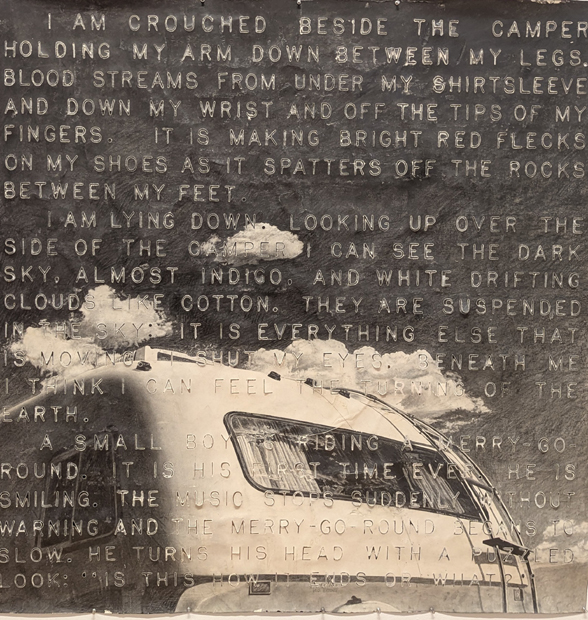
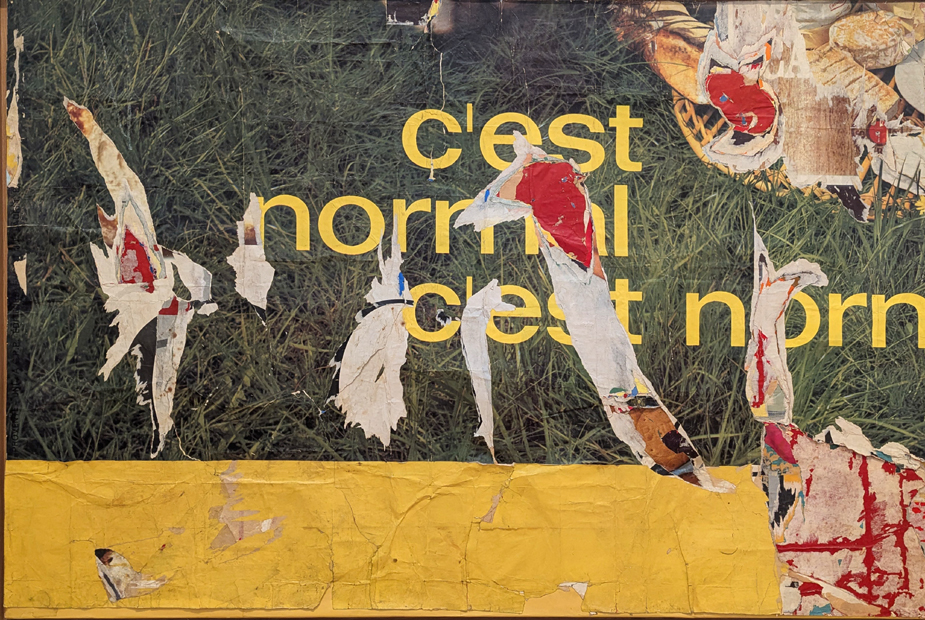
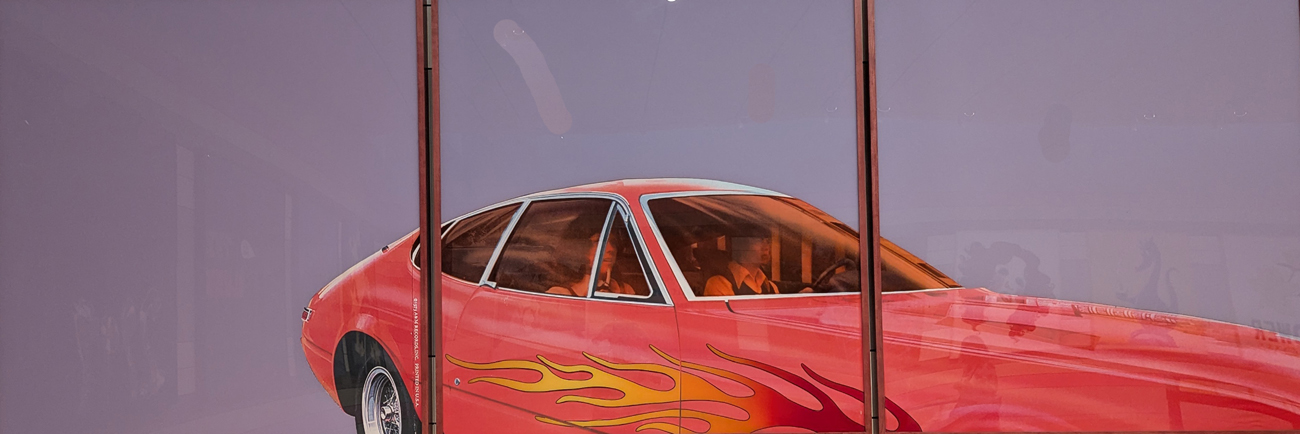
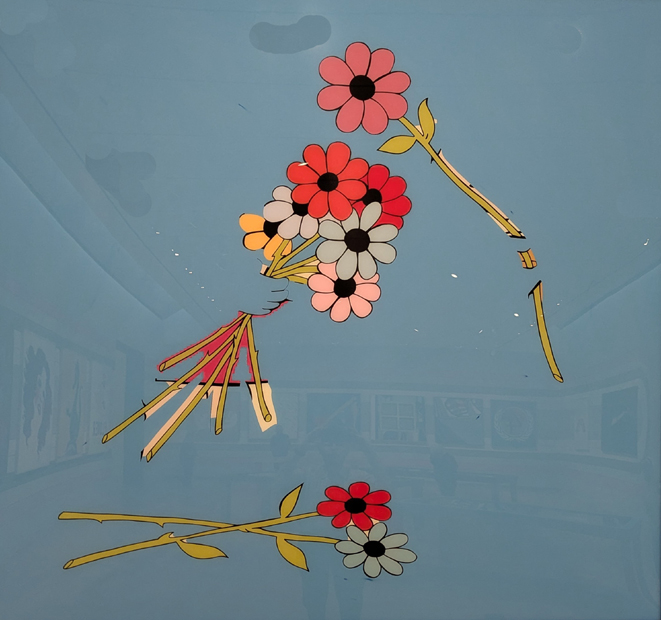
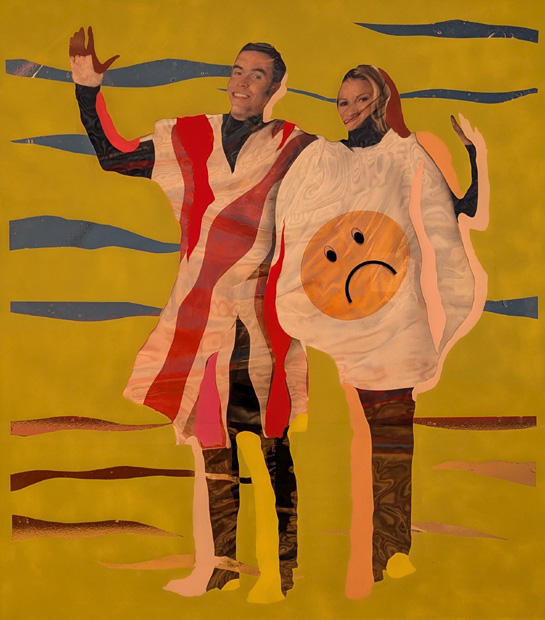
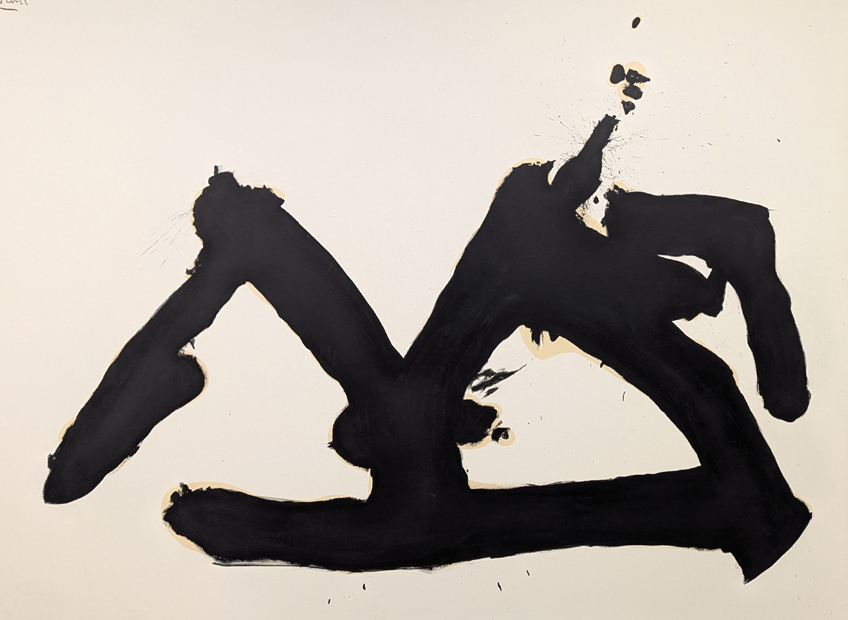
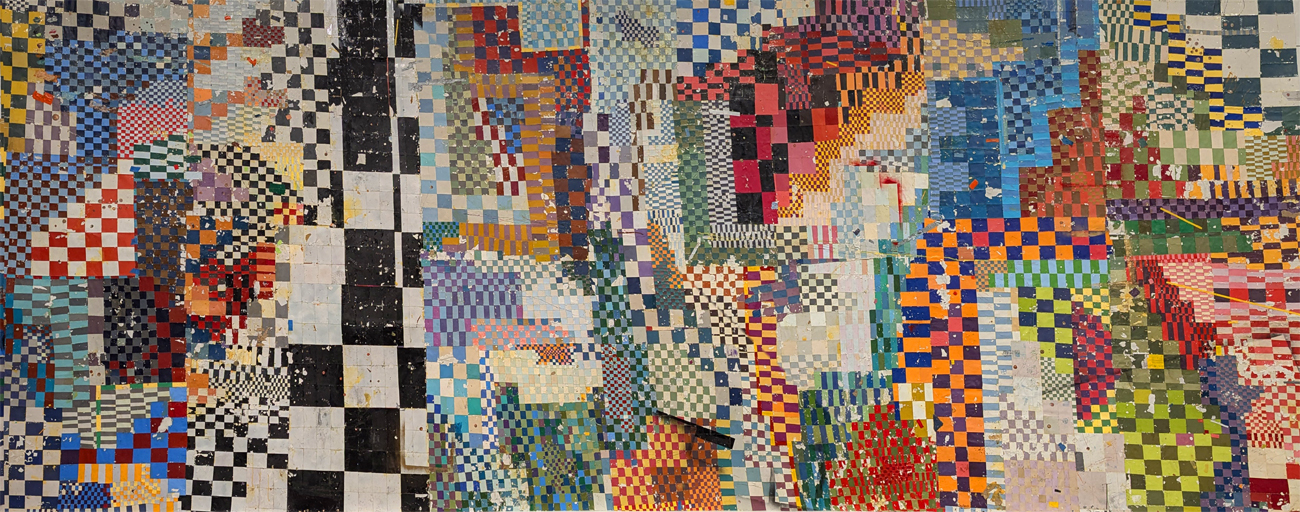
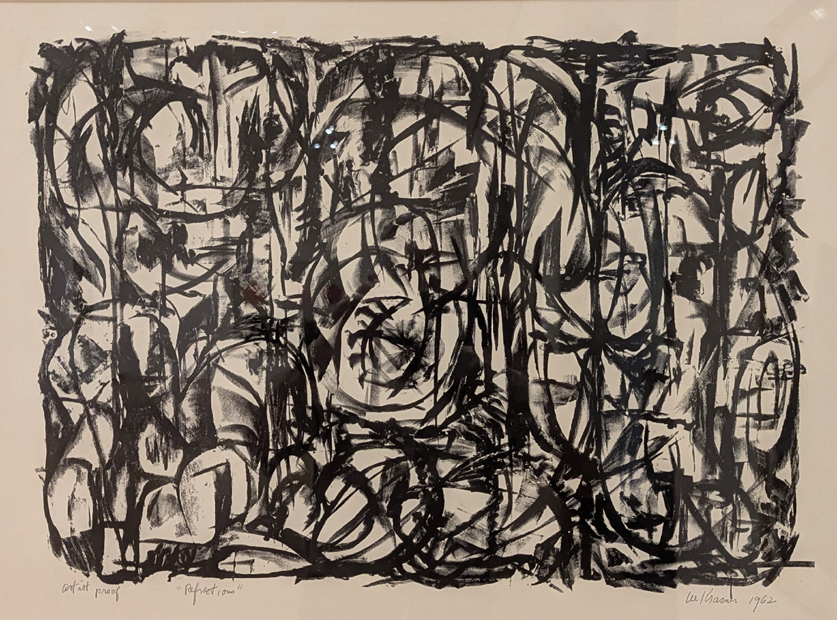
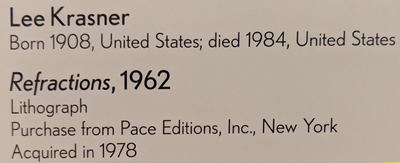
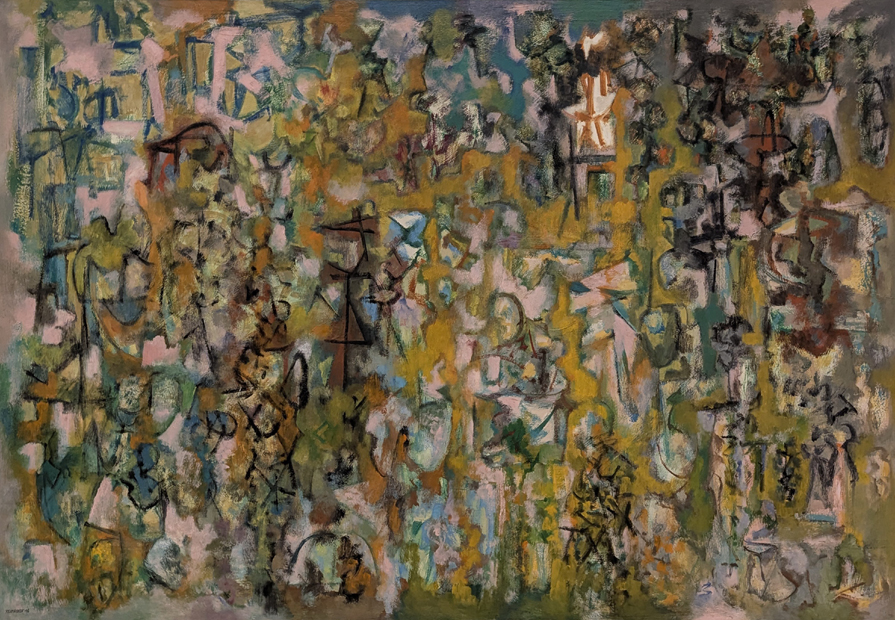
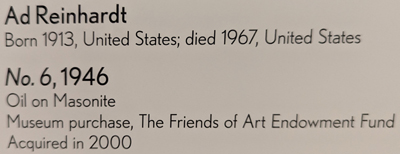
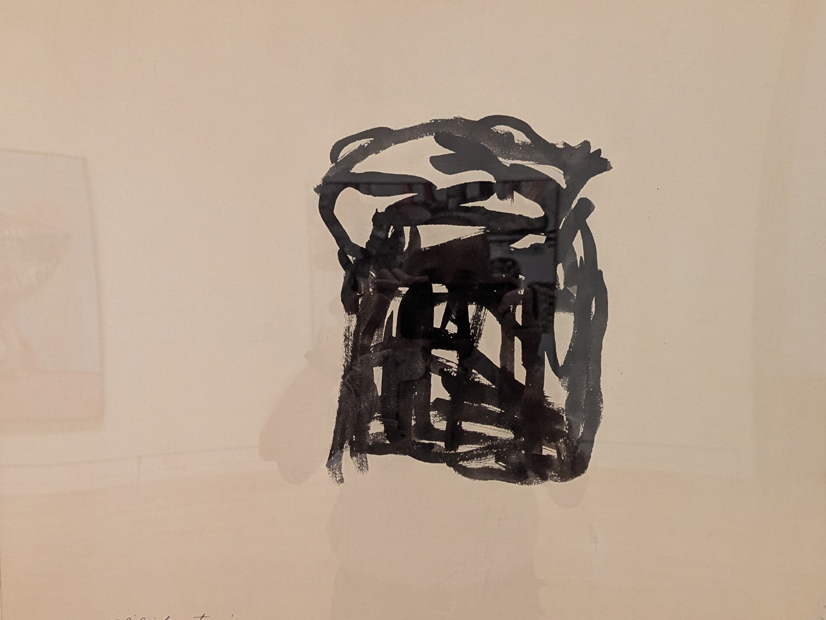
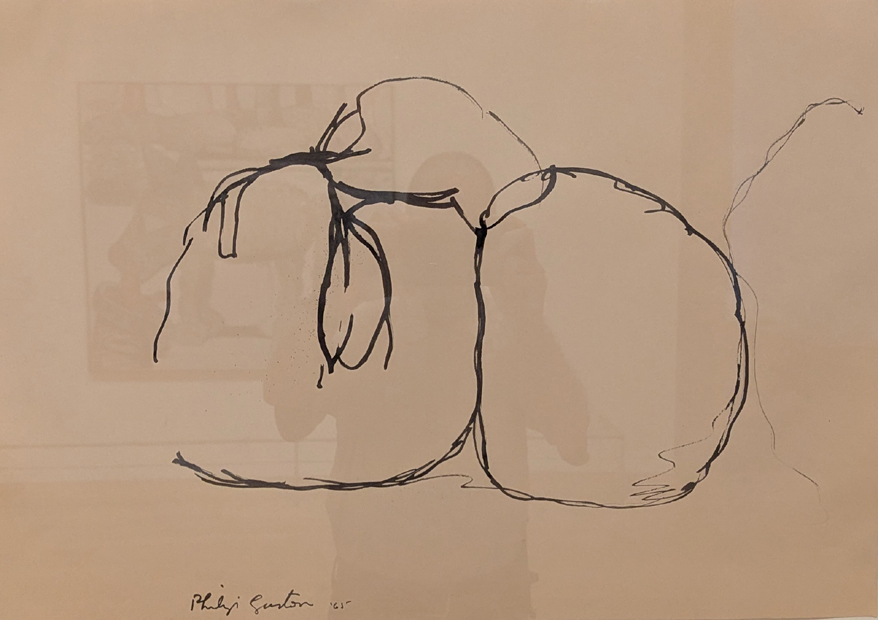
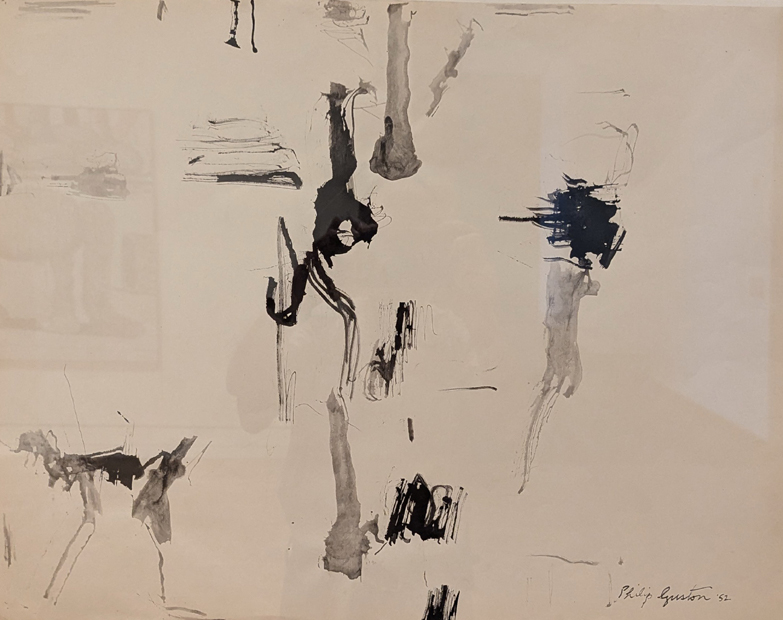
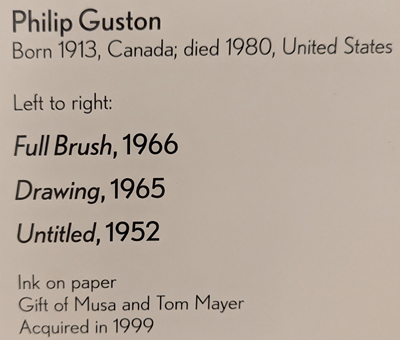
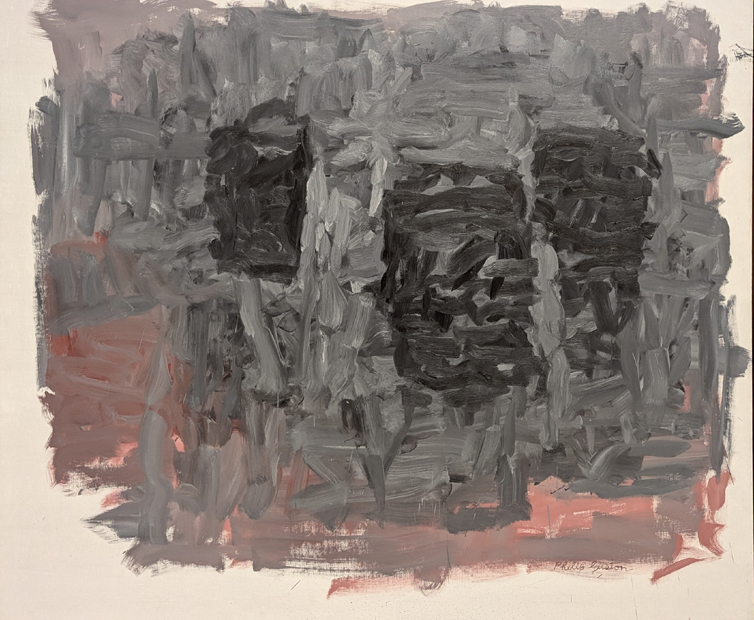
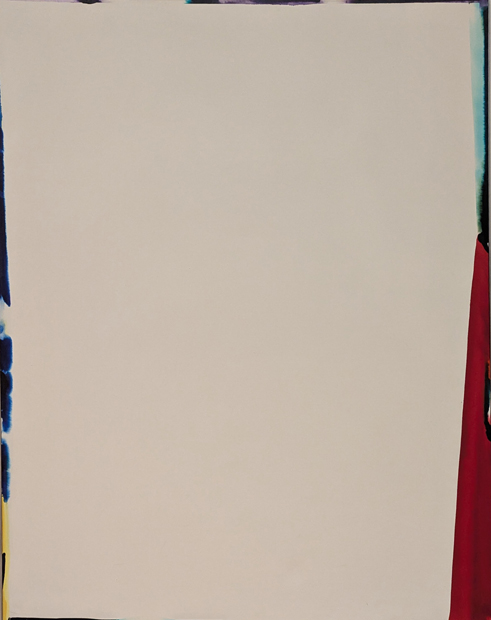
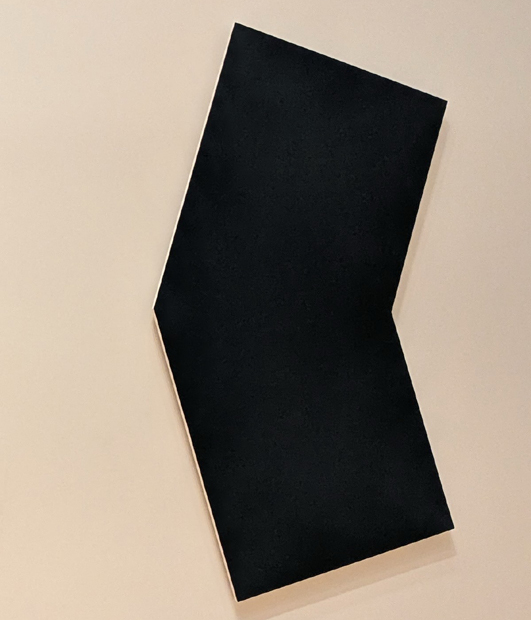
One of the artworks not actually in "The Whale" was nevertheless commented on my Da Corte in one of the plaques in his curated exhibit. And this work could be viewed from both the second floor, where the Da Corte exhibit was, and the first floor, where the actual plaque for the work was located. I have brought the two pictures I took of the work together with the plaque for it as well as Da Corte's comments:
The Plaque:
Da Corte's Comments:
Second-Floor View
First-Floor View
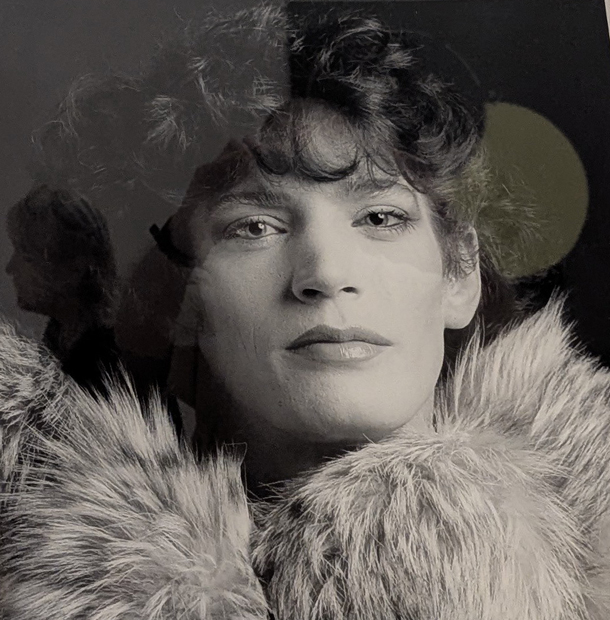
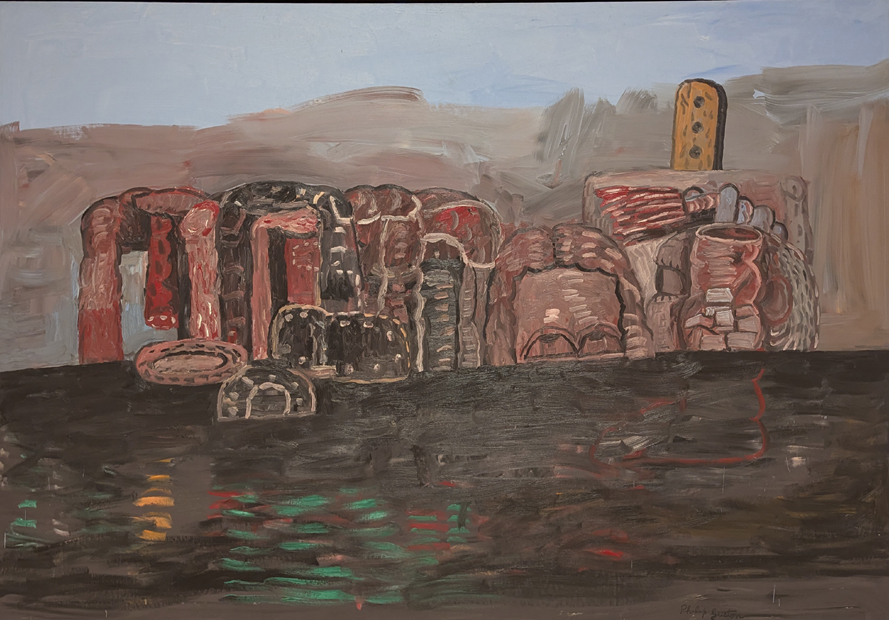
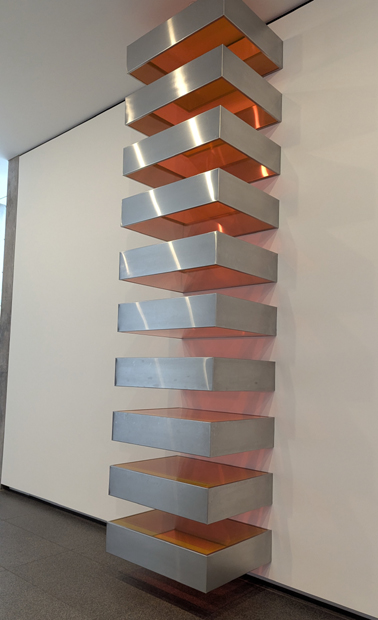
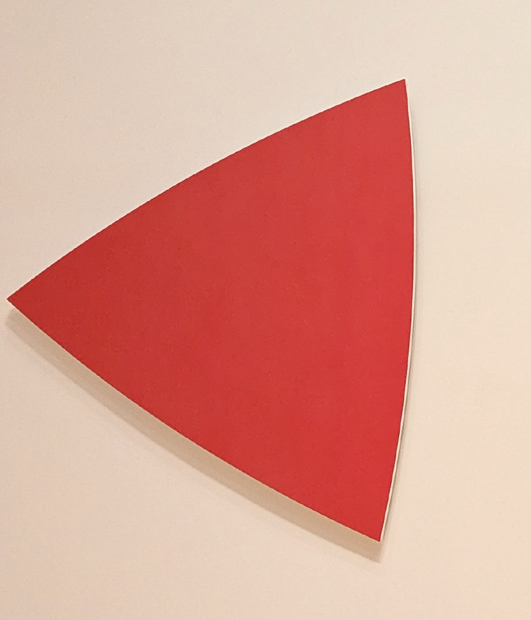
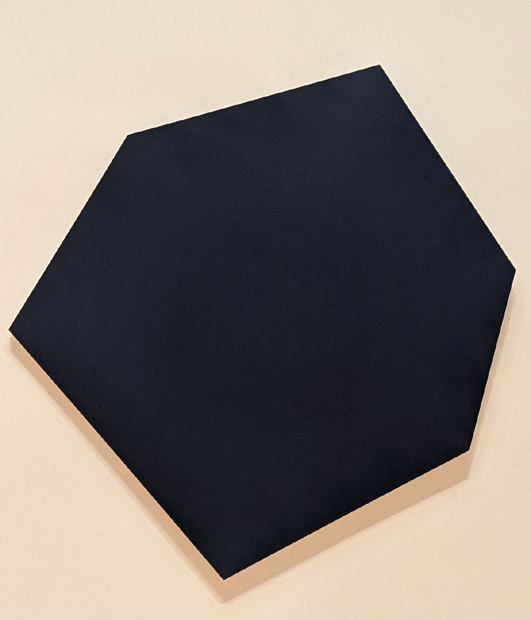
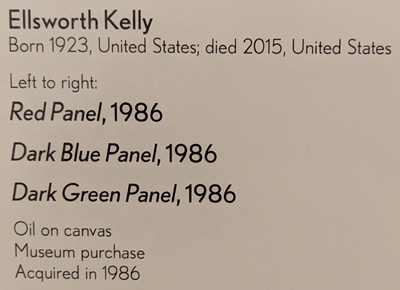
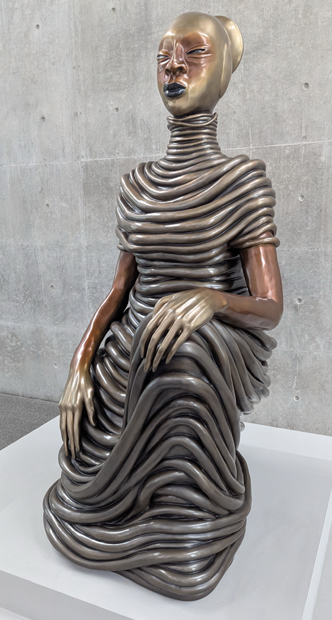
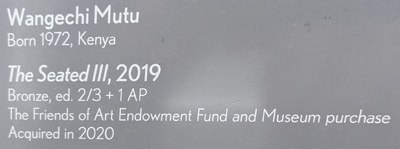
And now for the rest of the works we saw in the Modern today:
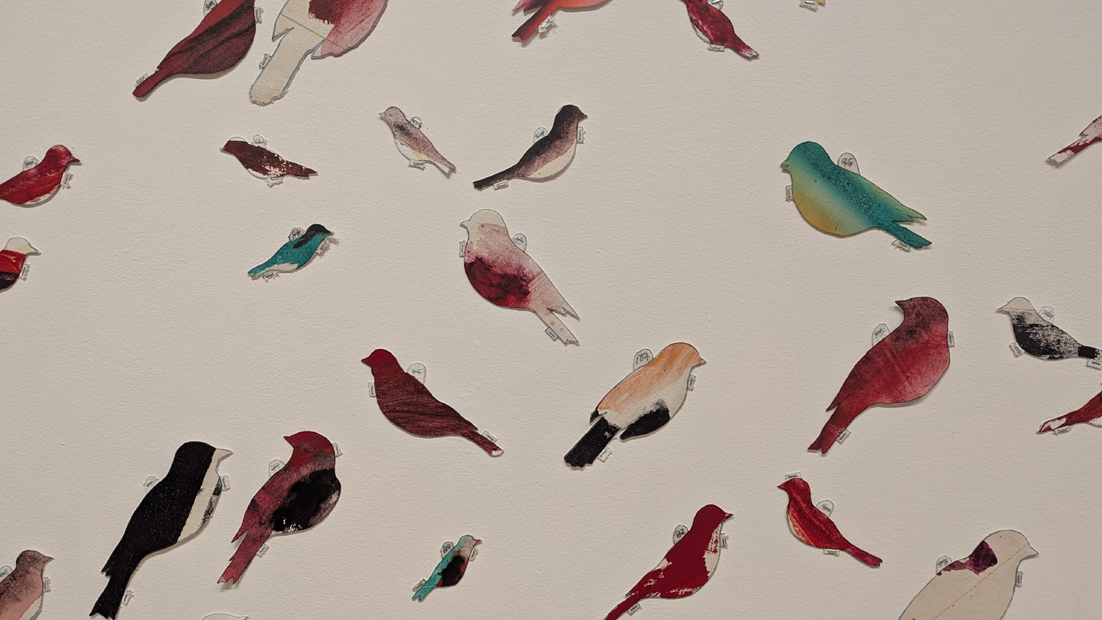
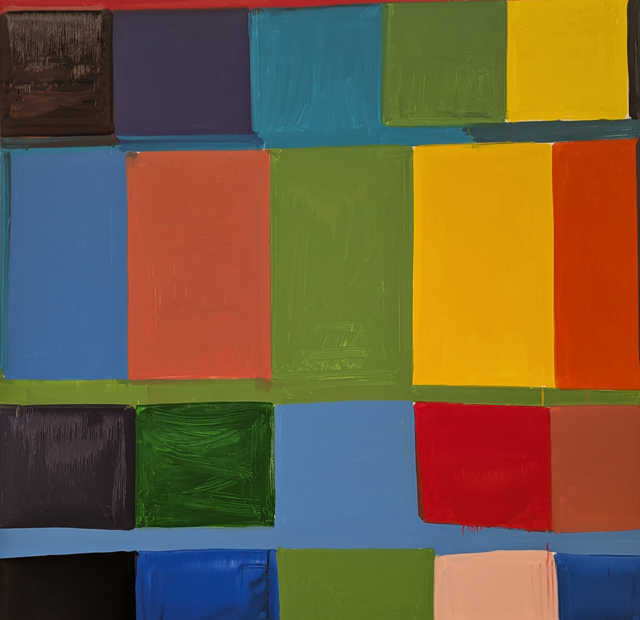
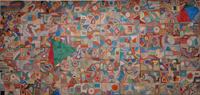
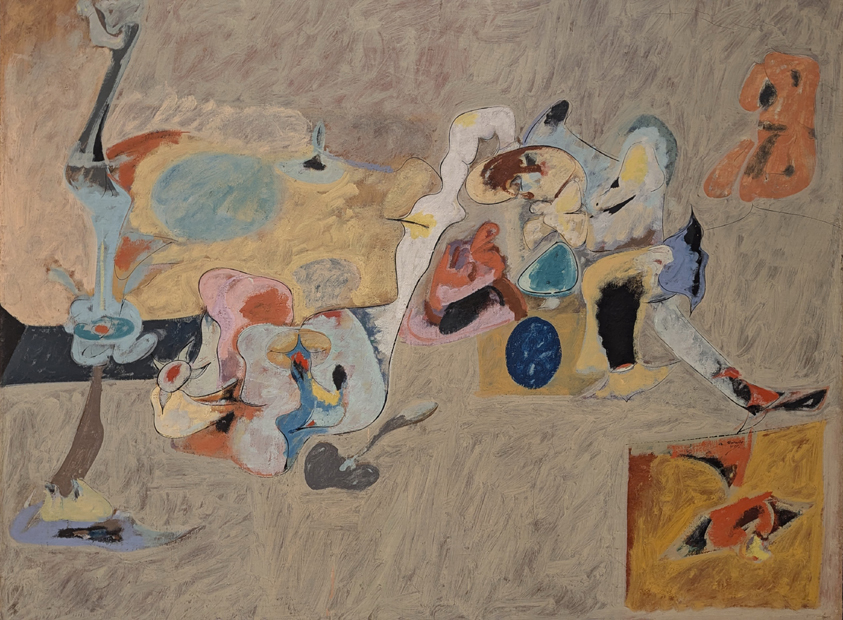
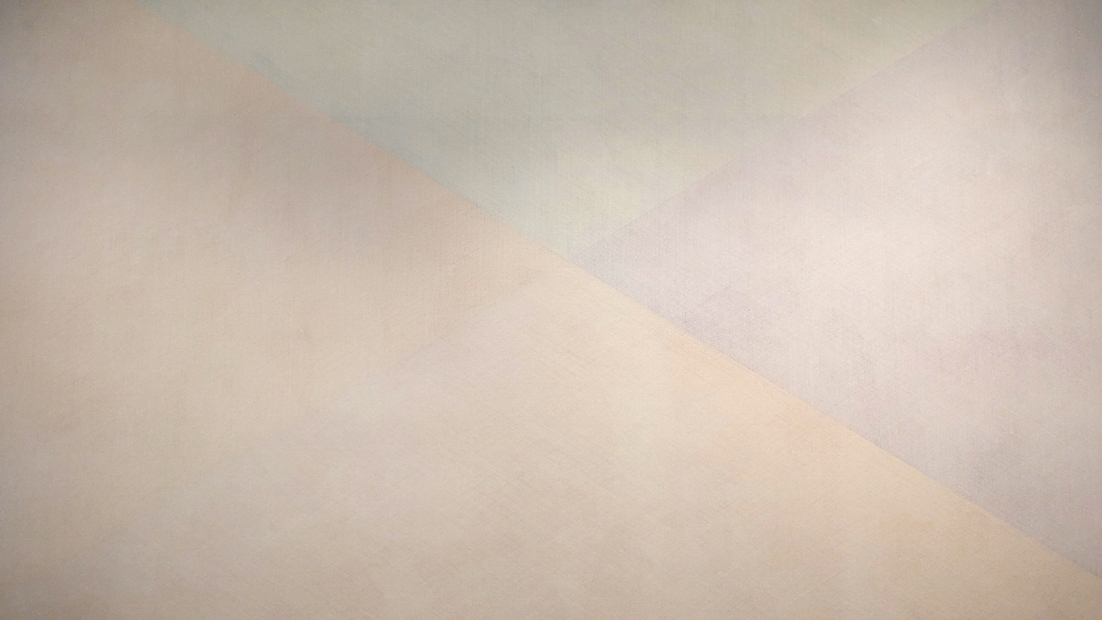
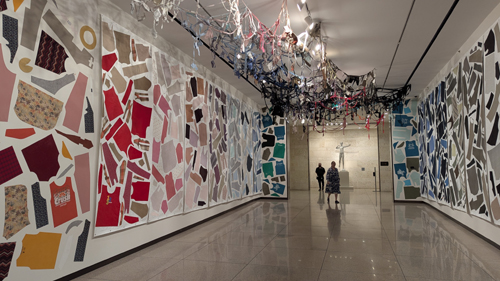
This work was very interesting; it was made of electrical wires. It is almost impossible to appreciate fully unless you are right up close and can see the wires. To try to give you that feeling, I also took a closeup picture of one of the rectangular "panels" that seem to make up the work. So, when you click on the thumbnail at right, I will open the large view of the work in a new browser tab. When that happens, find the panel at right, about midway down the work, that seems to have a "hanging blue fruit". If you will click on that panel, I will open a popup with a closeup of that panel. When you are done, close the popup window and then close the browser tab to return to the main page.
Not all artwork hangs on walls, and not all artwork is stationary, and not all artwork is even physical. This next artwork was actually a computer-generated projection on the floor of one of the galleries. Photographs don't work; only a movie could show it with any realism:
(Mouseover Image if Video Controls Not Visible)
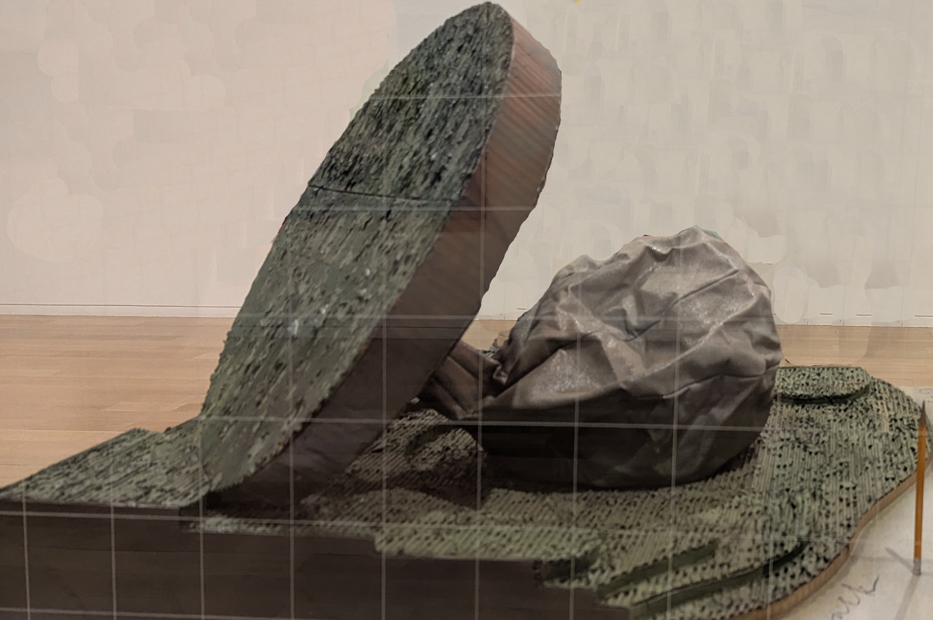
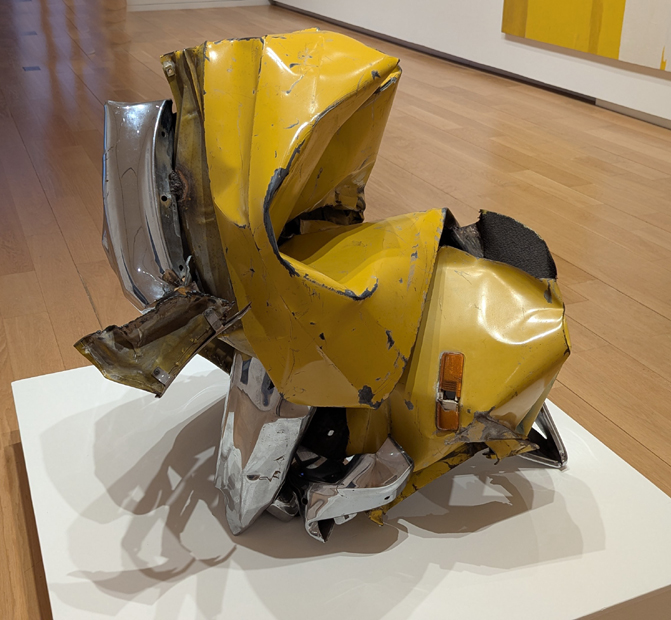
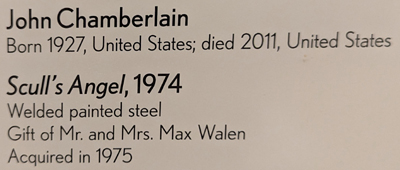
Oddly enough, this work by John Chamberlain was familiar to me. Not this piece, exactly, but his work in general. Last year, we made a trip to Big Bend with Prudence, and on one day of the trip we went to Marfa, Texas, where there is a museum devoted to Chamberlain's sculptures. If you would like to see more of his work and learn a bit more about him, you can visit The Chamberlain Museum in Marfa, Texas.
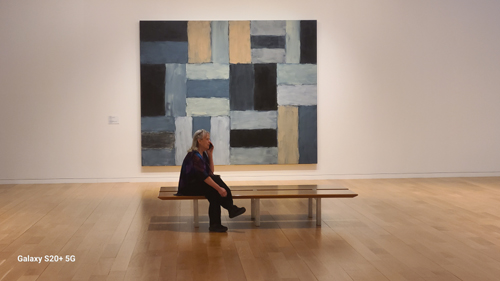
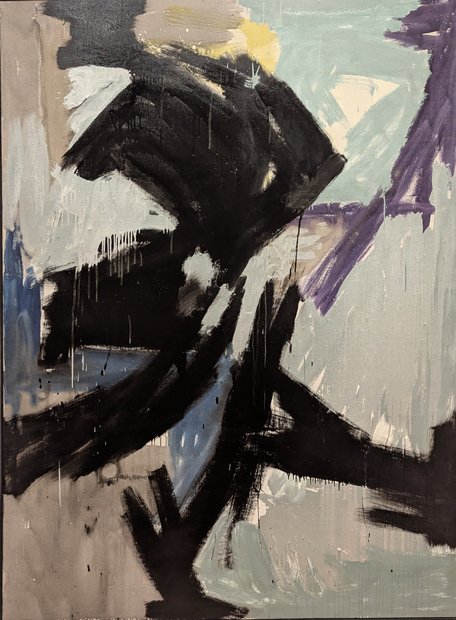
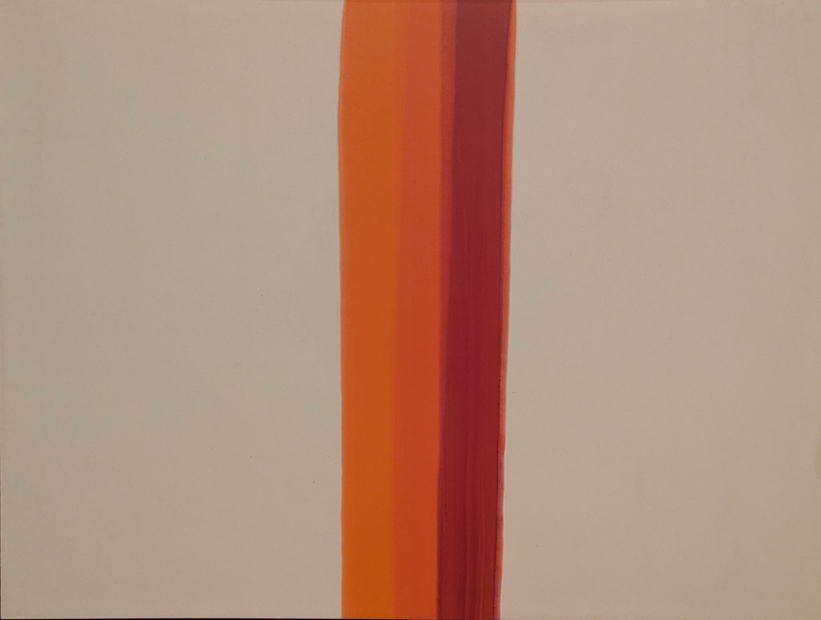
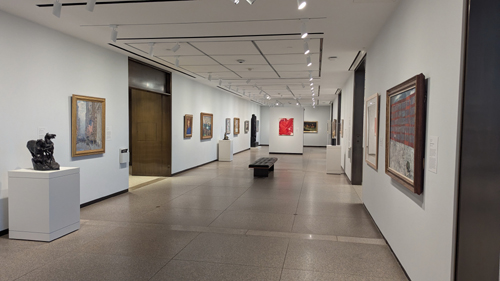
And with that last work, we concluded our visit to The Modern. Coming away from the museum, I had the same feeling that I often have after looking at "modern" art: while some of it is innovative, colorful, and worthy of the accolades it gets, much of it also derivative and in many cases "accidental". And some of it, notably the entire exhibit by David-Jeremiah is, in a word, inexplicable; how anyone could find any of his installations to classify as "art" is beyond me.
Anyway, we are leaving the Modern now, and while Ron and Karl return to Bowie House, Prudence, Nancy, Fred, and I are going to head over to the Amon Carter Museum, where I expect to find artworks more to my liking.
At the Amon Carter Museum of American Art
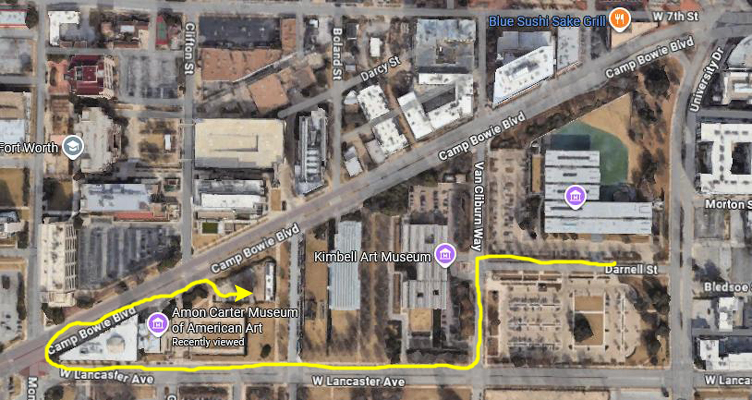
While it is solidly within the Museum District here in Fort Worth, the Amon Carter museum was just a bit too far to walk- especially considering that, if we did, one of us would still have to walk back to the Modern to collect the car. So we drove.
The Museum District in Fort Worth
The Museum District here in Fort Worth is roughly triangular, and the Amon Carter Museum of American Art (often just called "The Carter") is located near the western apex of this triangle.
The Carter's permanent collection features paintings, photography, sculpture, and works on paper by leading artists working in the United States and its North American territories in the nineteenth and twentieth centuries. The greatest concentration of works falls into the period from the 1820s through the 1940s. Photographs, prints, and other works on paper produced up to the present day are also an area of strength in the museum's holdings.
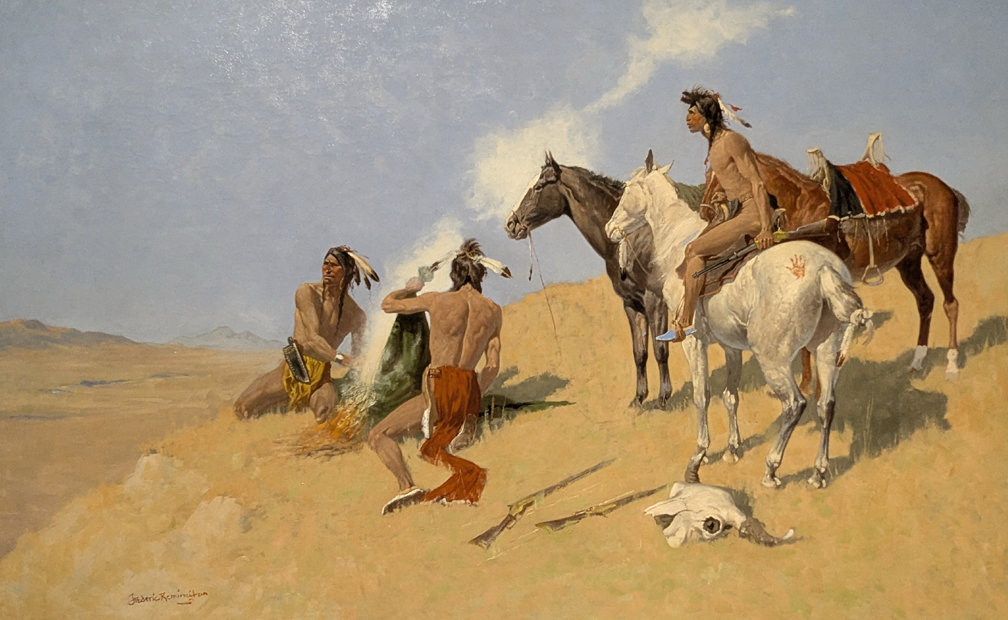
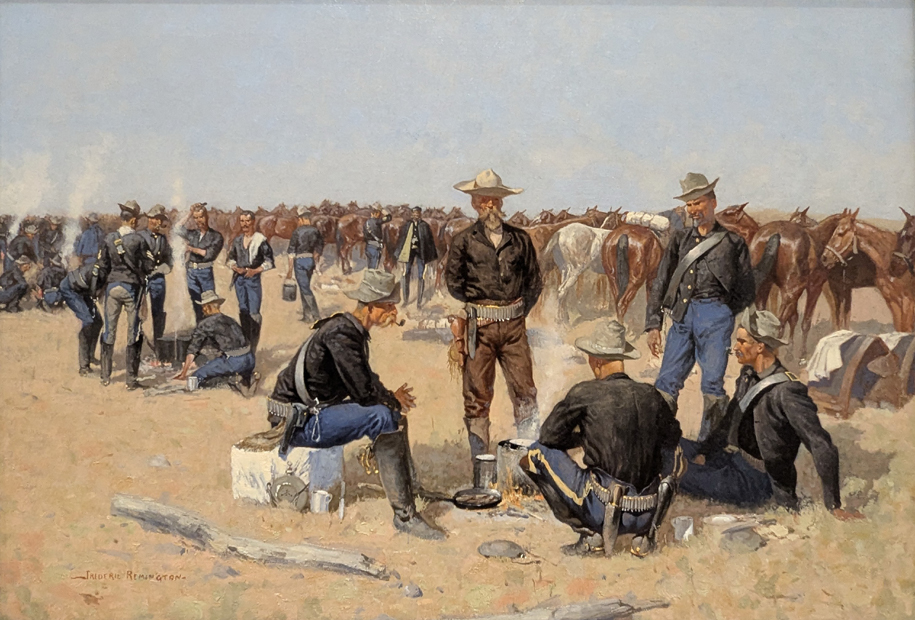
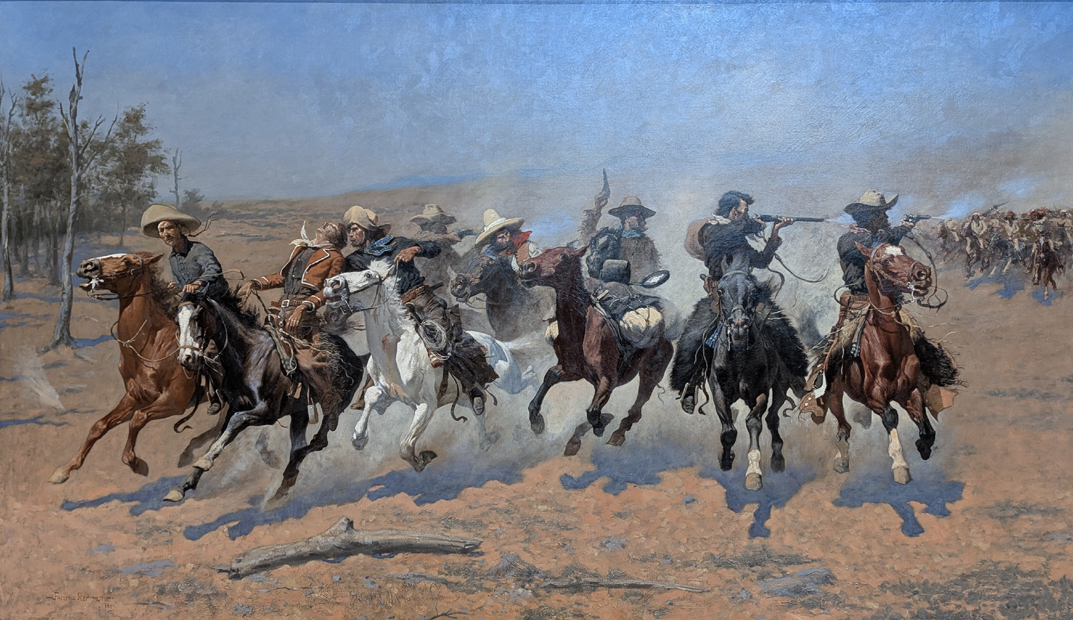
The collection was built on portrayals of the Old West by Frederic Remington and Charles M. Russell, artworks depicting nineteenth-century expansionism and settlement of the North American continent, and masterworks that are emblematic of major turning points in American art history. The "full spectrum" of American photography is documented by 45,000 exhibition-quality prints, dating from the earliest years of the medium to the present.
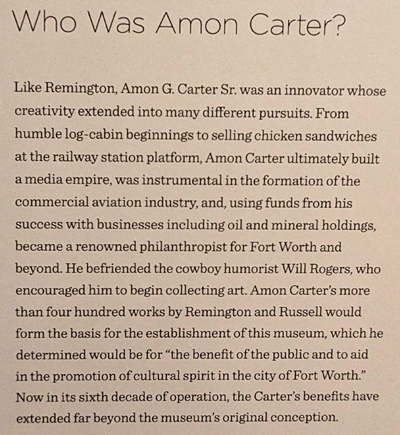
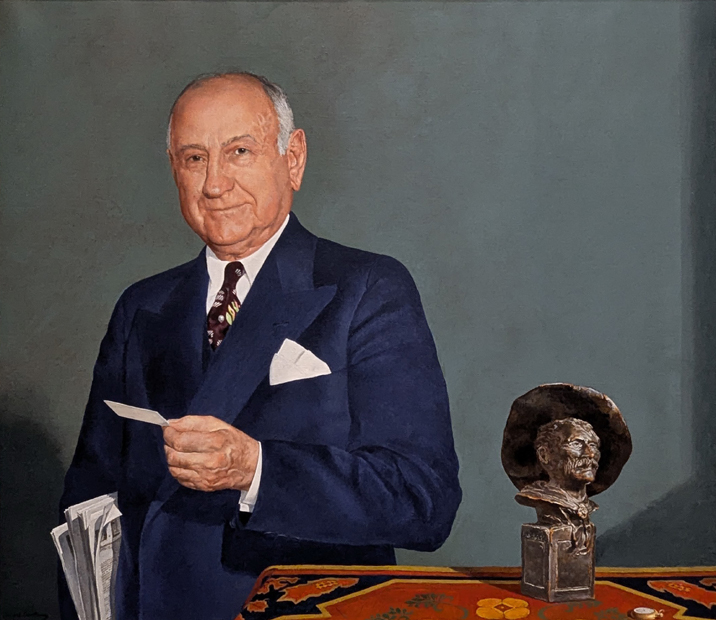
The Amon Carter Museum of American Art opened in 1961 as the Amon Carter Museum of Western Art. The museum's original collection of more than 300 works of art by Frederic Remington and Charles M. Russell was assembled by Fort Worth newspaper publisher and philanthropist Amon G. Carter Sr. (1879–1955). Carter spent the last ten years of his life laying the legal, financial, and philosophical groundwork for the museum's creation, and, due to his philanthropy and that of major museum donors, the permanent collection has expanded a hundred times since then.
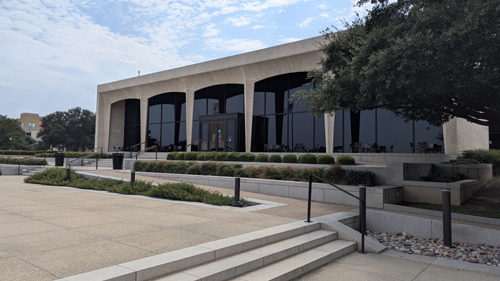
This view looks west at the front of the Carter.
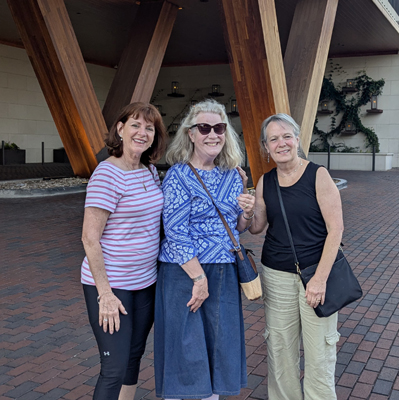
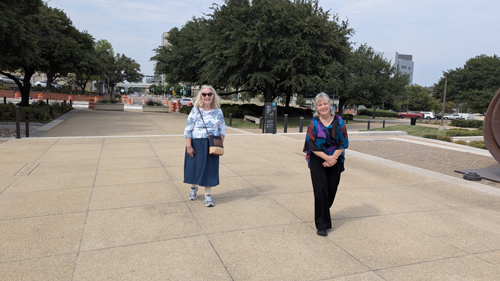
Here are Nancy and Prudence walking up to the entrance of the Carter.
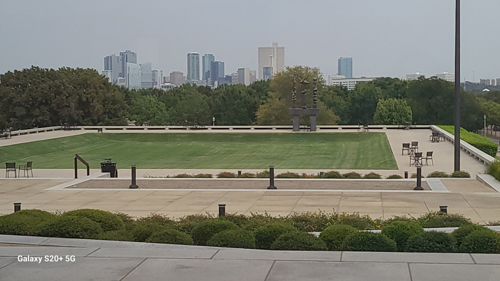
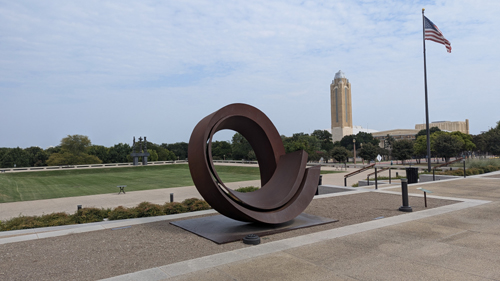
From just outside the Carter, here is a view of the Fort Worth skyline.
Also from just outside the Carter, this view looks southeast towards the Will Rogers Convention Center.
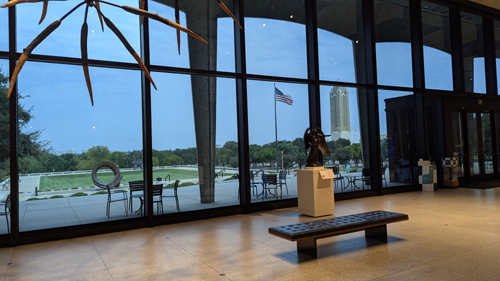
The entire front of the museum is glass, offering amazing views.
From the main lobby, here is another view to the southeast.
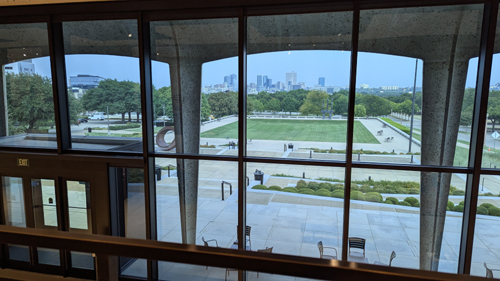
From the front gallery on the second floor, here is another view towards downtown Fort Worth.
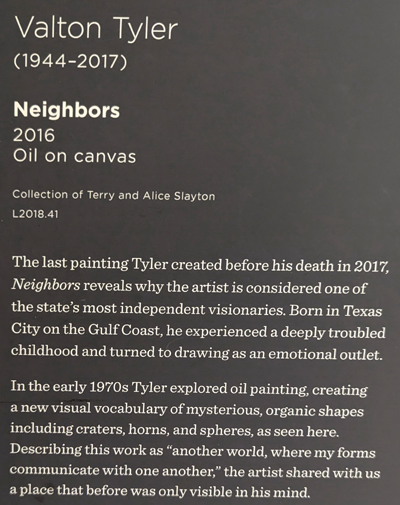
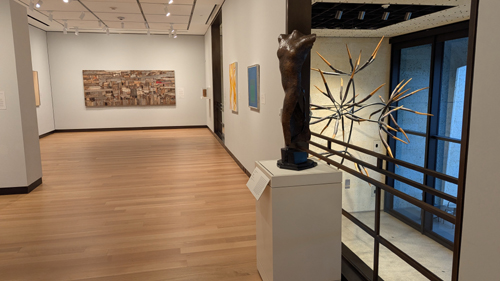
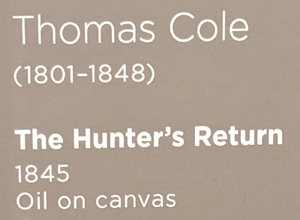
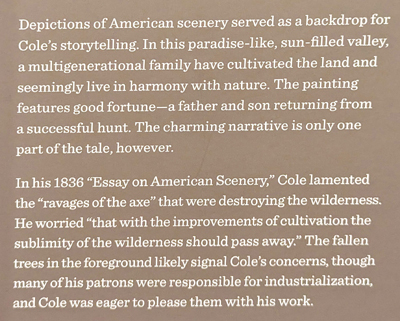
As I've done for the Modern, I am just going to show you the works that I viewed and photographed. I did not, as I did at the Modern, "document" all the works on display in all the galleries. Instead, I focused on one current exhibit, my favorite works by Remington and Russell, and also some other works that I found particularly interesting.
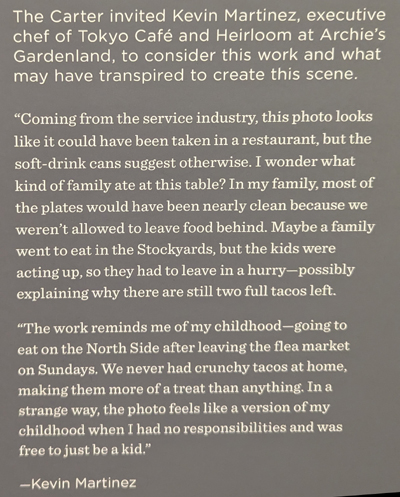
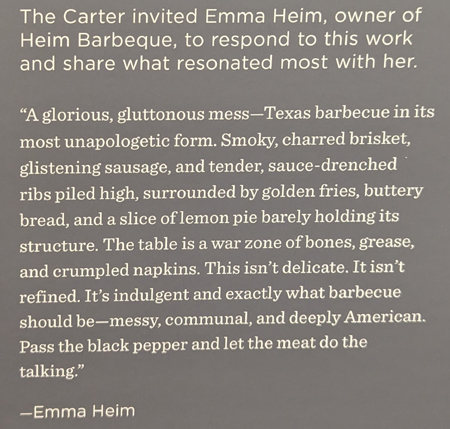
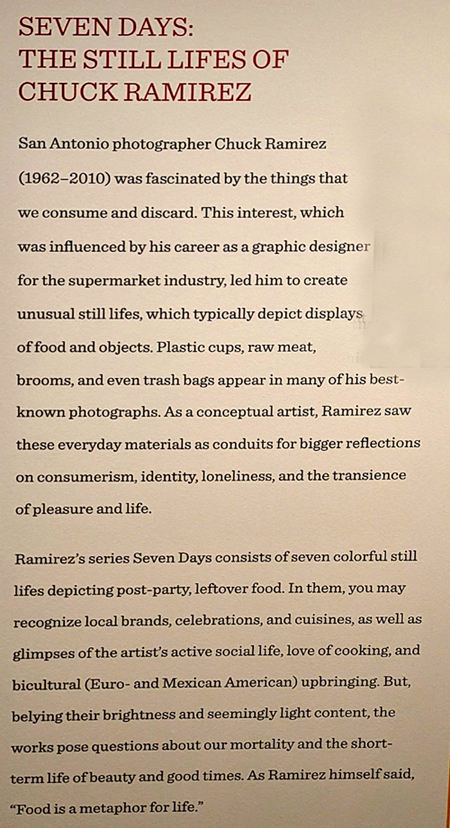
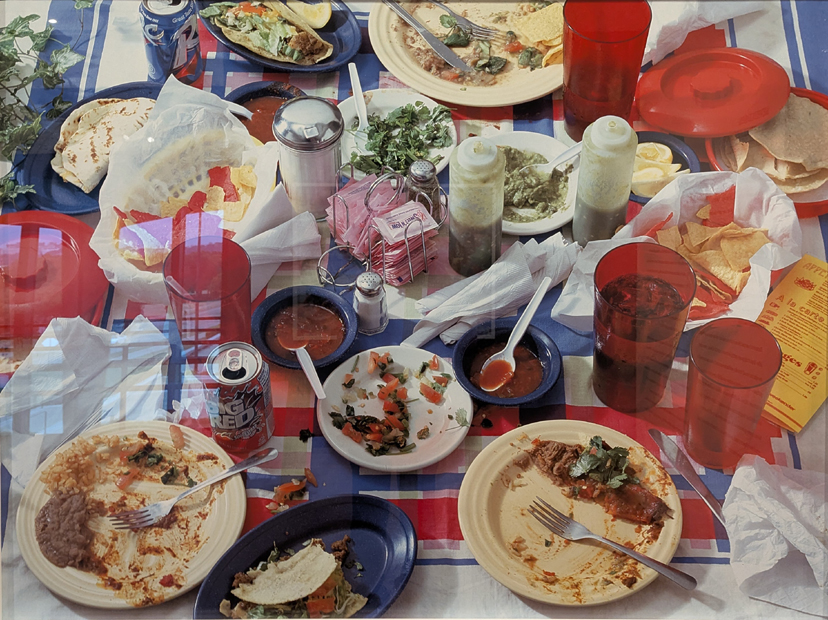
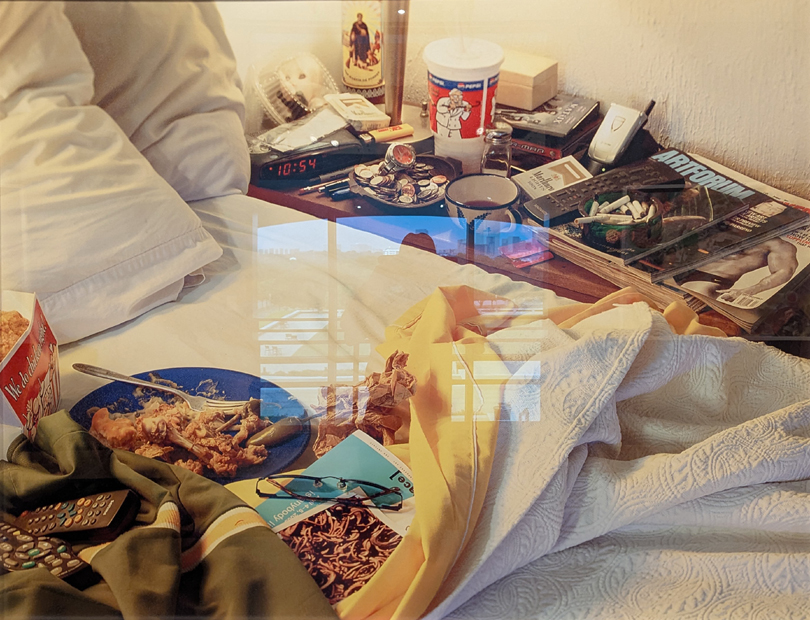
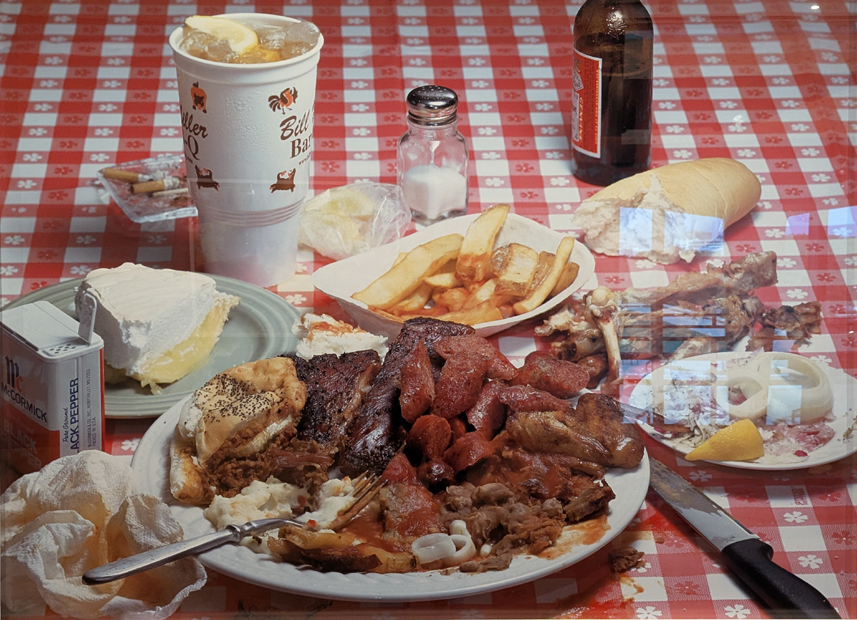
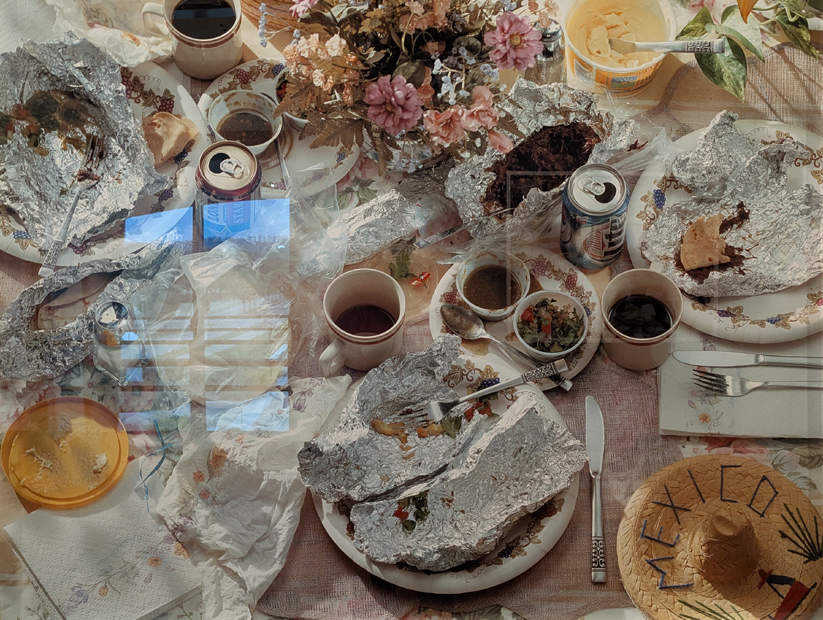
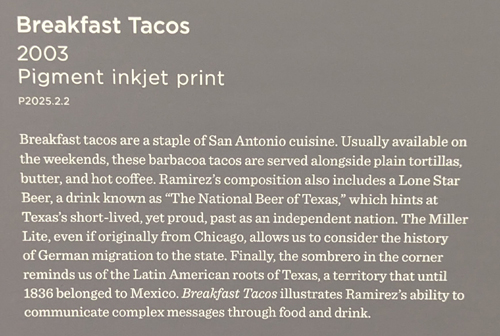
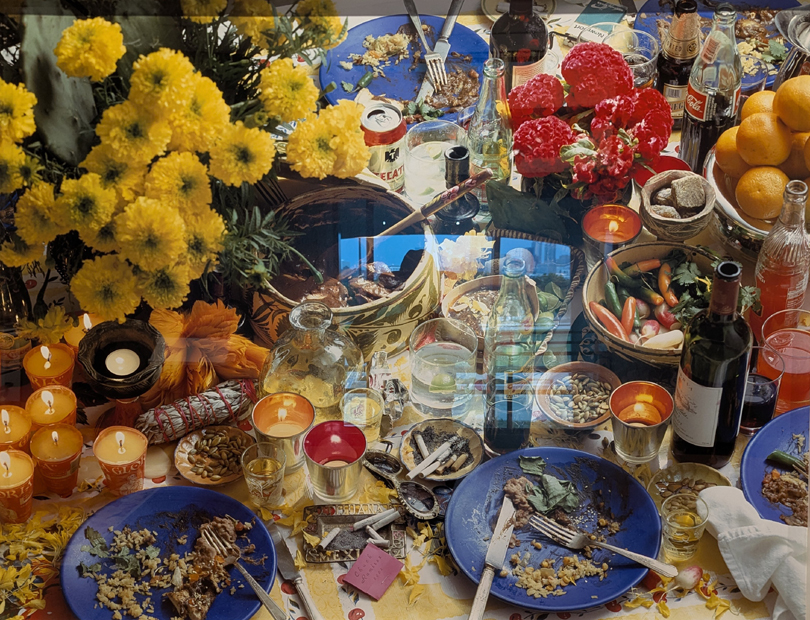
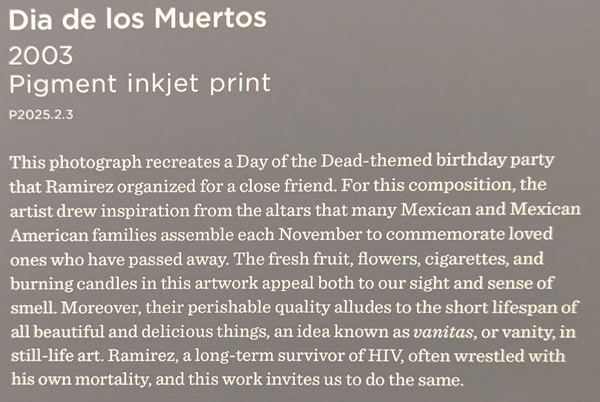
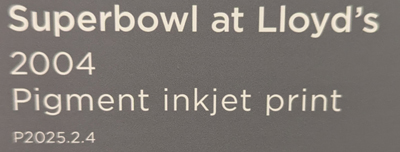
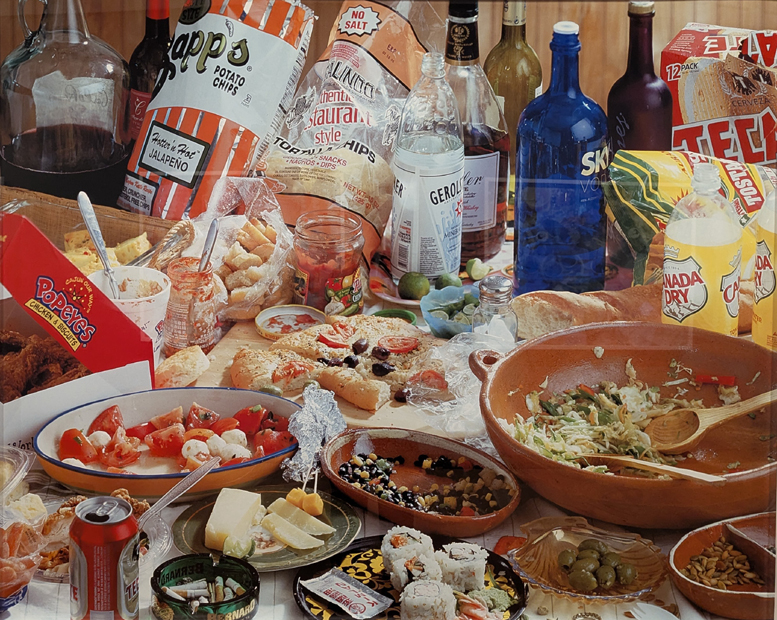
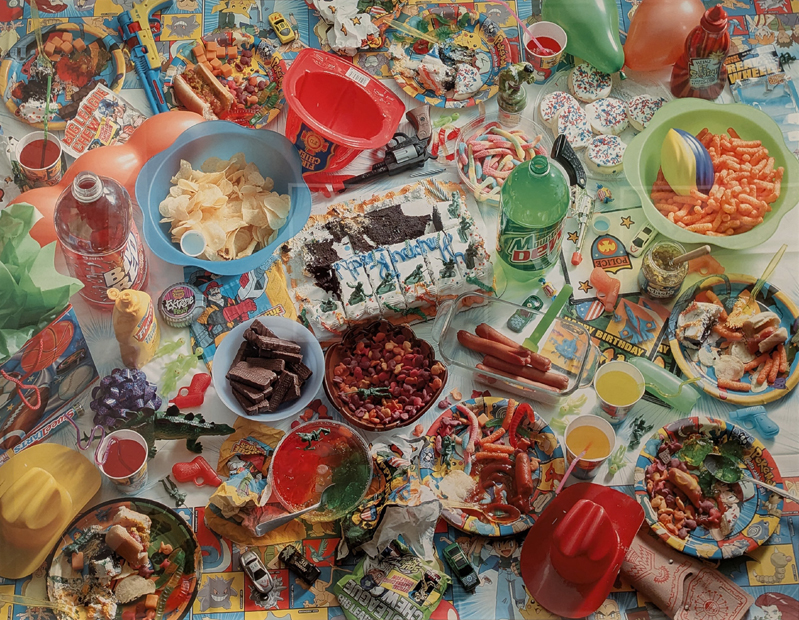
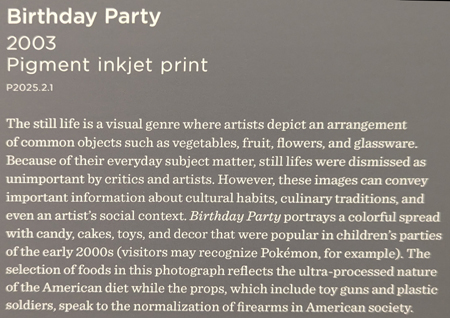
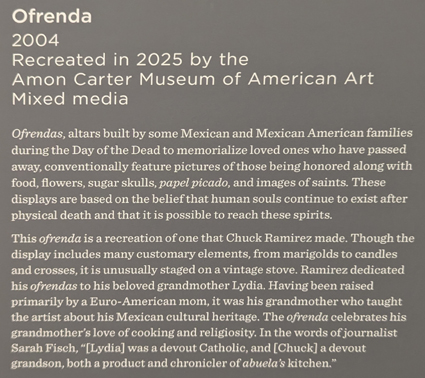
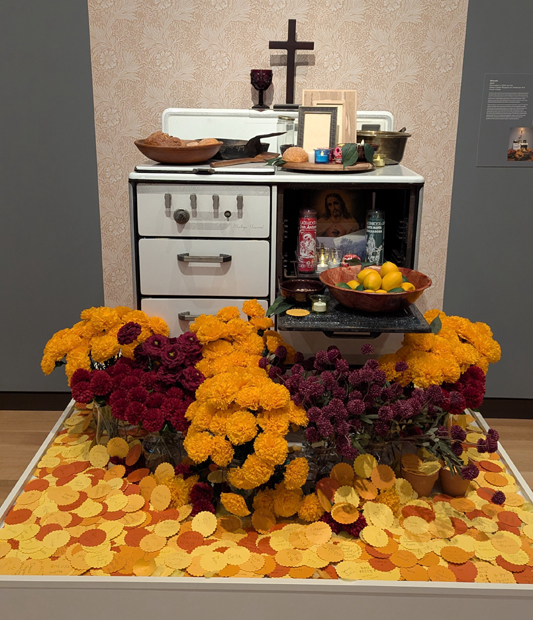
Seven Days: The Still Lifes of Chuck Ramirez
This exhibit was on the second floor in the front gallery, and, having never seen these works before, I photographed all of them.
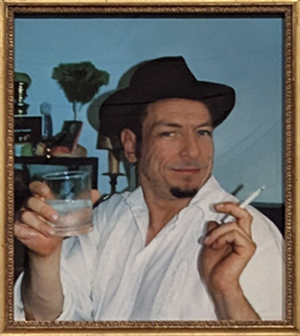
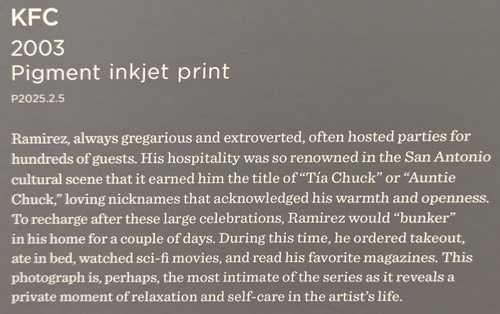
The exhibit was of work by photographer Chuck Ramirez, pictured at left. Below, in the scrollable window, is the information about Chuck and the exhibit that was posted nearby.
The Art of Thomas M. Russell
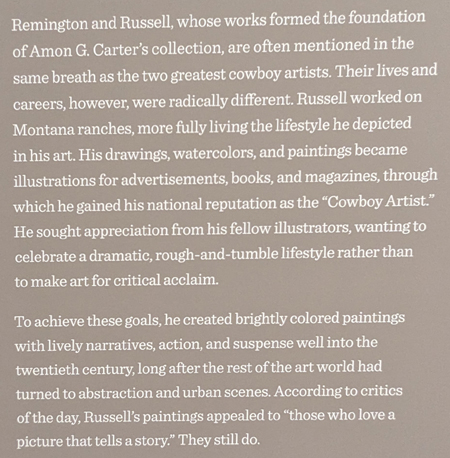
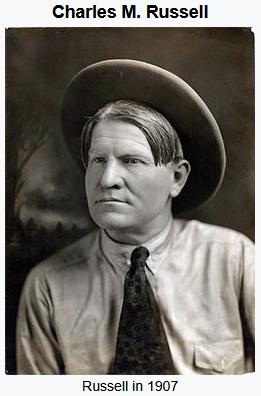
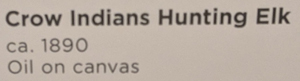
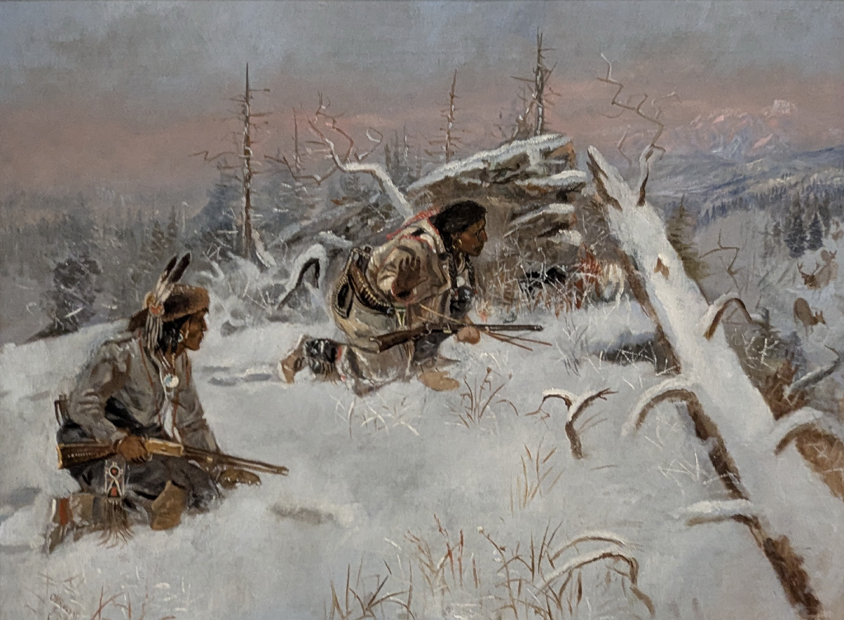
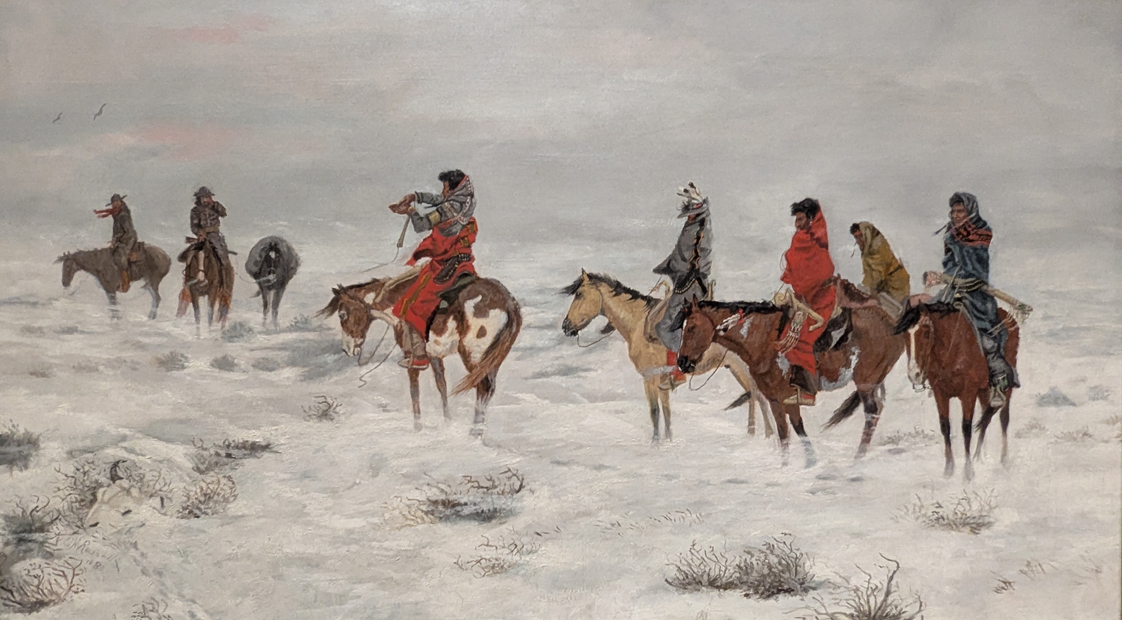
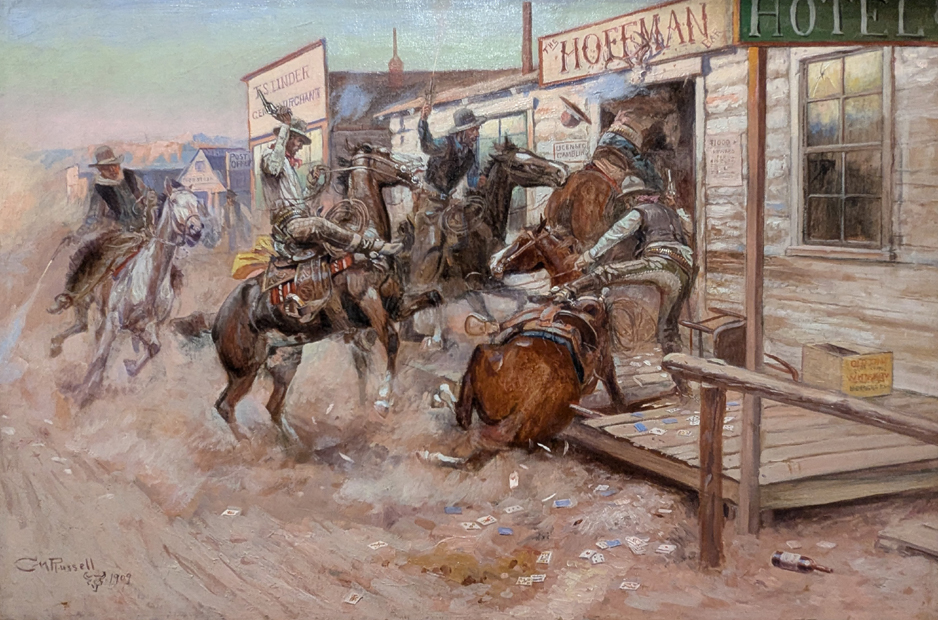
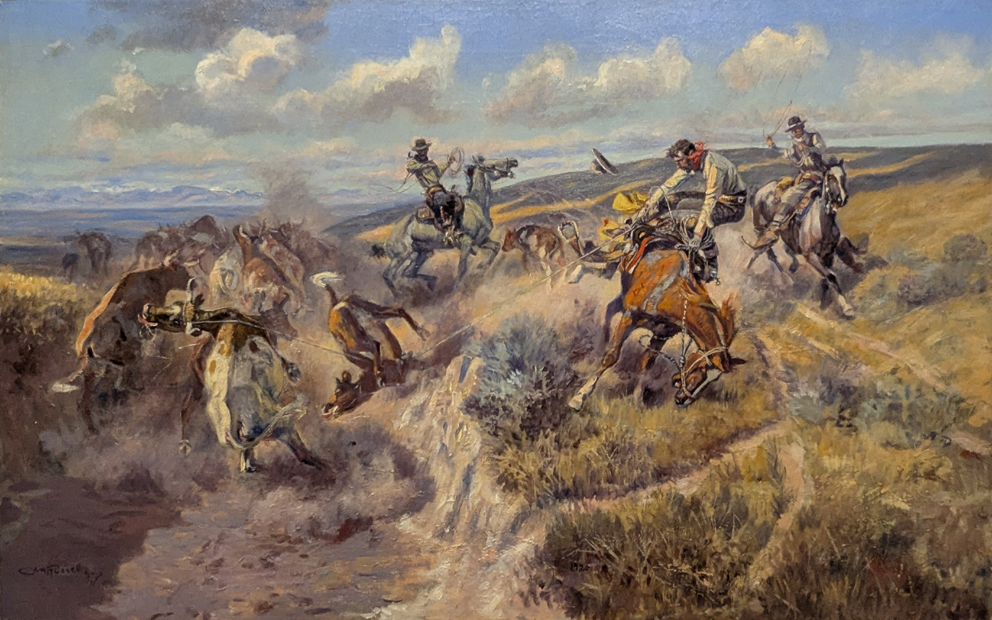
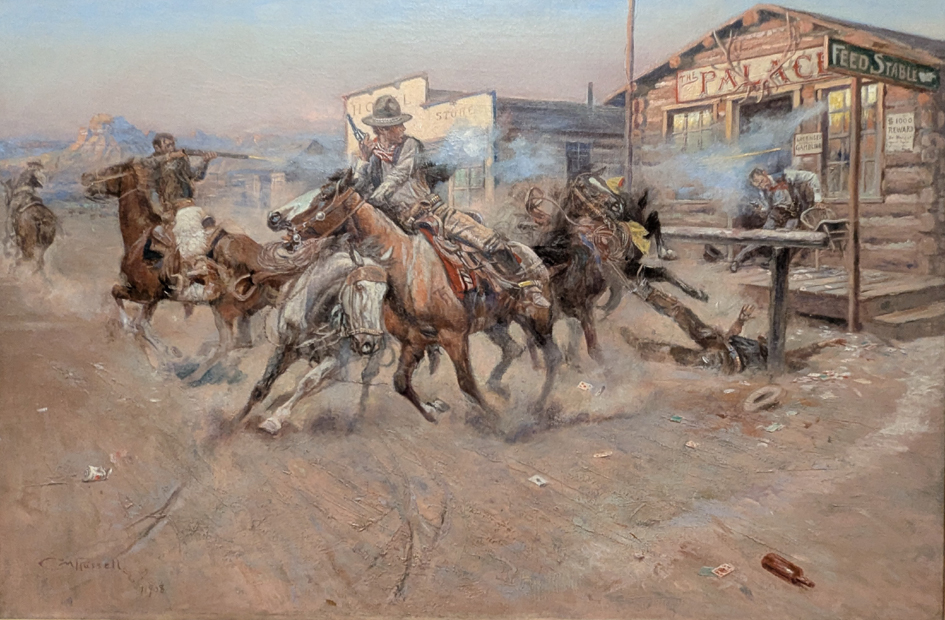
Whenever I come to the Carter, I always spend time looking at the works on display from two of my favorite artists. One of these is Charles M. Russell. His works are usually adjacent to those of another of my favorite artists- Frederick Remington.
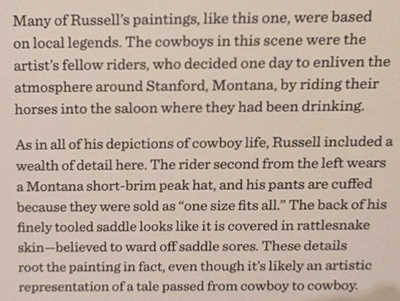
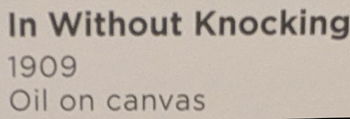
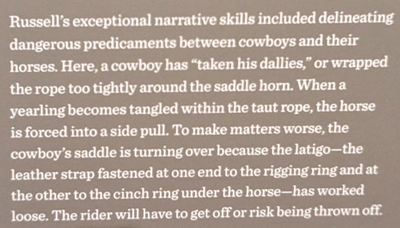
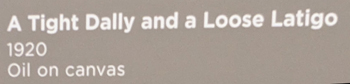
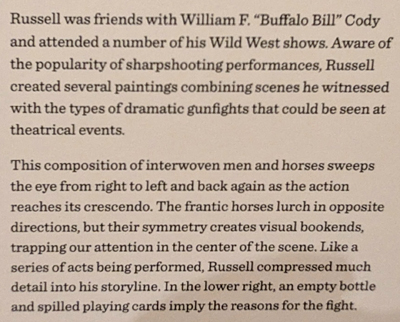
Posted near some of Russell's works was a plaque about the artist, and you can read it at left.
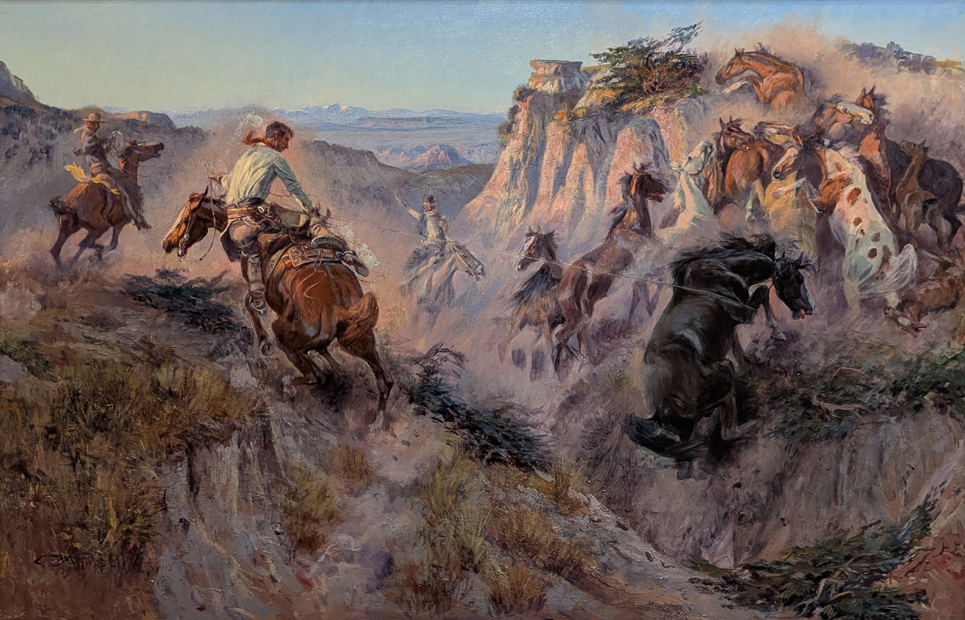
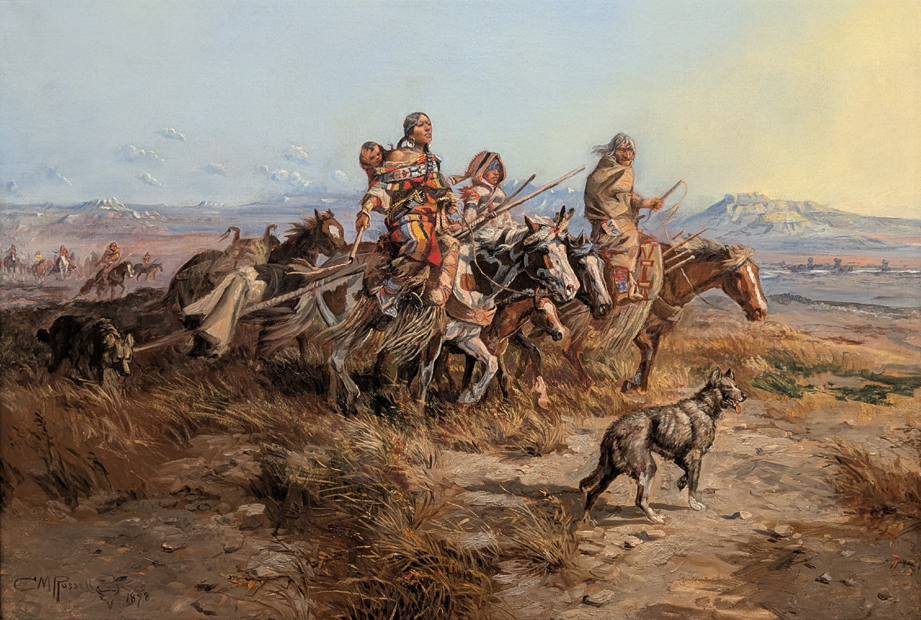
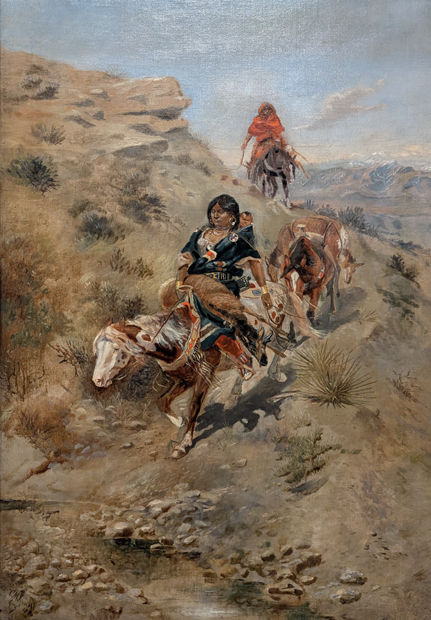
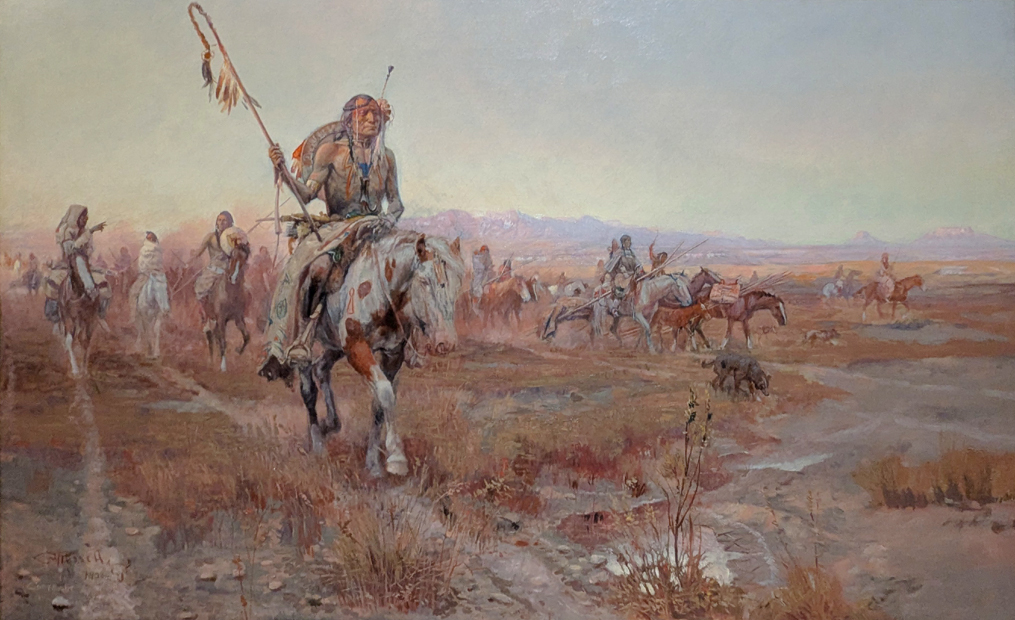
Charles Marion Russell (March 19, 1864 – October 24, 1926) was an American artist of the American Old West. He created more than 2,000 paintings of cowboys, Native Americans, and landscapes set in the western United States, in addition to bronze sculptures. He is known as "the cowboy artist" and was also a storyteller and author. He became an advocate for Native Americans in the west. While the Russell Museum in Great Falls, Montana, houses the most of his artworks, the collection at the Carter is next most significant.
Art was always a part of Russell's life. Growing up in Missouri, he drew sketches and made clay figures of animals. Russell had an intense interest in the "wild west" and would spend hours reading about it. Russell watched the explorers and fur traders who frequently came through Missouri, and he learned to ride in nearby Illinois. At the age of sixteen, Russell left school and went to Montana to work on a sheep ranch.
Russell left the sheep ranch and found work with Jake Hoover, a hunter and trapper who had become a rancher. He owned land in the Judith Basin of Central Montana. Russell learned much about the ways of the West from him, and the two men remained lifelong friends. After a brief visit in 1882 to his family in Missouri, Russell returned to Montana, and lived and worked there for the remainder of his life.
Working as a cowboy on the O-H Ranch in the Judith Basin, he documented the harsh winter of 1886–1887 in a number of watercolors. The ranch foreman received a letter from the owner, asking how the cattle herd had weathered the winter. In reply, the foreman sent a postcard-sized watercolor that Russell had painted of a gaunt steer being watched by wolves under a gray winter sky. The ranch owner showed the postcard to friends and business acquaintances, and eventually displayed it in a shop window in Helena, Montana. After this, the artist began to receive commissions for new work. Russell's caption on the sketch, Waiting for a Chinook, became the title of the watercolor. Russell later painted a more detailed version of the scene which became one of his best-known works.
In 1888-1889, Russell lived with the Blood Indians, a branch of the Blackfeet nation. Scholars believe that he gained much of his intimate knowledge of Native American culture during this period- knowledge that became a hallmark of his artworks. Russell eventually moved to the area of Great Falls, Montana, in 1892. There he worked to make a living as a full-time artist.
In 1896, Russell married his wife Nancy, and in 1897, they moved into Great Falls; Russell spent the majority of the remainder of his life there. He continued with his art, becoming a local celebrity and gaining the acclaim of critics worldwide. As Russell was not skilled in marketing his work, Nancy is generally given credit for making him an internationally known artist. She set up many shows for him throughout the United States and in London, creating many followers for his work.
As an artist, Russell emerged at a time when the Wild West was of intense interest to people who lived in cities, and cattle drives were still being conducted over long distances. He painted images of the Old West that were later adopted by Westerns, which became a movie staple. Russell made many friends among the well-off collectors of his works, including actors and film makers such as William S. Hart, Will Rogers, and Douglas Fairbanks. Russell produced about 4,000 works of art, including oil and watercolor paintings, drawings and sculptures in wax, clay, plaster and other materials, some of which were also cast in bronze.
On the day of Russell's funeral in 1926, the children in Great Falls were released from school so they could watch the funeral procession. Russell's coffin was displayed in a glass-sided coach, pulled by four black horses.
Inside the Carter
As we walked through the Amon Carter, I took a good many pictures, with most of them being the Ramirez exhibit, the works of Charles Russell, and the works of Frederick Remington. In this section, I want to put the other pictures that I took.
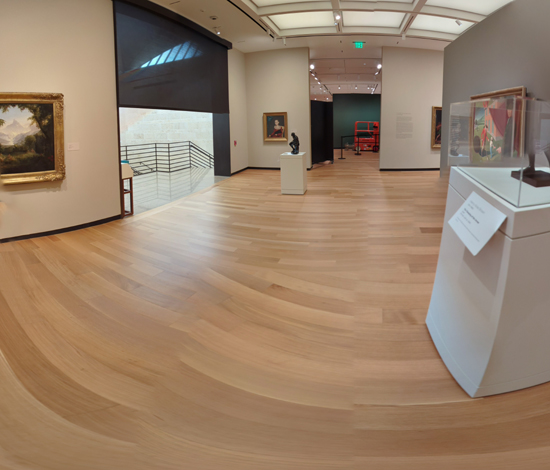
I took a couple of pictures upstairs. The picture at right is called a "photosphere" (at least in my phone's camera). The facility is designed to capture all of a confined space by taking numerous pictures in every direction, which the camera then stitches together. As you can see, the process isn't perfect- particularly as perspective is concerned. Below is one of the smaller upstairs galleries.
The last gallery pictures I took were in the back of the museum in the large area near the gift shop.
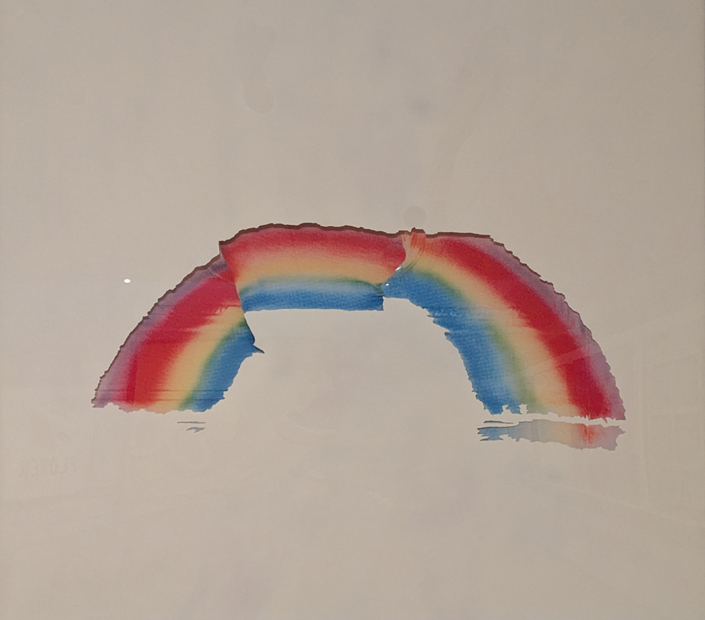
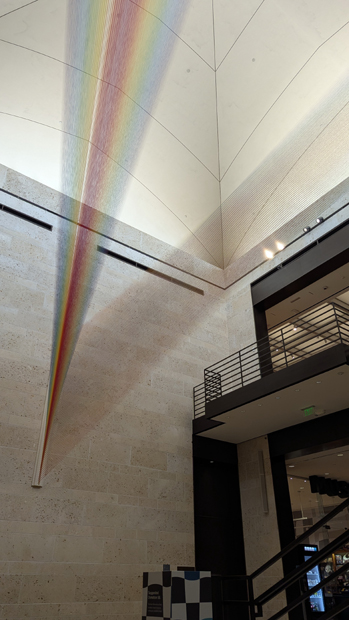
In this area, there was at least one art installation- a rainbow created out of colored wires that are strung from a single point on one wall to a range of points on the opposite wall. At left is the thumbnail for a picture that I took of this specific artwork. I should have also taken a picture of the descriptive plaque on the wall, but I got sidetracked and forgot.
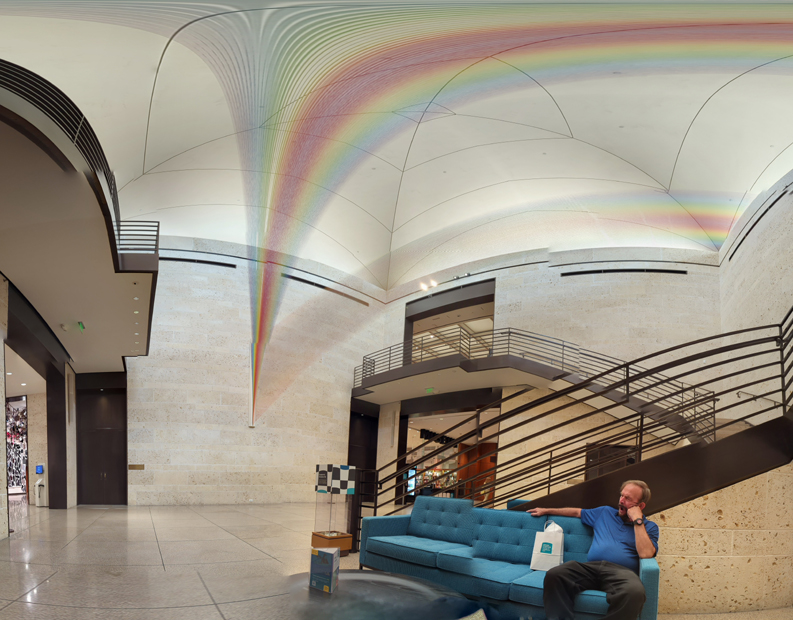
At right is a thumbnail for a photosphere that I made while I was sitting in a chair opposite the sofa on which Fred was sitting. I think these photospheres are pretty amazing. I could have retouched the picture to eliminate the two obvious imperfections (the sofa and the railing on the stairs behind Fred), but this would still leave the perspective differences. In this particular picture, though, I think these perspective anomalies are actually kind of interesting.
Click on each thumbnail to see the large picture.
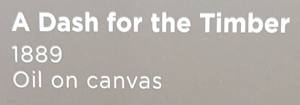
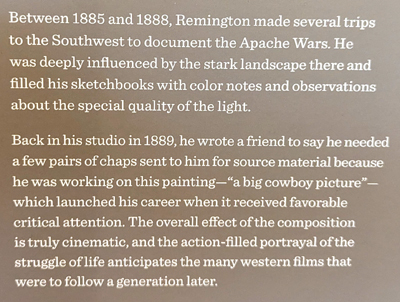
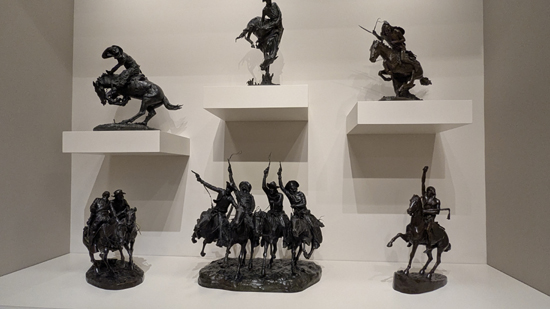
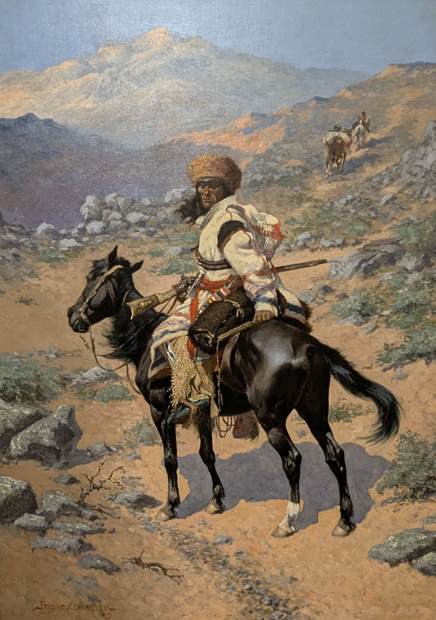
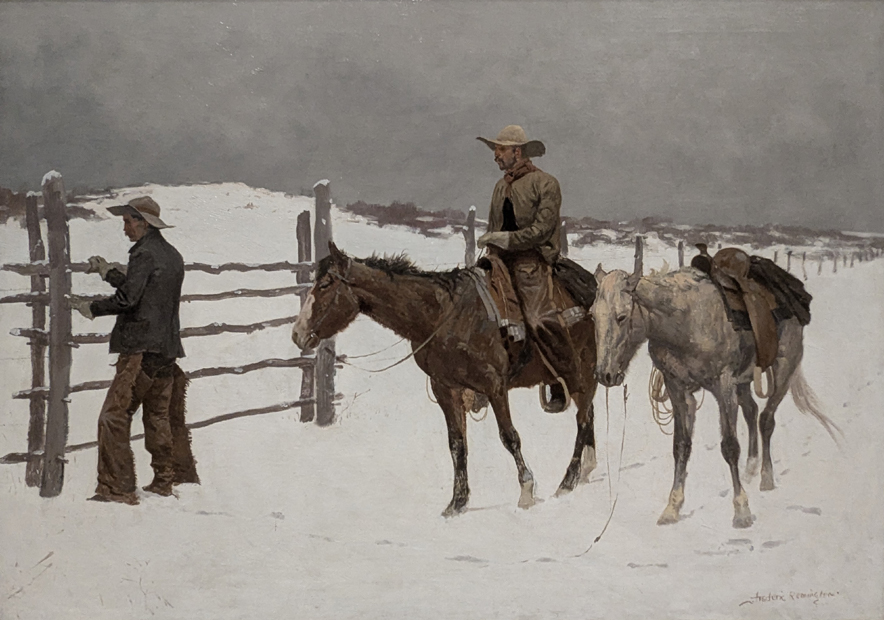
The Art of Frederick Remington
Sometimes, the works of one of my favorite American artists, Frederick Remington, can seem quite similar to those of my other favorite American artist- Charles M. Russell. You can judge for yourself as you look at the pictures I took of Frederick Remington's artworks on display here at the Carter.
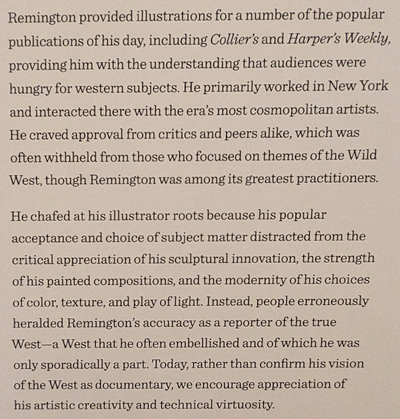
Posted near some of Remington's works was a plaque about the artist, and you can read it at left.
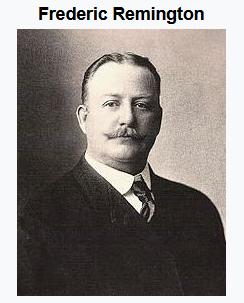
Frederic Sackrider Remington (October 4, 1861 – December 26, 1909) was an American painter, illustrator, sculptor, and writer who specialized in the genre of Western American Art. His works are known for depicting the Western United States in the last quarter of the 19th century and featuring such images as cowboys, Native Americans, and the US Cavalry.
Remington was born in Canton, New York, in 1861, to a family already connected in various ways to the West, the cavalry, horsemanship, and even famous mountain men like Jedediah Smith. The Remington family's ancestors fought in the French and Indian War, the American Revolution, and the War of 1812, and the family's relatives included George Washington. Remington was an only child, very active, big and strong for his age, who loved to hunt, swim, ride, and go camping. He began to make drawings and sketches of soldiers and cowboys at an early age.
Remington took his first drawing lessons at Vermont Episcopal Institute, and imagined a career for himself as a journalist, with art as a sideline. Remington attended the art school at Yale University and studied under John Henry Niemeyer. His father died in 1880, and Remington did not return to school, lived off his inheritance and modest work income, and traveled to the American West, including Montana and New Mexico. This trip gave Remington an authentic view of the West that many later artists lacked. The trip resulted in the publication of his first commercial sketch.
Remington tried a number of businesses around Kansas City and further west- including ranching, a hardware business and a saloon. Through it all he continued to sketch and paint, doing so in earnest when his business went badly; he often traded these works for essentials. He soon had enough success selling his paintings to locals to see art as a real profession.
He returned to New York and began studies at the Art Students League of New York and significantly bolstered his fresh though still rough technique. His timing was excellent, as interest in the dying West was escalating. His works were published more frequently, and by the time his first full-page cover appeared in Harper's Weekly in 1886, he was able to pursue his art career and support a family. Harper's sent him West that same year, and he returned with invaluable experiences.
His career blossomed (he earned $1200- a large amount- in his first year) and his art sold well. More trips to the West and to Canada resulted in more works enjoyed by the public. In 1887, Remington received a commission from Theodore Roosevelt to illustrate his book; this assignment gave Remington's career a big boost and forged a lifelong connection with Roosevelt.
Remington moved to full-color oil painting, and his status as the new trendsetter in Western art was solidified in 1889 when he won a second-class medal at the Paris Exposition. He had been selected by the American committee to represent American painting, over Albert Bierstadt whose majestic, large-scale landscapes peopled with tiny figures of pioneers and Indians were by then considered passé. His first one-man show, in 1890, presented twenty-one paintings at the American Art Galleries and was very well received.
Remington's fame made him a favorite of the Western Army officers fighting the last Native American battles, and he made numerous additional trips West throughout the 1890s, producing some of his best work as a result. Remington's attitude toward Native Americans was typical for the time. He thought them unfathomable, fearless, superstitious, ignorant and pitiless, and generally portrayed them as such.
Remington Sculptures at the Carter
During this time, Remington had developed a sculptor's 360-degree sense of vision but until a chance remark by playwright Augustus Thomas in 1895, Remington had not yet conceived of himself as a sculptor and thought of it as a separate art for which he had no training or aptitude. But he did, and by mid-decade copies of his works were being sold at Tiffany's. With help from friend and sculptor Frederick Ruckstull, Remington constructed his first armature and clay model, a "broncho buster" on a horse that was rearing on its hind legs—technically a very challenging subject. After several months, the novice sculptor overcame the difficulties and had a plaster cast made, then bronze copies, which were sold at Tiffany's.
Remington's association with Roosevelt paid off, however, when the artist was hired as a war correspondent and illustrator for William Randolph Hearst's New York Journal in January 1897. Remington was sent down to Cuba. He produced numerous works, including a sculpture gifted to Roosevelt, but left having lost his heroic conception of war. In 1898, he achieved the public honor of having two paintings used for reproduction on US Postal stamps.
In the 1900s, Remington honed his sculptural skills, wrote a novel, and continued to paint. In 1905, Remington had a major publicity coup when Collier's devoted an entire issue to the artist, showcasing his latest works. The financial panic of 1907 caused a slowdown in his sales and he tried to sell his home in New Rochelle to get further away from urbanization. One night, he made a bonfire in his yard and burned dozens of his oil paintings that had been used for magazine illustration (worth millions of dollars today) to make an emphatic statement that he was done with illustration forever. Remington died after an emergency appendectomy led to peritonitis on December 26, 1909.
Remington was the most successful Western illustrator in the "Golden Age" of illustration at the end of the 19th century and the beginning of the 20th century, so much so that the other Western artists such as Charles Russell and Charles Schreyvogel were known during Remington's life as members of the "School of Remington". His style was naturalistic and his focus was firmly on the people and animals of the West. Remington was one of the first American artists to illustrate the true gait of the horse in motion, and the galloping horse became his signature subject, which was copied by many Western artists. Also noteworthy was Remington's invention of "cowboy" sculpture. From his inaugural piece, The Broncho Buster (1895), he created an art form which is still very popular among collectors of Western art.
There weren't as many Remingtons as their were Russells here in the gallery, but the Remingtons were classic. As the museum was closing in another fifteen minutes, we met back at the entrance. I always enjoy the Amon Carter Museum, as will you if you ever get the chance to visit and see its amazing works in person.
Prudence's Birthday Dinner at the Chumley House
We returned to the Bowie House where we had a chance to relax before we started gathering in the lobby bar to get ready to head out to dinner.
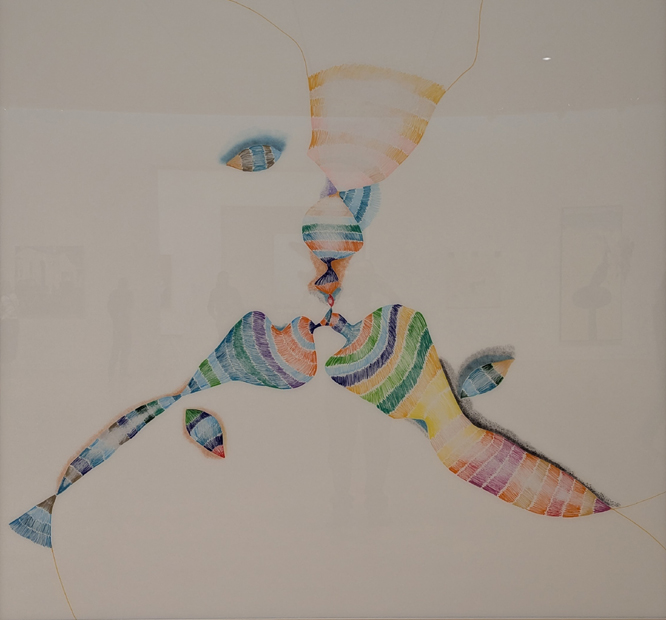
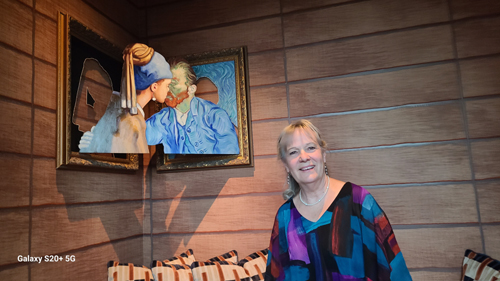
Fred happened to find Prudence in the lobby near an interesting artwork. If you can't quite tell, it appears as if the two figures, one of whom is Van Gogh, have come out of their respective artworks to kiss.
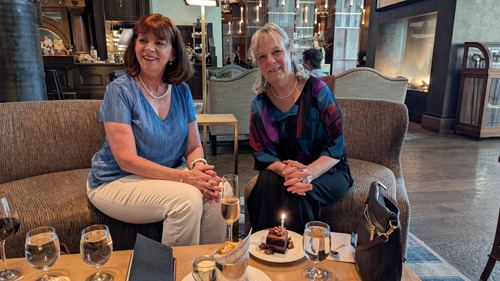
Someone told the lobby bar that today was Prudence's birthday, for they brought her a square of chocolate cake with a candle. I took this picture of Prudence and Lori.
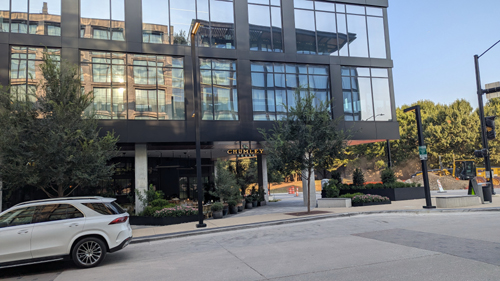
When everyone had gathered in the lobby, five of us began walking down Camp Bowie Boulevard to the Chumley House, while Karl and Ron drove down there.
The Chumley House was a very nice restaurant, modeled loosely on an English Pub. Joining the seven of us were Vicki and Dan, good friends of Prudence who live in Fort Worth.
Here are Prudence and Ron during dinner at the Chumley House.
That night, Prudence treated Fred and I to an overnight stay at Bowie House, which is a very, very nice boutique hotel. We enjoyed the stay, and seeing everyone again the next morning before we returned to Dallas and the rest of the crew headed back down to San Antonio. Yet again, we thank Prudence and Ron a great deal for their hospitality over the last two days.
You can use the links below to continue to another photo album page.